



 Team Prac
In her video series on EQUESTRIAN+, international Grand Prix dressage competitor and trainer Shannon Dueck describes the ideal seat for lateral work and explains how a proper seat position can help free up your horse’s shoulders and withers to help him get more supple into your hands and in front of your seat.
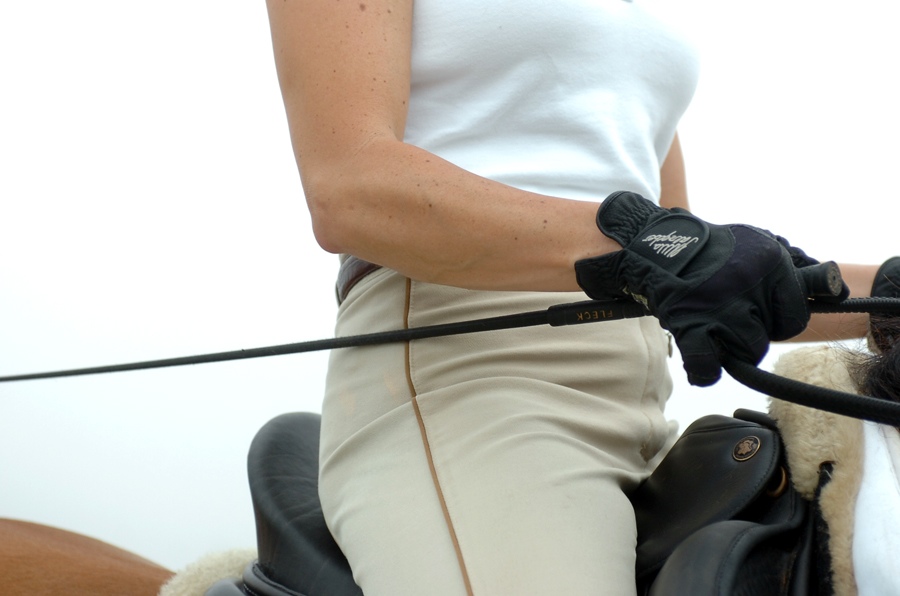
Here, Dueck provides tips to help refine your seat position and leg aids for improved suppleness, collection and balance.
Keep Your Seat in the Tempo
“During your warm-up, it’s important to check in with your horse to see how he reacts to your leg both forward and laterally. Your horse needs to move off your leg promptly to prevent you from using too strong of an aid and getting out of balance.
“You can always make your leg more effective in two ways: Timing and placement. Your timing must be absolutely correct. And sometimes you might need to bring your leg a little bit more forward to modify where it’s acting.
“Every horse has a correct tempo that gives him the ability to engage and collect. For some horses it might be a little bit slower than their natural tempo; for others it may be a little bit faster than their natural gait.
“Your job is to always keep your seat in the tempo you want your horse to be in. You are the conductor and your horse is the musical instrument that has to get up to the tempo or slow down to the tempo depending on what you’re asking him to do.
“If your horse slows down behind you, don’t slow down with him. Stay up in the tempo and use your leg to remind him to stay in front of your seat.
“When you start to ride corners, going deep is not the priority. Instead, ask yourself if you can use the corner to get your horse going better. Bring him a little bit up in his ears and get his inside hind leg under you a little bit more. That way you can use the corner to make him a little more energetic underneath you and come out of the corner better.”
Learn How to Stay Perfectly Square
“Work on getting your horse sharper to the leg and more upright. Overall, you need to stay absolutely square. That way your horse has a place to balance underneath you.
“Pay attention to your weaker side to make corrections. If, for example, you’re weaker on your left side, think about engaging the core muscles on your left side to hold yourself in a correct position with your seat bone and your shoulder on the left side of the horse, even as you use your right leg.
“The better your horse responds to your leg, the less strength you have to use in that leg and the easier you can do it with just placement. Then you can concentrate on staying upright.
“Whatever your horse is doing—because he won’t always do things perfectly either—strive to use your core muscles to stay perfectly upright and in the middle of your horse, so he has a place to balance underneath you. If you think of a gymnast who balances on top of a balance beam, riders want to think about bringing the balance beam up and underneath them.
“Even in your free walks, make your horse walk on and practice keeping your seat in a proper position. This is a hard habit for us because we all want to take a break and talk and think, but it’s a good habit to develop if you want to get those eights on your extended walks. Every time you give your horse a longer rein, he has to learn to go for it a little. If you let him just go dull, that’s going to happen in the show ring. And then you’ll have to use more leg, which can create a rhythm problem on the rest of your test.”
Create Roundness and Improve Suppleness
“It’s always best to start by being prompt. So get your horse uphill and slightly above the bit right away, so he steps into that uphill balance. Then you can ask him to be more supple and get a bit rounder.
“When trying to get your horse rounder, don’t lower your hands, because you don’t want him low. It’s the roundness, not the lowness you want. You goal is to manipulate the shoulders and the base of his neck a bit more so his withers will get more supple up into your hands and in front of your seat.
“To create roundness, start with your reins a little shorter. This will give you more strength and allow your elbows to be more aligned with your back. Plus, it will give you a stronger half-halt to hold your horse in balance.
“Straightness is a virtue when you’re going up to a fence. And straightness is a virtue as you work up the levels to pre-St. George. But suppleness is what ultimately leads to straightness and will really allow you to collect your horse.
“You shouldn’t have to pull at all in the downward transitions. You should do it off your seat and then maintain your leg and hand connection. Try to keep your horse supple as he changes gears.”
Watch & Learn on E+
- You can watch Shannon Dueck’s entire series on improving your seat position here on EQUESTRIAN+.
- For additional videos featuring Dueck’s top tips and training strategies, click here.
- From short training tips to how-to videos and insider-access to private clinics and lessons, learn more from top dressage experts on EQUESTRIAN+.
About Shannon Dueck
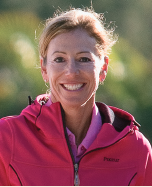
Shannon Dueck represented Canada at the 1999 Pan American Games (individual silver medal), the 2002 World Championships, the 2003 World Cup Final and the Open European Championships aboard her self-trained horse, Korona. She competes her self-trained mare Ayscha at international Grand Prix. In addition to being an FEI-level trainer and competitor, she holds a master’s degree in equine nutrition and physiology, and she has served on the faculties of Lakeland College, Olds College and Johnson & Wales University. She lives and trains year-round in Loxahatchee, Florida.