




 Team Prac
My goal for the warm-up with every horse, no matter the level, is for him to be focused, responsive to my aids and physically prepared for the work ahead. That sets the tone and the standard for the rest of the ride. Only when I feel like my horse is accessible to me do I move on to new or more challenging exercises. From a physical standpoint, the warm-up should also prepare the muscles for the movements the horse will perform later in the ride. I want him becoming more supple, more connected and more able to carry himself as the work progresses.
There Is No Single Warm-Up
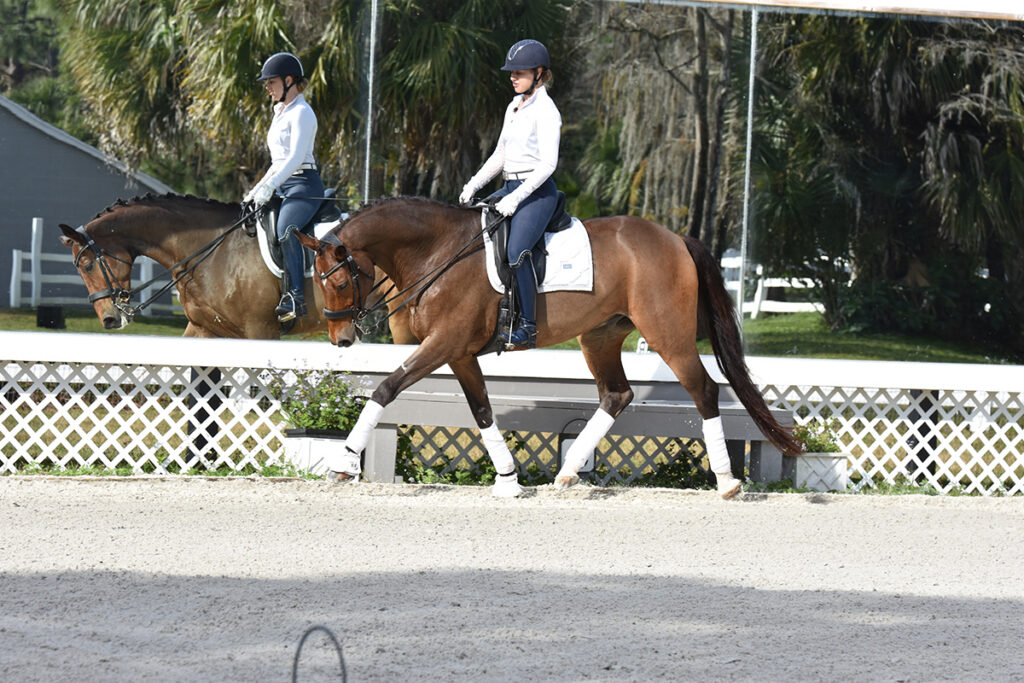
I don’t have one warm-up plan that I use with every horse. Horses are different, and the warm-up has to cater to the individual that day. It is a matter of knowing your horse, knowing his body, and paying attention to what he is telling you. Sometimes my warm-up might be the whole ride. Other times, I feel like I could ride a test after two minutes.
An older or stiffer horse may benefit from more time to loosen his body. Another horse may need more structure and guidance right away. Some horses feel better if I canter in both directions fairly early because the canter creates more undulation (a rhythmic, wave-like motion) through the back than the trot and helps them loosen up. Even with a horse who benefits from cantering early, I still give him enough time walking to get his body moving, and I like to trot briefly so I can check how he feels before I move on.
The horse’s mind, fitness, age and education all affect the warm-up strategy. A Training Level horse will have a simpler warm-up than an upper-level horse who has more strength and capability. The point isn’t to get through a specific list of exercises. The point is to figure out what the horse needs in order to be ready to work.
Set the Standard From the Start
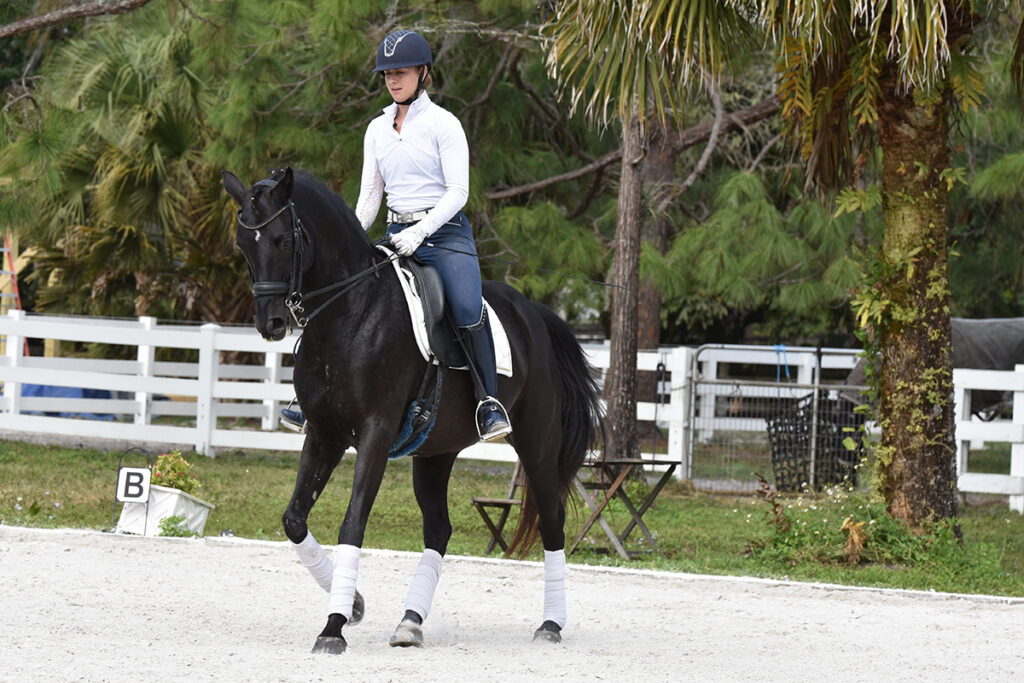
Every interaction with your horse matters, including what happens before you are fully into the ride. I pay attention to how the horse responds on the ground and at the mounting block. If I ask him to stand, I want him to stand relaxed until I ask him to go forward. Whoa means whoa. The same is true when I walk away from the mounting block. When I put my leg on, he should go forward. If he doesn’t respond, I make the aid clearer until I get the reaction I asked for, and then I go back to the quietest aid possible.
I like to think of the escalation of the aids as:
- “Please” – Ask with your seat bone
- “Do it” – Reinforce with your calf
- “Now” – Use your ankle or heel
- “Darn it” – Back up the aid with your spur or whip
“Please” starts with the quietest aid, asking with the seat bone. If I don’t get a response, “do it” adds the calf. If I still need a clearer response, “now” brings in the ankle or heel. And if the horse still doesn’t respond, “darn it” might mean backing up the aid with the spur or whip. The point isn’t to get stronger and stronger or ride with more emotion. It’s to make the cue clear, get the response and then immediately go back to “please.”
I also want the horse’s attention on me. It is fine for him to notice something unusual outside the arena, but I don’t want him turning his head away from the work or tuning me out. If I establish early that my cues matter, I’m much more likely to have his attention when I start asking harder questions.
Build Forward, Connection and Attention
The walk gives me a lot of information. I want it active and marching, but I also want the horse using his body rather than simply wandering around with his neck stretched out and his back hollow. I ask him to be rounder and seek the connection so he starts to work over his topline. My job is to stay tall, balanced and following. I want my seat to follow the walk, not push every stride, and I want my elbows soft enough to follow the horse’s mouth as his neck moves forward and downward. If the rider’s arms are rigid, the contact becomes rigid too. I want an elastic connection that allows the horse to move into the reins without being held there.
Use Lateral Work to Find What Needs Help
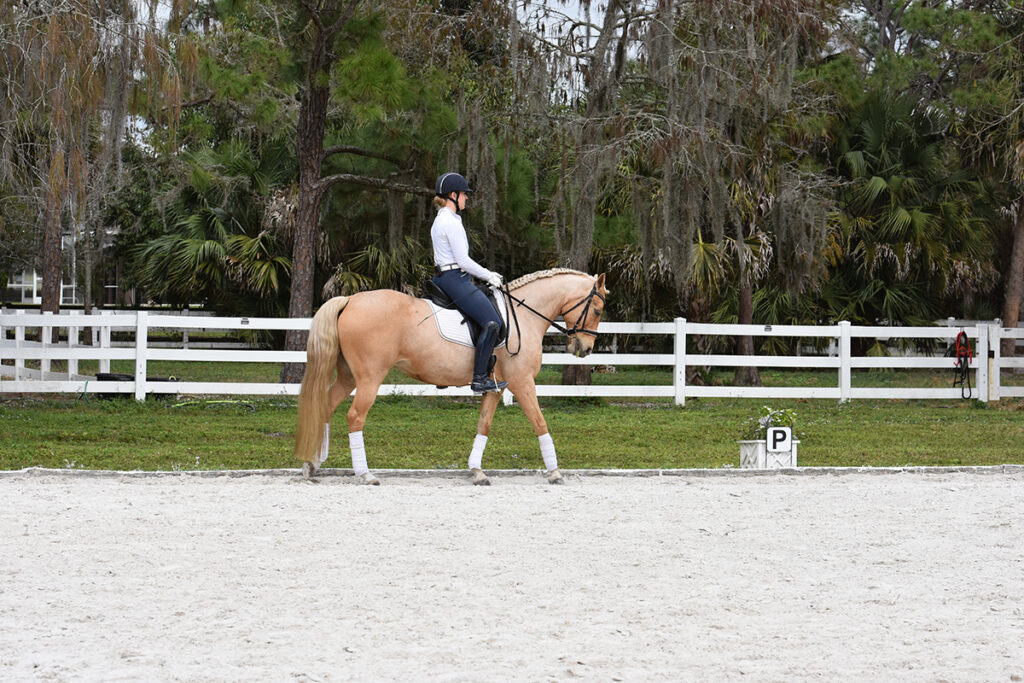
Once I have a forward, connected walk, I often use lateral work to check how the horse is responding to my aids in different directions. That could be leg-yield, head-to-wall leg-yield, shoulder-in or haunches-in. Lateral work helps me feel where the horse is supple, where he is stiff and whether I can influence the different parts of his body. My leg doesn’t always mean go forward. Sometimes I’m asking the whole body to move sideways. Sometimes I’m asking for the hip, barrel or shoulder. Sometimes I want the hind legs to react more quickly.
For some horses, I trot and canter before I do much lateral work in the walk. Again, it depends on the horse. But I like having the option to come back to walk whenever I need to clarify an aid or explain something more simply. For example, if I’m asking for canter pirouette and the horse is confused or making mistakes, I may go back to walk pirouette. I can show him where I want his legs to land and how I want him to bend, then try again in canter once he understands.
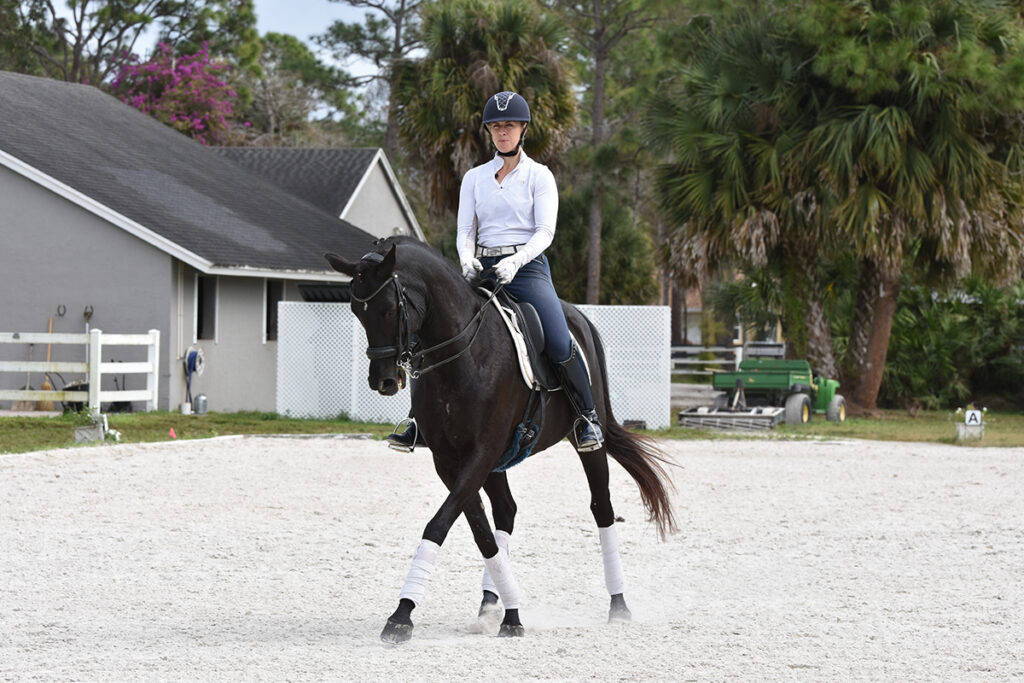
When you ask for lateral movements, apply the aid and then allow the horse to carry the movement. Don’t nag. If you have to keep driving, hugging and holding every stride, the exercise is not benefiting you or your horse.
With more advanced horses, I like linking lateral movements together. I might ask, “Can I have your haunches in? Can I have your shoulders in? Can I rotate you? Can I move you sideways?” I want the exercises to flow and I want to notice where the horse feels stuck. That tells me where he needs more gymnasticizing of the body.
A Serpentine Tells You a Lot
The three-loop serpentine is one of my favorite exercises because it gives you so much information about how the horse feels on both sides of his body. It is also a useful lower-level exercise because it can show you many of the same things that more advanced lateral work reveals. Think of each loop as a half-circle with a moment of straightness across the centerline. Then change the bend as you turn in the new direction. You can feel how honestly the horse bends around the inside leg, how straight he stays across the centerline and whether one direction is easier than the other.
It also helps you check balance. Is he falling onto an inside shoulder? Is he drifting off the line? Does the bend change smoothly, or does one side feel much harder?
You can add transitions to the exercise. Walk or halt as you cross the centerline, then try the same walk–halt transition while you are on the bend. You can also add more loops to test your accuracy. The exercise can stay simple or become more demanding depending on what the horse needs.
Use Transitions to Test the Connection
Transitions within the gait and between gaits are another way I evaluate whether the horse is truly responding to my aids. When I ask for trot from walk, I want a clear, prompt response to the leg. When I transition back to walk, I want to maintain that same energy and forward intention. I think of downward transitions as changing gears rather than shutting off the engine. The energy should continue to flow forward. The horse should continue moving freely forward through the transition, without losing impulsion, becoming abrupt, or stalling out.
The same idea applies to transitions within the gait. I may go from a bigger working trot to a more collected trot and then forward again. When the horse is sitting more in the trot, he is pushing into the ground, bending the joints of the hind end, and carrying more weight behind. That is demanding, which is why I want both sides of the spectrum. The horse should be able to go forward when I ask, and he should also be able to come back, sit and collect without losing the rhythm or the connection.
Prepare for Canter and Collection
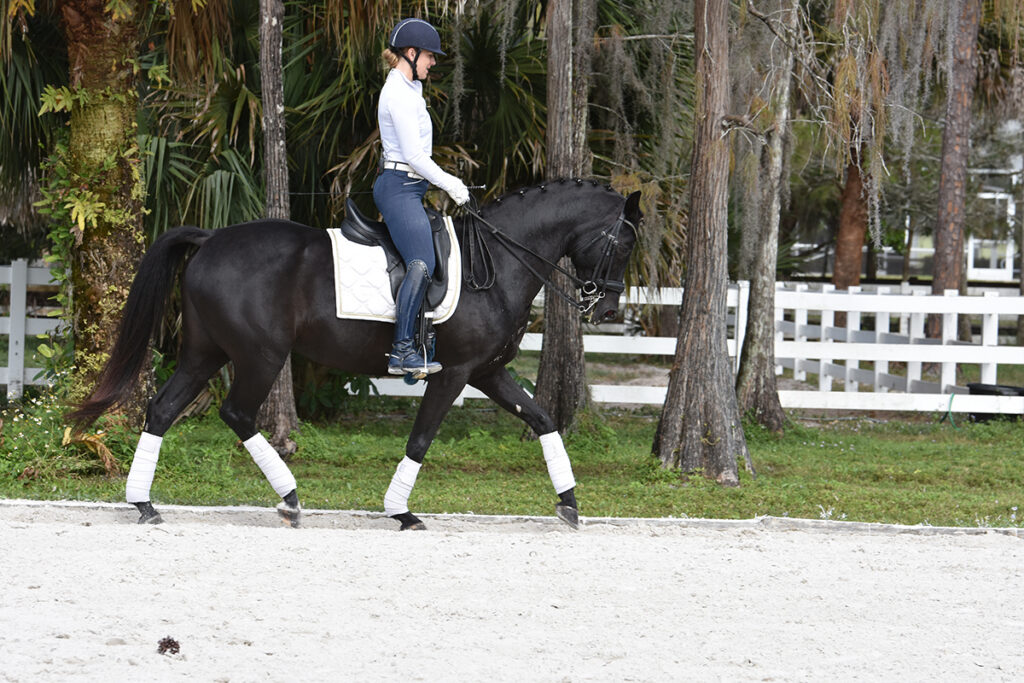
In the canter, my job is to support the horse by keeping my own body straight, aligned and balanced. I want gentle pressure from the calf encouraging the hind legs to reach farther under the body while the shoulders wait. If the horse feels strung out or disconnected, I may use a deeper seat and a closed calf until he is connected into my hand. From there, I can make small adjustments in flexion, straightness or the response to my leg, but the quality of the canter should stay the same. The rhythm needs to feel steady, like a metronome. Whatever I ask, I don’t want to lose the underlying quality.
Let the Warm-Up Change the Plan
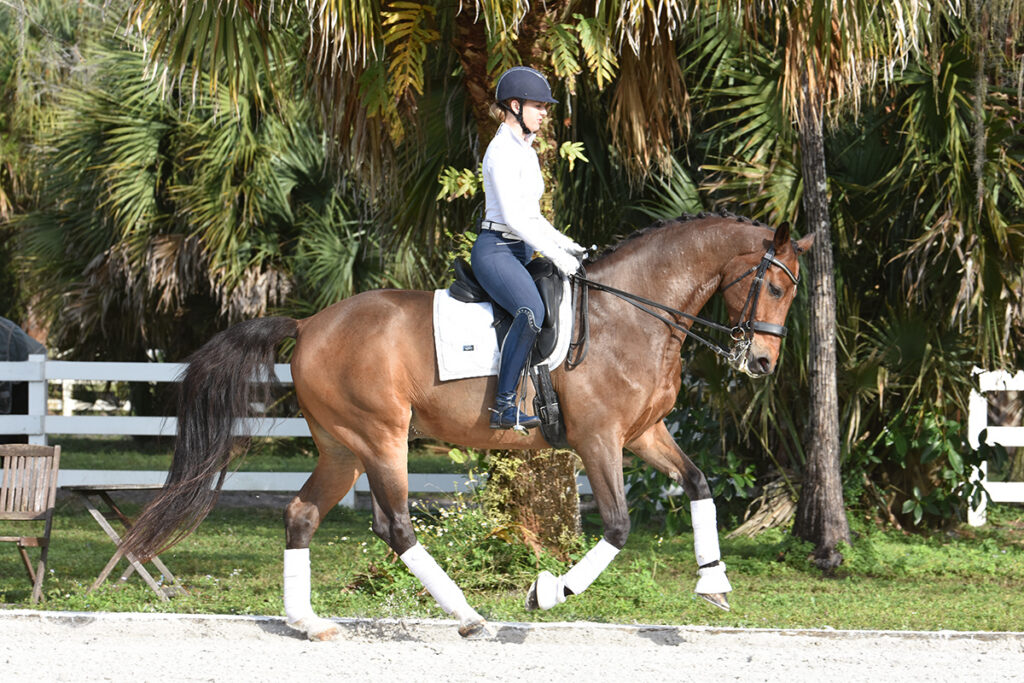
Depending on the horse, you may spend the whole ride working on what started as the warm-up, and that is OK.
Training is full of detours. Maybe I planned to work on canter zigzags, but during the warm-up I notice that the horse isn’t moving off one leg well enough. Instead of pushing ahead because that was the plan, I may spend the ride working on leg-yields in the walk. That is still productive. I’m working on the exact component the horse will need in order to perform the canter zigzag better another day.
The warm-up isn’t something I rush through before the “real” work starts. It’s where I find out what the real work needs to be.
Sometimes the warm-up is the work. The process takes as long as it takes, and it’s always worth going back to the basics. Those basics are what make the more complex dressage movements easier for the horse to perform and beautiful to watch.
About Laura Ashley Killian
©Gold Horse Media
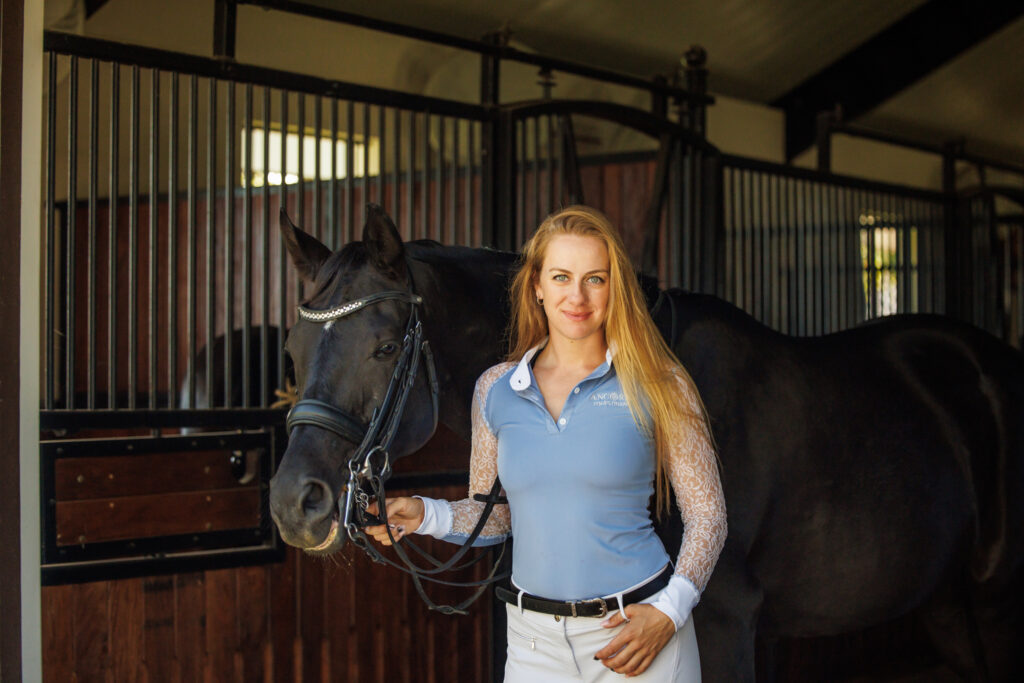
Grand Prix dressage rider and trainer Laura Ashley Killian is a USDF gold, silver and bronze medalist with silver and bronze freestyle bars. Killian is also a USDF Certified Trainer/Instructor through Fourth Level and a USDF “L” Judging Graduate. She teaches and trains year-round in Loxahatchee, Florida.
For More:
Dressage Today+ members can watch training videos with Killian here. To sign up for Dressage Today+, click here.
For more articles with Killian, click here.