




 Team Prac
For many dressage horses, flying lead changes can be one of the most challenging movements to learn and master because they require perfect balance, core strength and coordination. In addition to the physical components, there is also a mental aspect to consider because every horse learns at his own pace.
No matter your horse’s age or level of training, it’s essential that he’s relaxed and trusts you before introducing flying changes. Many riders make the mistake of rushing into introducing flying changes before their horses are truly ready. This will cause your horse to become tense and anticipate, resulting in unreliable changes.
The key to riding successful flying changes is in your preparation, specifically ensuring your horse is relaxed and adjustable in the canter. In Part 1 of her three-part video series “Preparing for the Flying Change” on Dressage Today+, Olympic dressage rider Laura Graves explains how you can tell when your horse is ready for flying changes and how you can better prepare him for the movement.
The Foundation for Flying Changes
Before you even think about flying changes, your horse must understand one critical concept: Cantering is separate from changing. He needs to accept half-halts on either rein, bend in either direction and respond to your leg without anticipating a change. Without this foundation, you’ll never achieve clean, reliable changes. If you don’t have this rideability factor, your series changes are always just a chance.
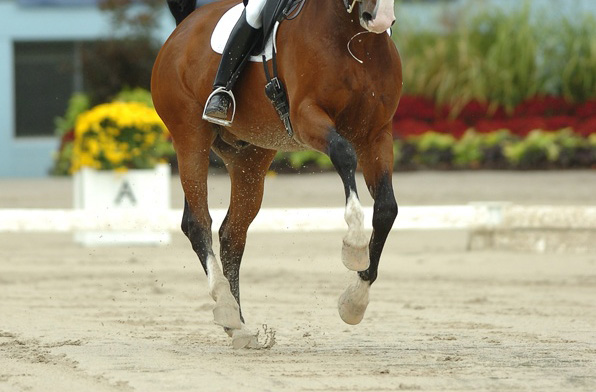
Here are some additional foundation tips for flying changes:
- Introduce changes early enough in your horse’s career that his training progresses slowly and naturally without causing him any anxiety.
- Do NOT set a strict deadline for introducing changes. You horse will tell you when he’s ready.
- Generally speaking, most horses are ready to begin flying changes when they are balanced in the counter-canter and can engage with good impulsion.
- To successfully perform flying changes, your horse must be supple (especially through his back), he should easily be able to collect and he should be responsive to your leg aids without being overly sensitive.
- Your horse should possess a clear, round canter and confident attitude. He should track straight whether on a diagonal line or a serpentine and be willing to pick up any lead regardless of where he is in the arena.
Flying Change Readiness Checklist
Your counter-canter work, counter flexion and canter rideability must be solid before attempting flying changes. Before introducing your horse to changes, ensure the following:
- He remains relaxed during counter flexion without any change in his breathing.
- You can half-halt on either rein without triggering a change.
- Your horse accepts your leg aids on either side without anticipating.
- He reliably leg yields in canter while maintaining proper bend and balance.
- Your horse stays patient and is willing to wait for your aids for the change.
Building Rideability in the Canter
1. Establish Looseness and Suppleness
Your horse must be loose through the back and equal on both sides. Not all horses are naturally balanced equally on the left and right—that’s your job as a trainer. Work on stretching exercises, particularly on your horse’s tighter side to help him relax and work over his topline.
In order to perform a quality flying change, Olympic dressage rider Laura Graves explains that horses must be loose in their backs and even on both sides. Sign up for Dressage Today+ to watch her three-part series on preparing for flying changes and for thousands of hands-on training videos with top dressage trainers.
You can make resistance uncomfortable, but never punish your horse in the bridle, and focus on keeping your elbows soft and connected as if they’re an extension of your horse’s back. When your horse gives, even slightly, reward him with a pat so he learns the correct response.
2. Master Counter Flexion and Leg Yields
Counter flexion in the canter is essential preparation for flying changes. This teaches your horse to accept the aids on both sides without changing leads. To practice this, canter a circle; we’ll start on the right lead and then reverse directions. Ask for a few strides of counter flexion, so you’re bending a little to the left on the right lead and add a slight leg yield off your inside leg. Then, immediately return to the normal bend on your circle and praise your horse when he accepts all this calmly. Simply reverse these aids when you circle off the left lead.
Here, the rider demonstrates cantering a circle while asking her mare for a few strides of counter flexion and then returns to the normal bend after she gets a positive response. Sign up for Dressage Today+ to watch her full three-part series on prepping for changes.
The goal is to “trick” your horse into accepting these aids without tension. Do it for just a couple of strides, then return to what’s comfortable. This will gradually build confidence in your horse.
3. Perfect Your Half-Halts
Your half-halts must be effective on both reins without triggering a change. Imagine your half-halt happening in front of you toward your horse’s front legs. It can help to practice half-halting on the “wrong” rein while maintaining the lead. In your leg yields, you can prevent your horse’s shoulder from getting too far ahead by half-halting strong on the outside rein.
4. Develop Patience and Waiting
In this clip, Laura Graves helps this horse-and-rider combination troubleshoot as they’re preparing for flying changes and stresses the importance of teaching your horse to be patient at all times. Sign up for Dressage Today+ to watch her full three-part series on prepping for changes.
A lot of horses get nervous and anticipate flying changes. When this happens, they often start offering changes whenever they feel certain aids, even when not asked. It’s important to address this before progressing in training to ensure you horse clearly understand your aids for the change. To correct this, try the following:
- Practice changing directions through the walk or trot so your horse doesn’t have the opportunity to anticipate.
- When your horse gets frazzled, return to walk and restore relaxation before continuing.
- Never rush. Wait for your horse to relax and come over his topline.
- You must make it clear: “This is my aid for changes. If I didn’t ask, it means no change.”
- If your horse offers an unwanted change, calmly correct it. Remember, he must learn to accept half-halts on either rein and bending in either direction without changing leads.
Horses don’t have bright ideas themselves—you must show them the way. If your horse is nervous about counter flexion or certain aids, remember that added stress at competitions will only magnify these issues. Address anxiety at home through patient, systematic training.
The Payoff
When you take the time to properly prepare your horse for flying changes by schooling the canter for rideability and teaching him to relax and be patient, your changes will become clean 100% of the time and eventually you’ll easily be able to do a series of changes.
Flying changes should simply be another form of cantering—nothing to get nervous about, nothing to anticipate. It’s just an honest movement your horse learns to perform calmly and reliably because you’ve built the right foundation. If you take your time, are systematic and never move forward until each piece is solid, both your horse and your future test scores are sure to improve!
About Dressage Today+
Get ready to connect with Dressage Today in more ways than ever before with our completely revamped website and member experience on Dressage Today+! The all-new platform will feature exclusive event coverage, on-demand training videos with top dressage riders and clinicians, VIP experiences, members-only discounts and premium tools to elevate your riding progress and horsemanship skills.
Click here to learn more about all the benefits you’ll enjoy as a member of Dressage Today+ for only $3.99 a month!