




 Team Prac
Q: In a previous podcast, you mentioned that you could generally tell the difference between an amateur and a professional by watching them in the show ring. Could you expand on this a little further? And no matter your level, how should you use your time after the bell rings before for your test?
~ Dressage Today Podcast listener
A: I’m glad she asked this question, because in hindsight, I think it might have come off as being on the snarky side, which was not my intention. I was trying to speak about accuracy and preparation. Over my years in the sport of dressage, I’ve noticed that professionals tend to have a better sense of how to prepare for the next movements and changes of gait than amateurs. They also have better understanding of how to use the arena.
I often ask my students how they learn their tests. They typically reply, “I go down centerline, then turn right, then make a circle in the middle and so on.” That’s not the best way to memorize or prepare for your test. Instead, I suggest something like, “As I head down centerline, I’m going to focus on keeping my horse between my legs and seat and rein aids. I’m staring at the judge and taking a deep breath as I half-halt in preparation for my halt.”
This way, you’re thoroughly thinking through every moment of your test and what you need to be doing when. If you’re only thinking “turn right, make a circle, turn left, transition change,” you’re not considering what you fully need to do to prepare for that next turn or circle or transition. Or maybe you did prepare for the next turn, but you didn’t plan for what was after it.
Biomechanics expert and co-host of the Dressage Today Podcast Stephany Fish Crossman observed that professionals tend to have preparation ingrained in their DNA as they get to the top levels of the sport. Their experience gives them the ability to ride the test in a way that’s more than just going through the pattern’s directions.
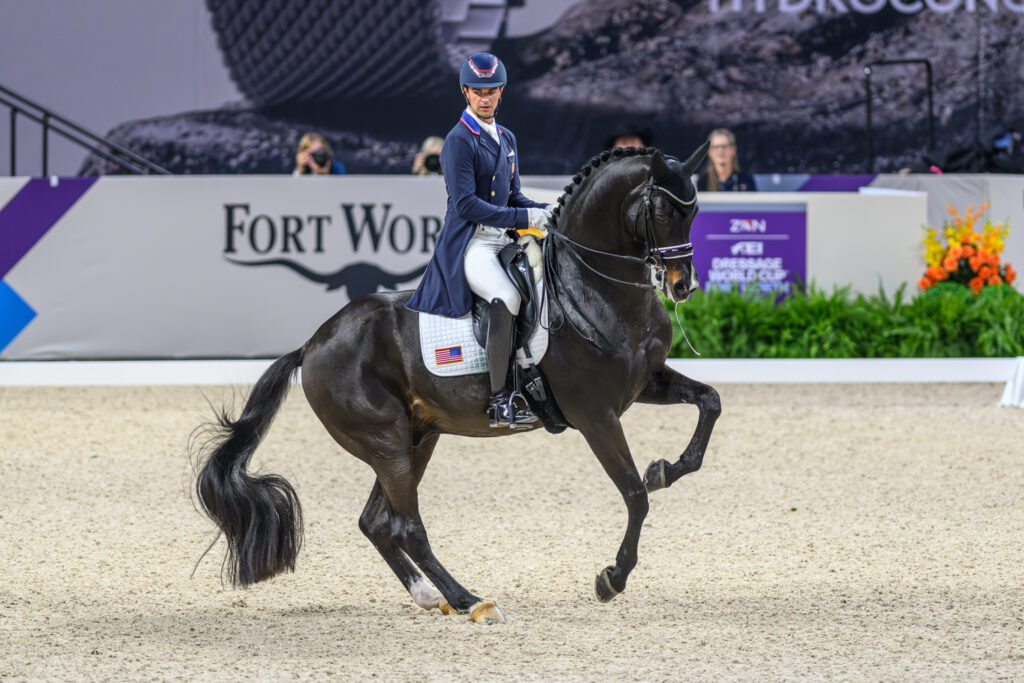
I started our “Ask the L” segment because I was competing with a really nice horse, but we were always last, and I didn’t understand why. I learned that average horses were beating us because they had mastered the basics like riding in a straight line and having the correct bend and all those little things better than we had. It’s these seemingly small details that eventually separate average riders from good riders.
Dressage is really hard and very technical, and riding at shows is even more challenging because you not only have to ride the test you’ve memorized, but you also have to ride your horse in a new and likely more stimulating environment. So, you must be able to multitask because, for example, your horse might find upward canter transitions perfectly easy, but your trot-to-walk transition requires more preparation to make it appear seamless.
Bringing All the Pieces Together
I tell my students that accuracy is at the top of my list because it demonstrates to the judges that you can do the required movements where you’re supposed to. But keep in mind that as you move up the levels, the movements and transitions happen much more quickly in the tests. By the time you get to the FEI level, if you mess up a transition, you’ve now potentially messed up the next three movements because they come up so much faster.
I was riding a Third Level test in Israel, and after our extended walk, I went to ask my horse to go forward again, and he went backward. I had to pick up the left lead canter at K, so I knew I better hurry because at F I had to start half-pass.
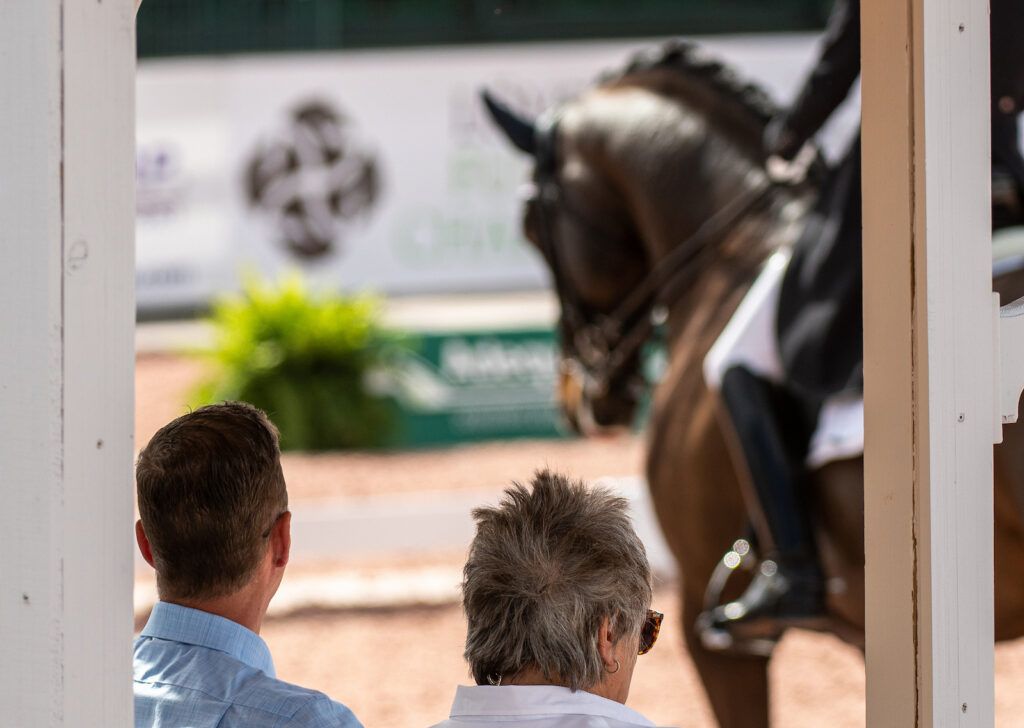
Fortunately, I knew the Third Level tests so well and had ridden them so many times that I was able to get my horse going forward again before everything started to spiral downhill. Our canter transition was not at K, but we got it a little bit before C, so we were able to canter a few strides before the half-pass at F.
If I hadn’t so much experience, I probably would have gone into panic mode and likely wouldn’t have gotten the canter at all. As you move up the levels, you ultimately become more aware of all the intricacies of test riding.
Amateurs Who Stand Out
I am a graduate of the L program and am not a licensed judge, which means I mostly judge Second Level and below, so I tend to see a lot of amateurs who are trying to get a feel for where the holes are in their training and what fundamentals need to be polished. Every so often when I’m judging, I’ll see a beautifully ridden test and ask my scribe if the rider is a professional. And I’m always thrilled when I find out it’s a local amateur and not a pro.
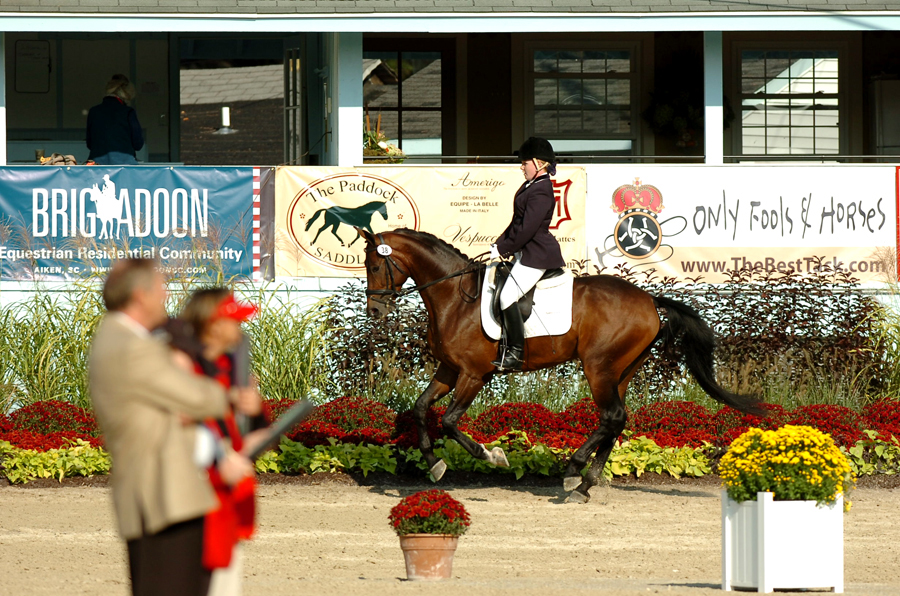
It’s not that these horses are 10 movers. They’re not. It’s more about how the rider handled the entire test—all those intrinsic little pieces that come from simply doing it, observing, thinking about it, planning and doing it again. I love being able to tell riders that they received every single point they were capable of getting and didn’t leave anything on the table.
Every chance you get, go to local shows and just observe and listen or watch tests online. Over time, you’ll start to notice the riders who are planning, who are riding every stride and are thoughtful in everything they do, versus the riders who come in and simply ride the pattern, or those who are holding their breath just hoping they remember the test.
How to Use Your Time After the Bell
Now, I want to address the second part of your question on how to best use your time before you enter the ring for your test. To clarify, our listener was not asking how to properly warm up her horse by making sure he’s in front of her leg with a couple of halt-halts or making sure he’s seen the judge’s booth from both sides. Instead, she was referring to the 45 seconds after the bell rings before she’s required to enter the arena at A.
Professionals and riders who are experienced in the show ring tend to take a deep breath after the bell rings, because they know they have plenty of time to mentally and physically prepare before they come down centerline where the judges technically have their first look at you. Believe it or not, 45 seconds is a long time; try counting it sometime.
Judges are often still working on their remarks about the previous rider during this window of time, but in the off chance they happen to look up and see you, should you do your fancy trot down the long side to show off a bit? Should you do a transition or two to signal your preparation and professionalism toward the test?
These are both good options, depending on your horse and his strengths and weaknesses. Use your time outside the arena to really tune in to him and do whatever is appropriate for both of you.
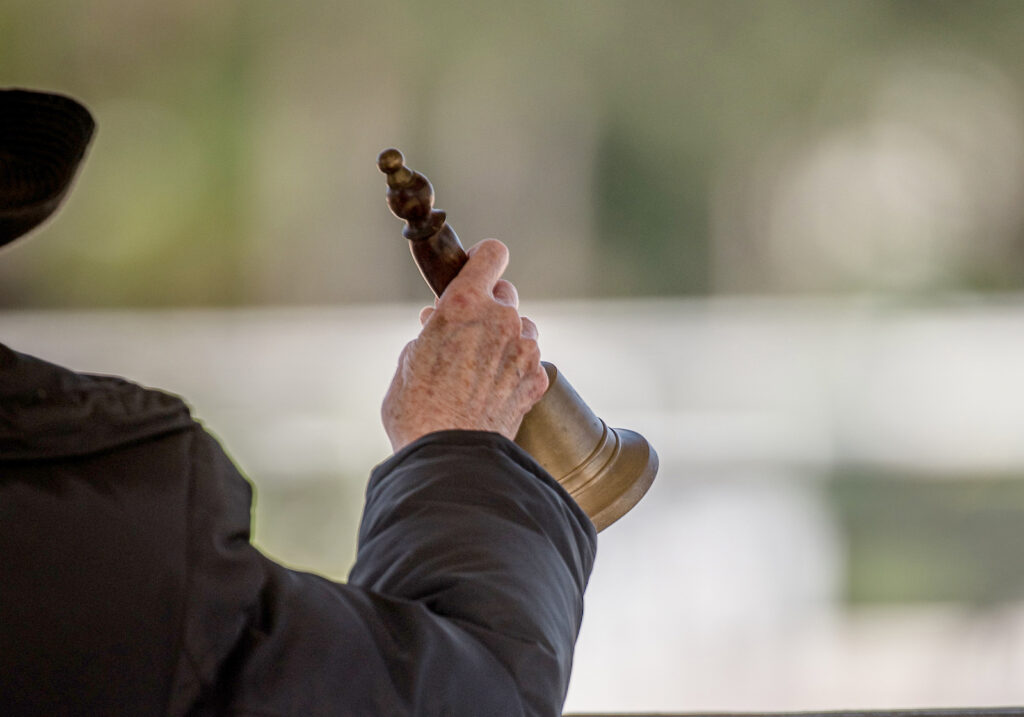
Often, you can also use this time outside the ring to accomplish two goals at once. For example, riding that fancy trot down the long side can help get your horse in front of your leg. And, incidentally, if you look fancy doing it, all the better!
Also, keep in mind that you don’t just suddenly want to rush toward the centerline, because, “Oh my gosh, you have to get in the ring now,” before incurring a point deduction. Or if A is set up in a way that you have to zigzag around to it, you might enter the ring off a half circle or from a leg yield—whatever makes the most sense. Essentially, you want to say to the judges, “Look at us! We’re coming down the centerline, and you’re going to want to watch because we’ve got the right stuff!”
Demonstrating professionalism before and after you enter the ring will go a long way in impressing the judges and standing out as an amateur. I tend to roll my shoulders and collapse my chest when I ride, and I had a trainer who told me to pull my shoulders back, stick my chest out and come down the centerline like I was the queen. You don’t want to come down the centerline like you’re apologizing. Come down as if you belong there.
For More:
- Read more “Ask the L’s” with Aviva Nebesky here.
- Listen to the Dressage Today Podcast, hosted by Aviva and Stephany Fish Crossman, here.
About Aviva Nebesky
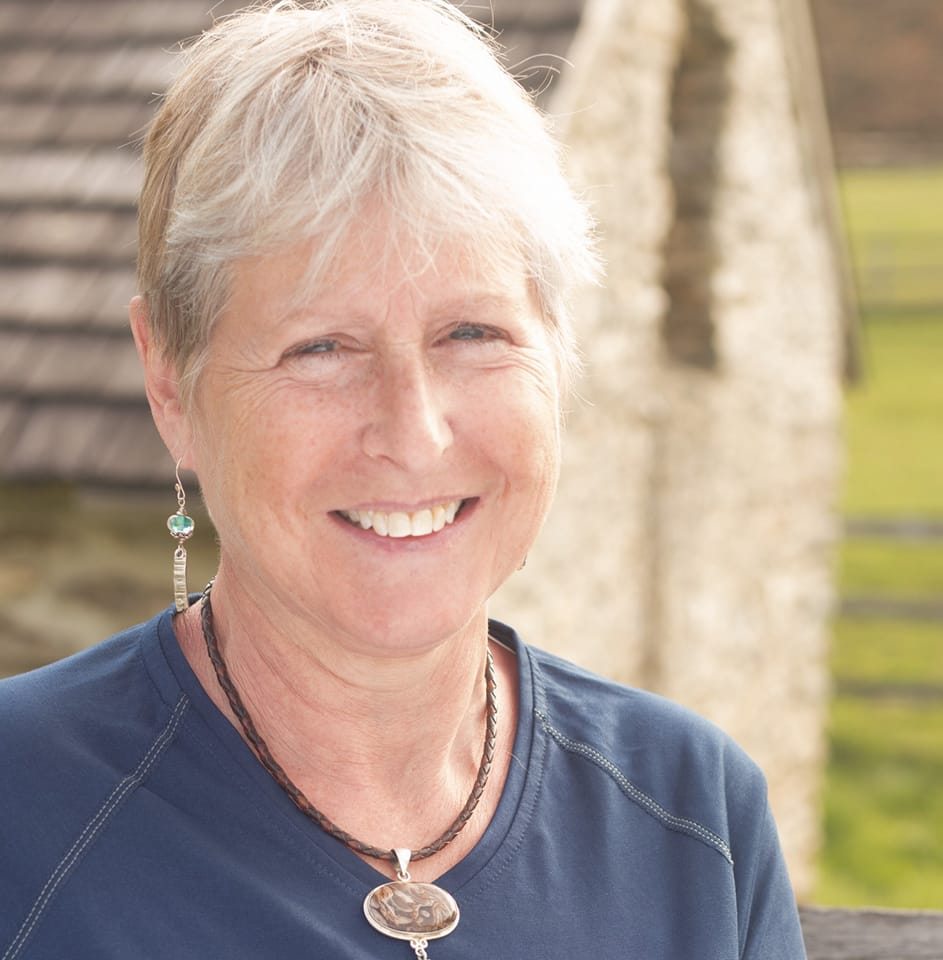
Aviva Nebesky started riding in her 30s, but horses rapidly took over her life and she went on to graduate with distinction from the USDF “L” Program. She actively trains and competes in dressage while maintaining a busy teaching and judging schedule throughout the mid-Atlantic. She has her USDF Bronze Medal and the Fourth Level scores towards her Silver and has competed internationally representing the USA at the Maccabi Games in Israel in 2022.
Aviva regularly works with eventers, working equitation riders, Western Dressage riders and traditional dressage riders and also cohosts the Dressage Today Podcast with Stephany Fish Crossman. With a master’s degree in social services and Social Research and decades of work in the field of physical rehab, Aviva specializes in working with adult amateurs with fear issues.