




 Team Prac
It’s never too early—or late—to think ahead and plan for your next competition season. Being organized with all your i’s dotted and t’s crossed and having a solid, yet flexible plan will make for a less-stressful show season so you can focus on what’s really important: Putting you and your dressage horse in the best light possible as you prepare to head down centerline.
The following is a month-by-month checklist to help you outline your goals and prepare for successful show season. If my calendar doesn’t exactly match your show season, simply adjust the dates and times accordingly or jump ahead to the current month. We hope these tips help you and your dressage horse on your journey in the show ring.
Dressage Show-Season Checklist
December
Look at your current situation. Do you have a lot of work cut out for you to move up a level? Is your horse still fresh and ready to work or would he really benefit from some downtime? This is a good time to let your horse relax a little before gearing up toward the next show season.
January
By the beginning of the year, you should have a sense of what level you’ll be showing this season. Maybe the pieces haven’t come together yet, but they should be well started. We talk about the old adage, “Show a level below what you’re schooling,” and I think there’s a lot of truth to that. Work with your trainer to determine what level you should be gearing up to show.
- By the end of January, you should be able to execute every test movement you want to show with relative ease.
- Renew your U.S. Dressage Federation (USDF), U.S. Equestrian Federation (USEF) and Group Member Organization (GMO) memberships.
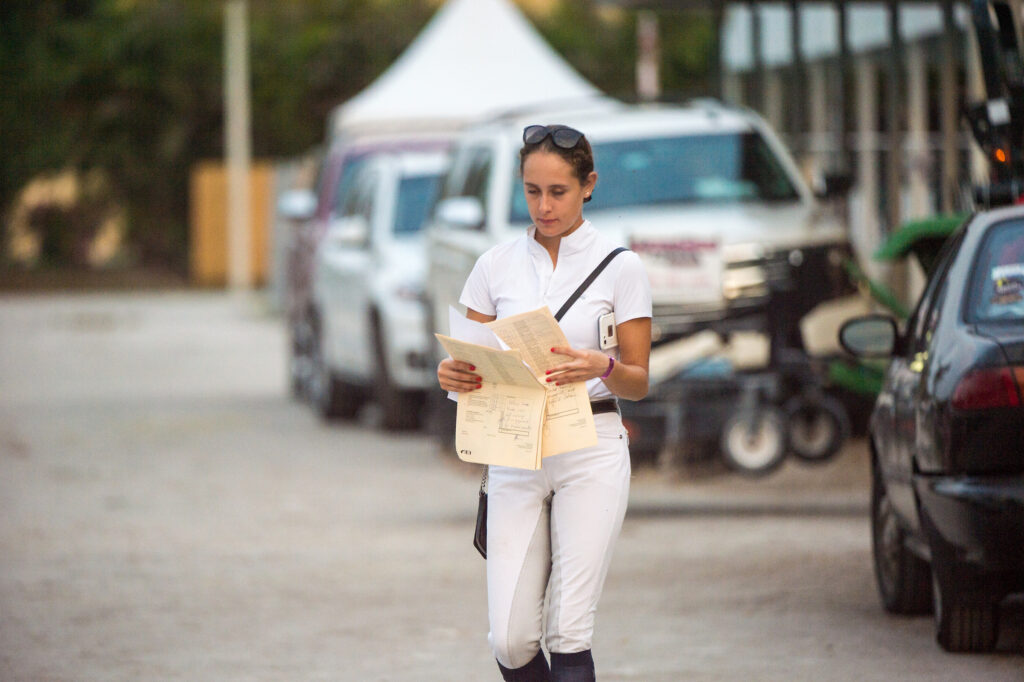
If you think that the USDF regional or national championships might be for you, a participating membership for yourself and a full membership for your horse are required. If you don’t, a GMO membership and Horse ID number might be sufficient. If you’re competing at Training or First Level without championship ambitions, you can compete in “Opportunity” classes without any memberships.
February
By now, each region’s show Omnibus should be complete with a list of show dates and locations in your area. Check with your GMO to find out how you can get an Omnibus, if it isn’t automatically sent.
- Check Omnibus: Make sure you have a current Omnibus with show dates and locations.
- Plan your show season: First, what are your goals? If you want to qualify for the regional championships, you’ll need to attend at least two shows. If you want to qualify for USDF year-end awards, that will require at least four shows. Do you want to try for the North American Junior and Young Rider Championships or USEF National Championships? Each of those has its own rules regarding not only the number of shows but also which shows—only certain ones offer official qualifying classes. Do you want to win GMO awards? These have their own requirements for the number and kind of shows and for volunteer hours.
- Think about the calendar: Do you want to do one show a month? Do you want to avoid the heat and show in the spring and fall? Do you want your coach to help you at the shows and, if so, which will she attend? Compare that to your region’s list of shows. Do you mind driving a long way or would you rather stay close to home? Map out the shows you know you want to go to and keep a couple in reserve in case of emergency.
- Make hotel reservations: Now is the time to book hotels for all of the horse shows you are attending out of your immediate area. They book up fast on horse-show weekends.
Two Months Before
Even show veterans should look through the USEF Rulebook, as rules change often in small ways. And if you’re just beginning your dressage journey, reading the rules is very important for things like checking the legality of your equipment and what attire is required.
- Read the USEF Rulebook: Doing this early gives you plenty of time to correct something you need, such as ordering a new bit and acclimating your horse to it, to get tall boots if you’re moving up past First Level, etc.
- Do a dress rehearsal: Try on all your show attire to make sure it fits and that it’s comfortable for you and your horse. If you’re moving up to Fédération Equestre Internationale (FEI) levels, ride in your tailcoat, as some horses need to adjust to the flap of tails and you’d rather have that be at home than on show day. Make sure your boots zip over white breeches, your gloves feel right, your hair stays in place, your saddle pad is big enough. In short, test everything.
One Month Before
Memorize your dressage tests: It is really important to memorize your dressage tests. Don’t rely on a reader. What if the reader makes a mistake? What if it’s windy and raining and you can’t hear your reader? Plus, memorizing your test means you know what’s coming when you’re riding your tests. A well-planned performance will usually outscore “winging it.”
Two Weeks Before
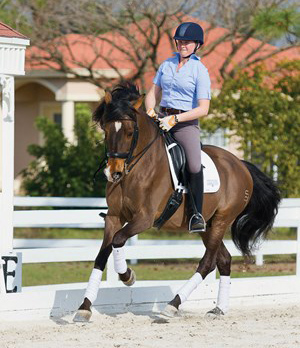
- Ride through your whole tests: Start riding your tests in full, not just bits and pieces. Pay attention to the details—corners, centerlines, halts. Those are important places where points can be gained or lost with just a little focus.
- Plan your warm-up: This is also the time to plan out your at-the-show work. How much and what kind of warm-up does your horse need? As you ascend the levels, you may find that you don’t need to school every movement in the warm-up. Some horses need a few minutes to warm up while others need closer to an hour.
One Week Before
Prepare your show week schedule: Does your horse put in his best work after a day off or by the end of the week? Does he feel best after a day of stretching, a day of hard work or a day of transitions with an eye on respect of the leg? Plan your horse’s week leading up to the show so he peaks there, instead of leaving your best horse in the “locker room.”
Takeaway
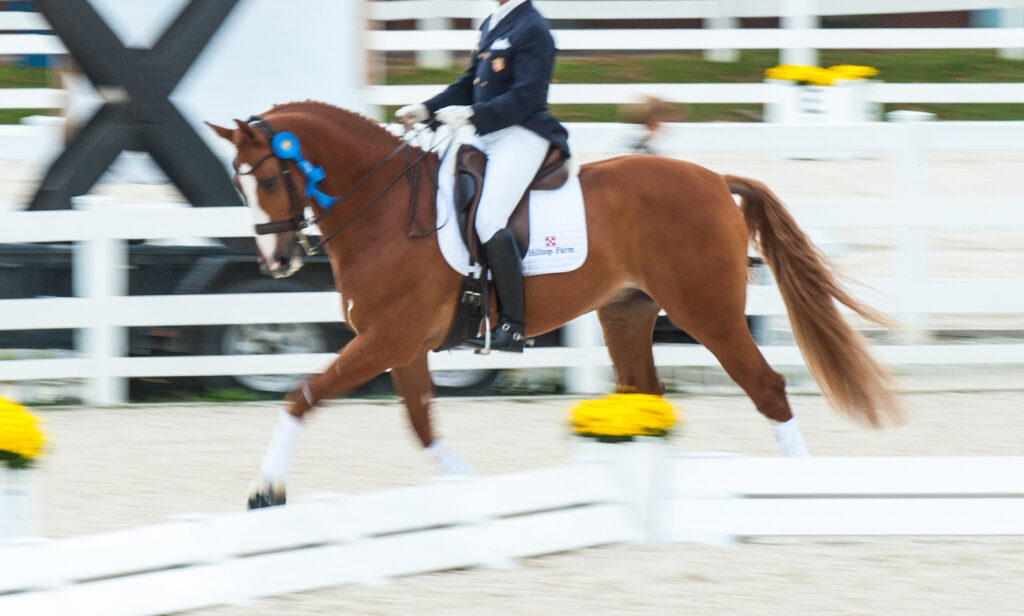
Once you’re at the show, you’ll be fully prepared having already done your homework. Now, all you have to do is put the pieces together in the show ring and have fun!
For More:
- Sign up for Dressage Today+ for hands-on training videos with Lauren Sprieser and access to thousands of other videos with top dressage riders, trainers and clinicians. What is Dressage Today+? Click here to learn more about all the benefits you’ll enjoy as a member of Dressage Today+!
- To read more articles with Lauren Sprieser, click here.
About Lauren Sprieser
Originally from Oak Brook, Illinois, Lauren Sprieser made her first foray into international-level dressage at the age of 18, under the tutelage of Lendon Gray. She competed in three North American Junior & Young Rider Championships—winning two team medals—and three U.S. Equestrian Federation Young Adult “Brentina Cup” National Championships, and earned her U.S. Dressage Federation gold, silver and bronze medals—all before her 21st birthday. Now running her own business, Sprieser Sporthorse, in Marshall, Virginia, she produces FEI horses and trains riders of all levels and disciplines.