




 Team Prac
I once tried a sleek, powerful Anglo-Arabian as a competition horse on loan. The owner’s coach was there to guide the trial. Overall, the mare was an amazing athlete—strong, capable, elegant and energetic. That is, when she actually moved.
I sat on the horse and gave leg cues, and she’d move a few steps and stop, or trot a bit and slow down. The coach said, “Give her your legs! Keep the legs! Come on, don’t be lazy; real riding is a great workout for the thighs!”
I didn’t take that horse on loan. But not because of laziness—on her part, or mine. The bigger problem was that this lovely young chestnut had absolutely no concept of what scientists refer to as self-carriage. And that was a deal-breaker for me.
As leading equitation scientists insist, self-carriage is critically important; it plays vital roles in performance, safety, and above all, equine welfare. In this article, we’ll take a closer look at what self-carriage is, why it matters, and how it applies to future horse sport.
What Exactly Is Self-Carriage?
Self-carriage is a concept with somewhat different definitions across the horse world, with variations often depending on discipline, competition level, training method, and individual riders. It tends to get portrayed as some version of a biomechanics feat blending collection and balance, conjuring images of horses “carrying themselves” lightly in the air as if they’re suspended by an invisible harness.
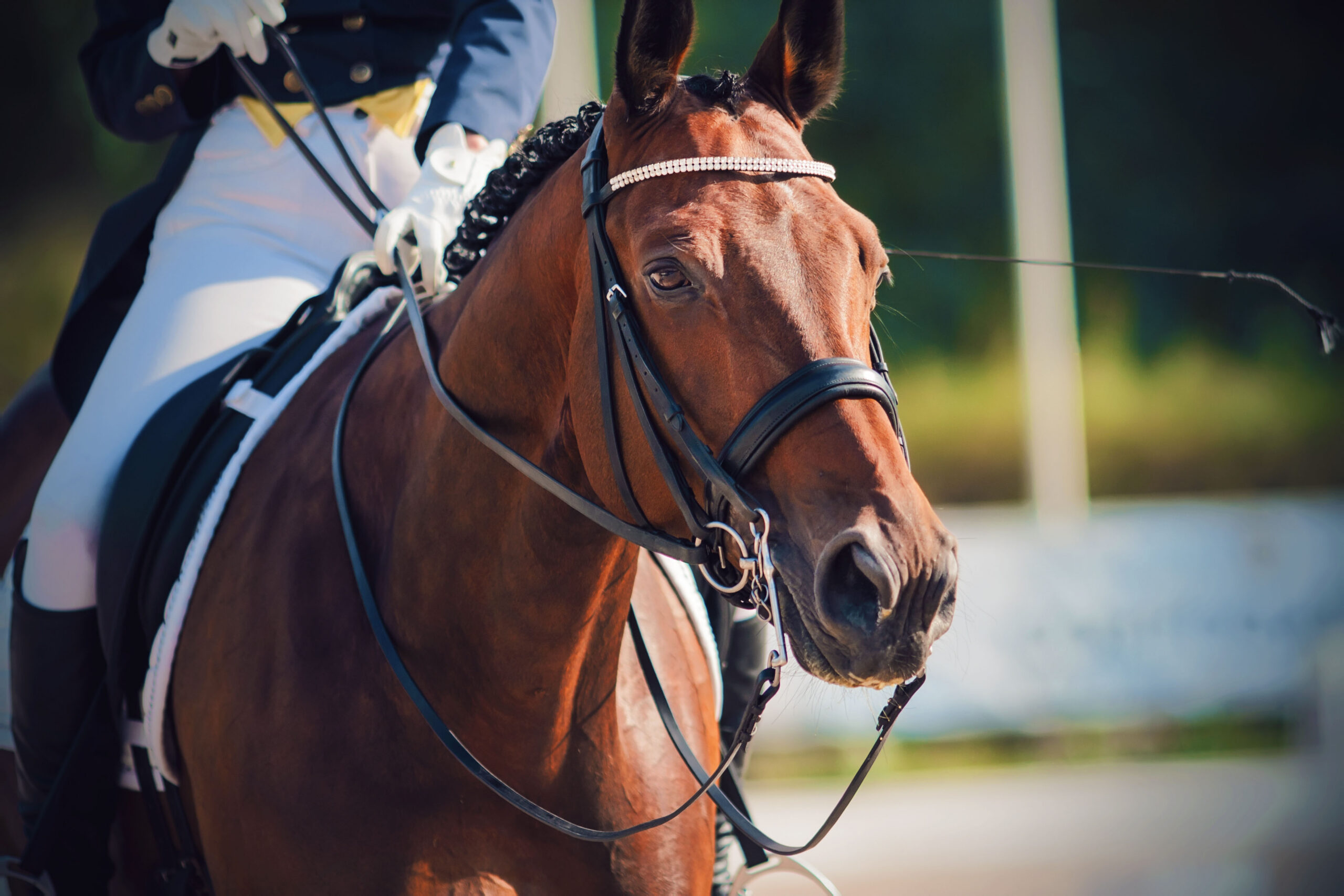
While that’s an important performance goal, it isn’t self-carriage as described by the researchers who investigate horses’ abilities to learn, perform, and interact with humans. Rather, self-carriage is a pure and clear product of a good education: “It’s teaching the horse to do it—and do it himself,” explains Andrew McLean, PhD, BSc, Dipl. Ed., founder of the Australian Equine Behaviour Centre in Victoria.
Put simply, horses in self-carriage keep doing what we’ve asked them to do, without constant reminders, he says. Unlike the mare I trialed, these animals respond to a leg aid to trot, for example, and keep trotting until the rider asks them to do something else instead—like slow down, speed up, or stop. Likewise, horses in self-carriage maintain their lateral movements—straight, diagonal, shoulder-in or shoulder-out, turns—and their head and neck positions on their own. They even continue complex movements like piaffe and passage until they get the cue to stop doing them.
In essence, horses in self-carriage are on autopilot, or cruise control, explains Andy Booth, a science-based horse trainer based in southwest France.
McLean likens it to having a trained bird perched on a person’s shoulder. “If you tell me you trained the bird to sit there, you’ve really got to let go of its wings to prove it to me,” he says. “Otherwise, you’re just holding it there.”
And that matters immensely, our sources say, because self-carriage is better for horses’ minds and bodies—and their relationship with humans.
Effects on Performance, Safety and Welfare
Horses learn through the rewards they get, like pressure release, according to McLean. That release signals to horses’ brains that they’ve provided the “correct” response, because it’s the one that has made the pressure stop.
If you ask a horse to move forward with leg pressure, and you release the pressure as soon as the horse moves forward, the horse understands that moving forward is the right response, McLean explains. But if you keep the pressure while he’s moving forward, the horse thinks he still hasn’t found the right response. And if the pressure release coincides with the horse stopping, that’s telling the horse that the “correct” response to leg pressure is, actually, to stop.
If that sounds confusing to you, it’s even more confusing for the horse, Booth says. When moving forward doesn’t make leg pressure cease, or when slowing down or pulling in the nose doesn’t stop rein tension, the horse has three options: keep trying (more and more insistently), try something new (like bucking), or just give up and not try anymore. Such horses get written off as stubborn, lazy, difficult, or hard in the mouth. Some even develop an equine form of depression. And most of them end up enduring far more frequent and intense pressure than they should.
By contrast, self-carriage offers horses a sense of agency, McLean says. They can control the leg and rein pressure by responding in a way that keeps them from being bothered. That, plus its alignment with Learning Theory—the scientifically confirmed concept about how horses learn—has led to self-carriage becoming one of the 10 pillars of ethical horse training as defined by the International Society of Equitation Science (ISES).
The 10th ISES Principle urges riders to have “regard for self-carriage,” meaning they train their horses to maintain gait, tempo, stride length, direction, head and neck carriage, and body posture, without force, “nagging,” or “relentless signaling.” The society underlines that lack of self-carriage compromises welfare.
Self-carriage also improves performance and makes riding safer for both horse and rider—not just in dressage, but in all disciplines, including jumping and eventing. In large part, that’s because it frees up the rider to focus on balance rather than cues, while freeing up the horse’s body for the task at hand.
“It all comes back to self-carriage: setting the horse up for the fence, for example, and then being in the optimum place of balance for the horse to use its body effectively,” says Gemma Pearson, BVMS, Cert. AVP (EM), MScR, CCAB, PhD, MRCVS, director of equine behavior at The Horse Trust in Scotland.
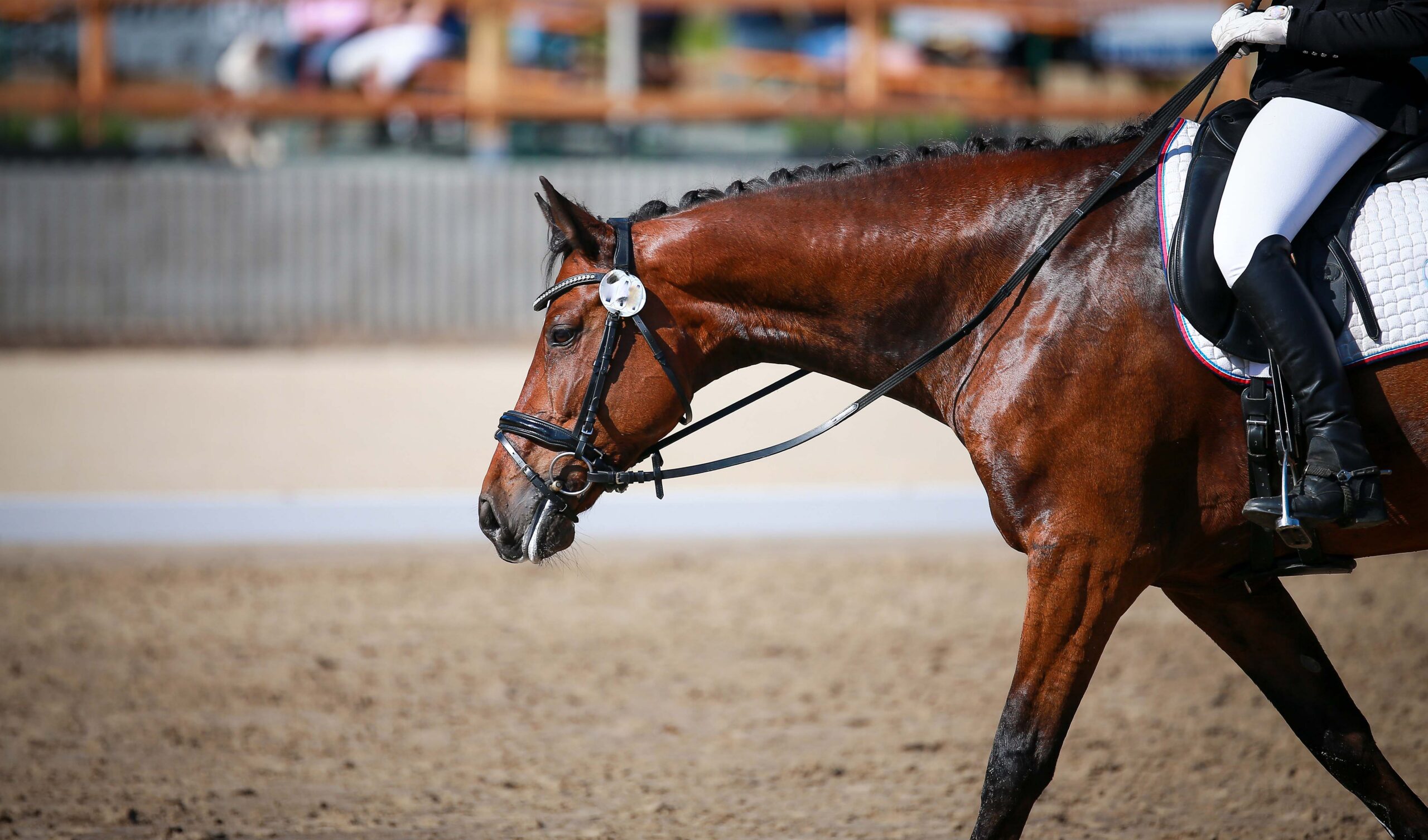
Plus, horses in self-carriage perform more voluntarily, with greater fluidity and better breathing, McLean says. Combined, this all leads to the sought-after portrayal of willingness and the “happy athlete” revered by the Fédération Equestre Internationale (FEI)—while improving the image of horse sports in general. “The self-carriage principle is about recognizing that we should avoid forcing and holding the horse, and nagging with the legs and reins,” McLean says. “And if we do that, we won’t see those tight nosebands, or hyperflexion, or blue tongues. This is the answer for the future.”
The Way Forward: Self-Carriage in Horse Sports
For McLean, self-carriage is so critical to ethical training and horse sport that it should be put to the test in the show ring itself. “It should be a very important element of judging,” he says. “We should show in each gait, and in most movements, that we can release the reins for a couple of steps. If the horse falls out, he was not trained for self-carriage.”
Roly Owers, MRCVS, CEO of World Horse Welfare, agrees. He applauds the FEI’s recently announced efforts to incorporate self-carriage as an official element of judging criteria in high-level dressage tests. At the 2026 FEI Sports Forum held in March in Lausanne, Switzerland, FEI Dressage Director Ronan Murphy told delegates that the FEI is looking at adding a “free movement” section in Grand Prix dressage, in which riders loosen the reins at a trot.
For Murphy, that would help reveal whether the horse “stretches the neck,” “seeks the bit,” and “responds to the rider picking up the reins again.”
“We’re not asking them not to have a contact,” Murphy explained during his talk. “They still have a contact, but it’s on a long rein. And we’re saying that the horse must maintain its rhythm, balance, and cadence. The horse should remain supple and light in the shoulder, with the hind legs well engaged, even though he’s on a long rein. So it’s not a free walk.”
That’s “obviously a positive,” Owers says. Still, effects on the judging mark remain vague at this point—meaning the element might add “window-dressing” value for spectators without actually affecting the rider’s score. “That’s not necessarily going to have the impact we want it to have,” he says. And he questions the brevity of the element. “Why aren’t there two or three of these within the test?” Owers asks. “That’s probably not sufficient.”
Rein contact requirements also create a conundrum, he adds. While dressage rules currently encourage constant bit contact, “that is absolutely counterintuitive when it comes to pressure release and how horses learn.” Owers would like to see the question addressed during the current judging guideline update discussions, he says.
“The FEI is making a step in the right direction,” says Owers. “But self-carriage has to become a far more central element to the assessment and scoring of dressage.”
Murphy agrees that horses’ performance in the dressage ring must reflect good training and welfare. That includes their displays of self-carriage—which, he insists, judges have already been evaluating for years.
“It’s incredibly important,” Murphy says.