




 Team Prac
I still remember one of the first interesting freestyles I saw ridden by Georg Theodorescu. He rode to the music from “Peter and the Wolf” and it was breathtaking. He had a good ear for music and he was a wonderful rider with a wonderful horse who could make the quick adjustments to the various phrasings of the music.
Over the years, musical freestyle has increased the popularity of our sport, drawing spectators, advertisers and TV and internet broadcasts. In fact, freestyle is one of the reasons dressage is still in the Olympic Games. To keep the entertainment value high, it’s important to allow for creativity among the competitors to keep the freestyle creatively free. At the same time, we must stay true to the technical qualities of dressage.
Here, I’ll discuss how the musical freestyle has evolved since its inception in the 1980s, the judging criteria and potential changes to the class, as well as ways to increase the entertainment value at the lower levels.
Judging Musical Freestyle
As a judge, I am also a spectator, and as a spectator, I want to be entertained. I want to see something new, something different, something fun. I want to start tapping my toes and snapping my fingers. I should think: What an interesting new movement! What an interesting new combination! I should have a smile on my face. If it’s just the same old test ridden to music without a whole lot of thought or planning, then the performance will be boring and the score is going to be low.
Judges want to see a harmonious performance that demonstrates beautiful gaits, correct training and solid riding. We like a floor plan. The horse and rider must stay within their capability—not try to perform movements that are too difficult—because those mistakes affect the harmony and therefore the artistic scores as well as the technical scores.
The beauty of the freestyle is when a horse and rider have the technical ability not only to ride to music but dance with it, and they should be rewarded in the Interpretation of the Music category. Riders should select music they like and make sure it’s appropriate for their horses. Twinkle-toes violin music doesn’t fit the 18-hand warmblood nor does Wagner fit a small Arabian. Music should also stay in the same genre. For example, using a mix of classical, rock n’ roll and country-western in the same freestyle will likely not enhance the ride. There’s a lot of great music out there and some great freestyle designers. New technology, however, now allows riders to select and edit their own music, which opens musical possibilities that weren’t available before.
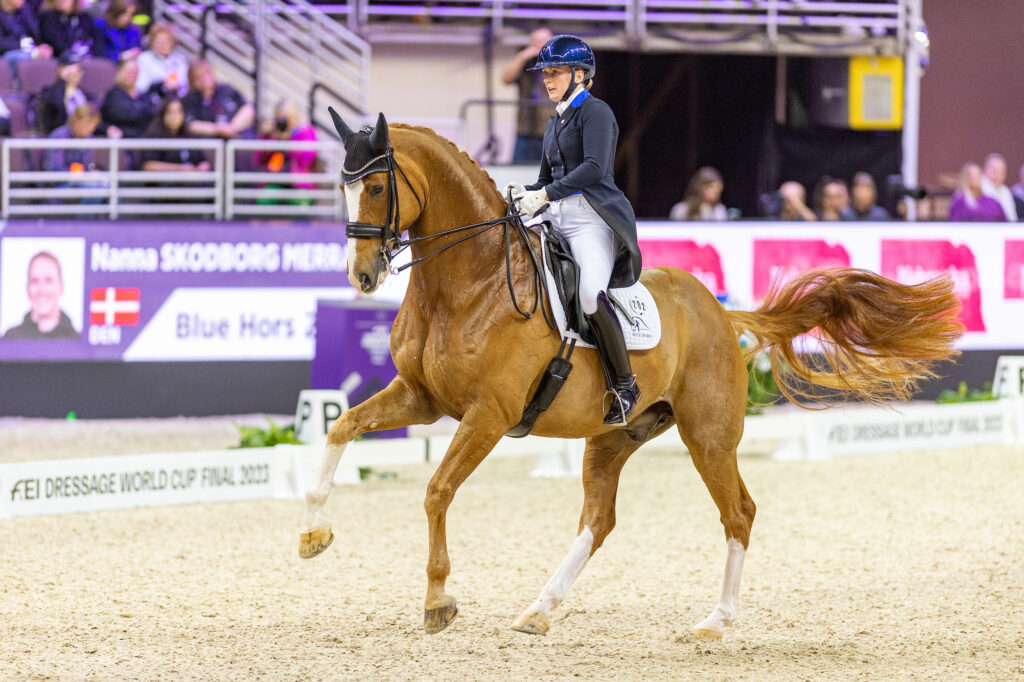
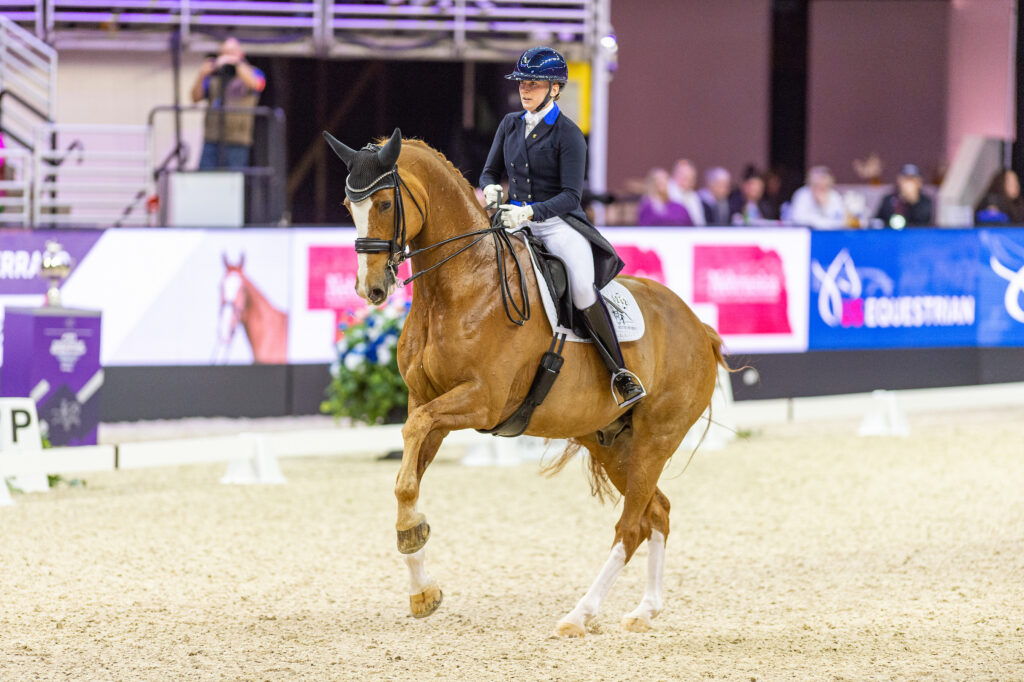
When it comes to the music scores in a freestyle, I prefer the way USDF handles the Artistic Impressions because they’re separated into two scores: Music and Interpretation, compared to the FEI, which has them together in one score. The Music score reflects the cohesiveness and seamlessness of the musical piece, whereas the Interpretation score reflects the rider’s use of the phrasing and dynamics. When evaluating the Interpretation of the Music, a judge should be able to close her eyes and know what the horse and rider are doing based on the melody. Linear background music, which sounds the same all the way through, is not conducive for choreographing an entertaining freestyle.
In my opinion, the quality of judging freestyle is quite high. If you look at the results in major championships, sometimes the freestyle scores are much closer than those of the technical tests. Overall, I think freestyle judging has become much less biased. As judges, we have become broader-minded as we have learned more about music and which music fits and which doesn’t. In the early years of freestyle, judges were more opinionated than we are today about the type of music. Maybe a judge liked only classical music or maybe he liked only particular classical music, but those ideas have changed as freestyle evolved over the years.
Evolution of Freestyle
In the 1980s, when musical freestyle was introduced, the dressage community was conservative. The worry was that adding music to dressage would make the technical requirements less important, resulting in a circus-like environment. Even as musical freestyle grew more popular, the purists resisted change.
The original idea for freestyle, before musical-editing technology came onto the scene, was to ride to one piece of music. I judged the 1990 World Cup Final in s’-Hertogenbosch, the Netherlands, and witnessed one of the first steps toward musical editing. Sven Rothenberger, that year’s winner, mechanically slowed down a well-known piece of music for the pirouettes, and there was uproar from the conservative dressage community. How could this young man bastardize this wonderful music and make it fit his own ride? They were terribly upset over it. Now musical editing has made the freestyle more entertaining and has increased the standard of Musical Interpretation.
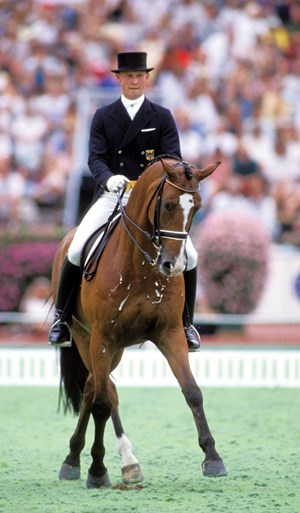
Purists were dead set against vocals, explaining that vocals were already an interpretation of the music, so freestyle would be an interpretation of the interpretation. That thinking went by the wayside, and now vocals are used to underscore the mood of the ride.
Anky van Grunsven, for example, was one of the first riders to ride a freestyle using appropriate vocals. Her music had many layers and on one of the layers Anky actually sang. One of the funniest uses of vocals was in Robert Dover’s freestyle; after he came down centerline to his final halt and salute, the music said, “That’s all!” Everyone laughed because no one expected it, and all of the judges were in a great mood, which helps because in the next 10 seconds they were going to mark the Artistic Impressions and maybe the scores were a little higher.
Changes Ahead
There is a possible movement at the FEI championships to take some of the inherent subjectivity out of the judging of the artistic side of the freestyle. Judges are well trained in the technical aspects, but the artistic elements of freestyle judging are a little more subjective.
Some think that Degree of Difficulty could be more uniformly judged if riders were to submit their freestyle floor plan in advance to a panel that would score the Degree of Difficulty to the planned ride. The process is similar to the sport of diving, in which each dive has a designated Degree of Difficulty. However, having the rider submit the planned ride takes a little bit of the “free” out of the freestyle.
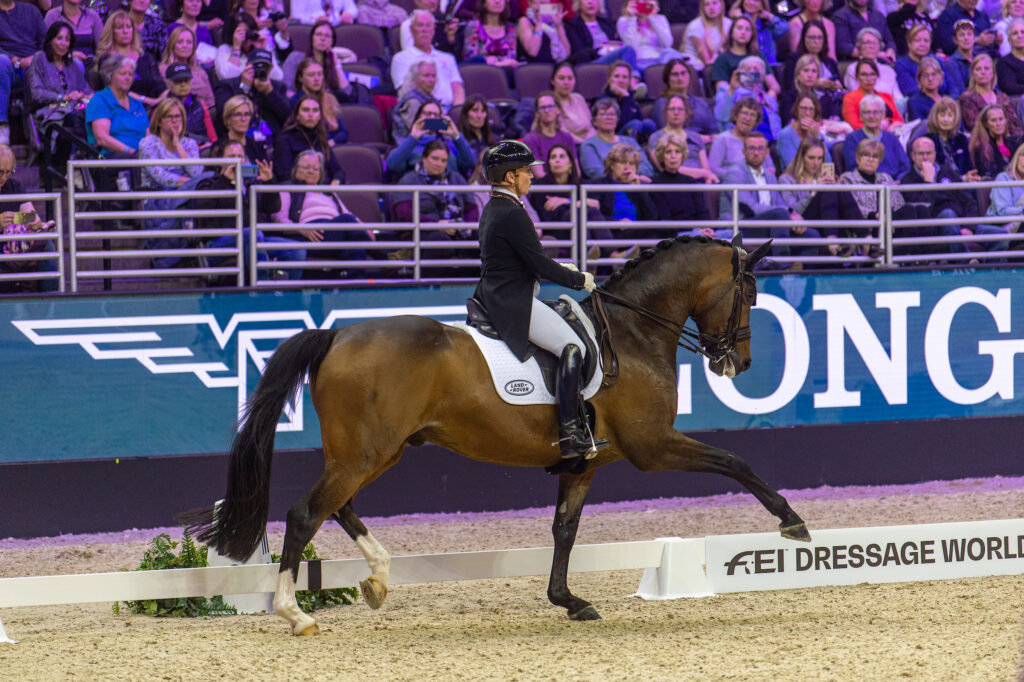
Another fairly complicated idea is to allow a computer program to evaluate the horse’s adherence to the music. The computer would evaluate and score the phrasing and whether the horse is in step with the music. In my opinion, this also makes the freestyle less free.
The FEI is hard at work on these ideas and feels it needs to maximize objectivity in deciding the medals at the Olympic Games and other major championships. Since those decisions are so important, I have no objection to the Degree of Difficulty panel and the computerized music evaluation. However, for national and small international competitions, I don’t think we should adopt these programs at the risk of limiting the creativity of musical freestyle. The programs are complicated and expensive, and I want to make sure they don’t end up at everyday shows and take all the fun out of lower-level freestyle. In fact, I want to encourage more fun in the lower-level freestyle.
Entertainment Value at the Lower Levels
Spectators want to be entertained and their attention span is short. My suggestions for increased entertainment value at the lower levels are a little out of the box and may be somewhat controversial to the people who make the rules. Here’s what I suggest:
Reduce some of the required movements. By the time the rider takes care of all of these requirements, there isn’t much time left to be original. Instead of handcuffing riders, we can give them more opportunity to be creative and differentiate themselves from the competition so we don’t see the same patterns over and over. This may require a higher qualification score to prove the rider has the skills for the level before he or she is allowed to compete in freestyle.
Smaller ring size: I also wouldn’t object to reducing the ring size and making the dance floor a bit smaller so everything happens more briskly. Right now the test is so long that you forget what happened at the beginning. A spectator would rather not see that lone 20-by-60-meter arena and endless 20-meter circles. At the FEI levels there is enough to do that you can use the big arena and keep it interesting.
Takeaway
Dressage deserves to have high exposure to spectators, advertisers and even television because it is a wonderful sport, and to promote it, we have to keep it entertaining. Let’s keep the freestyle free to cultivate creativity. Current and future officials, show managers, riders and trainers will have to make sure freestyle stays true to the horse and the sport by keeping the technical standards high while increasing the entertainment value to keep dressage on the map. If we can keep the spectators entertained, we can keep dressage in the spotlight for generations to come.
Thanks to Zoetis for our coverage of the 2026 FEI World Cup™ Finals. It includes lead-up events, rider interviews, competition reports, photos and more!
For More:
- Read more about our coverage of the 2026 FEI World Cup Finals in Forth Worth, Texas, here.
- The Definite Entries list for the Zen Elite FEI Dressage World Cup™ Final can be found here.
- For more information about the FEI World Cup™ Finals Fort Worth 2026, click here.
- Read more with Axel Steiner on Dressage Today here.
About Axel Steiner

Axel Steiner has been an FEI 5* judge since 1988. He has judged many World Cups among other international championships around the globe. Having recently passed the FEI age limit for judging, he remains an active USEF “S” judge, a trainer and examiner for the USEF judges’ program, a USDF “L” Program faculty member and a popular clinician. He lives with his wife, Terri Miller, in Lake San Marcos, California.