



 Team Prac
Nora Batchelder just loves riding and training horses—young horses, Grand Prix horses, horses she bred, and horses she didn’t. Based in Williston, Florida, Batchelder is a rider and trainer at River House Hanoverians, the family operation started by her parents, Verne Batchelder and Jeanie Hahn, and which she runs with Hahn now. She currently has about 18 horses in training, including some of her own and some client horses, and she rides them all herself.
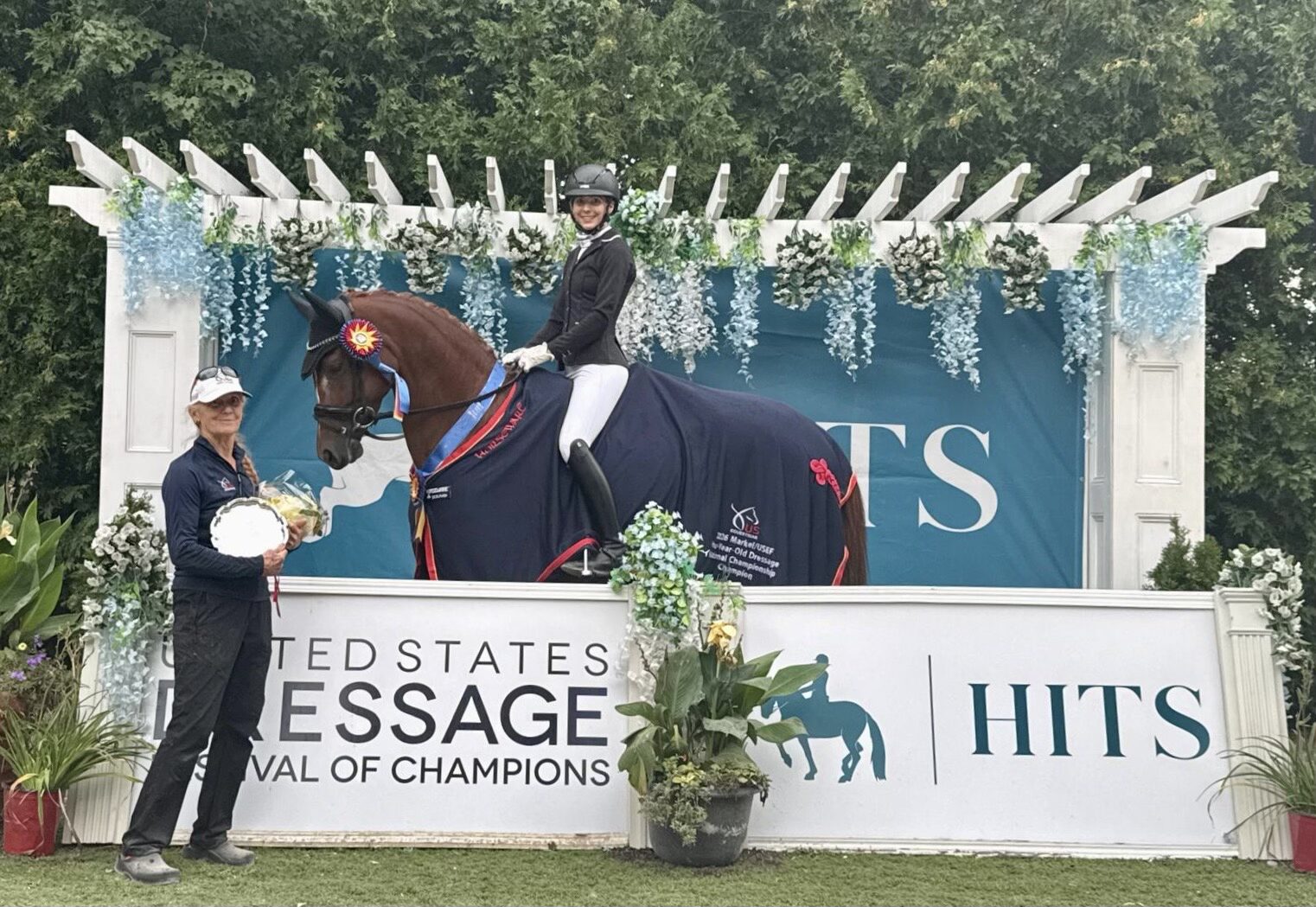
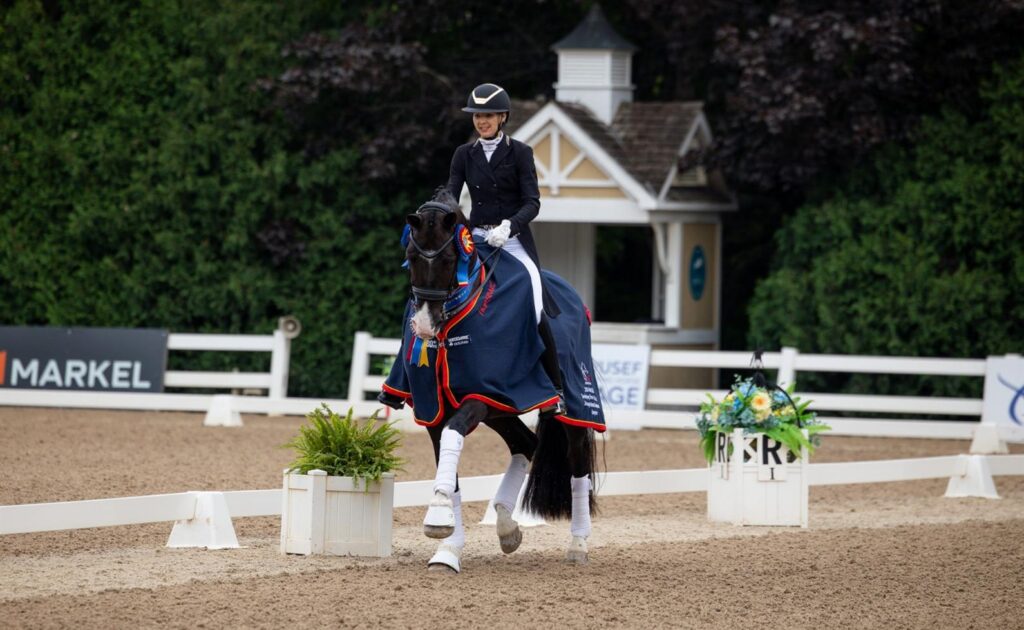
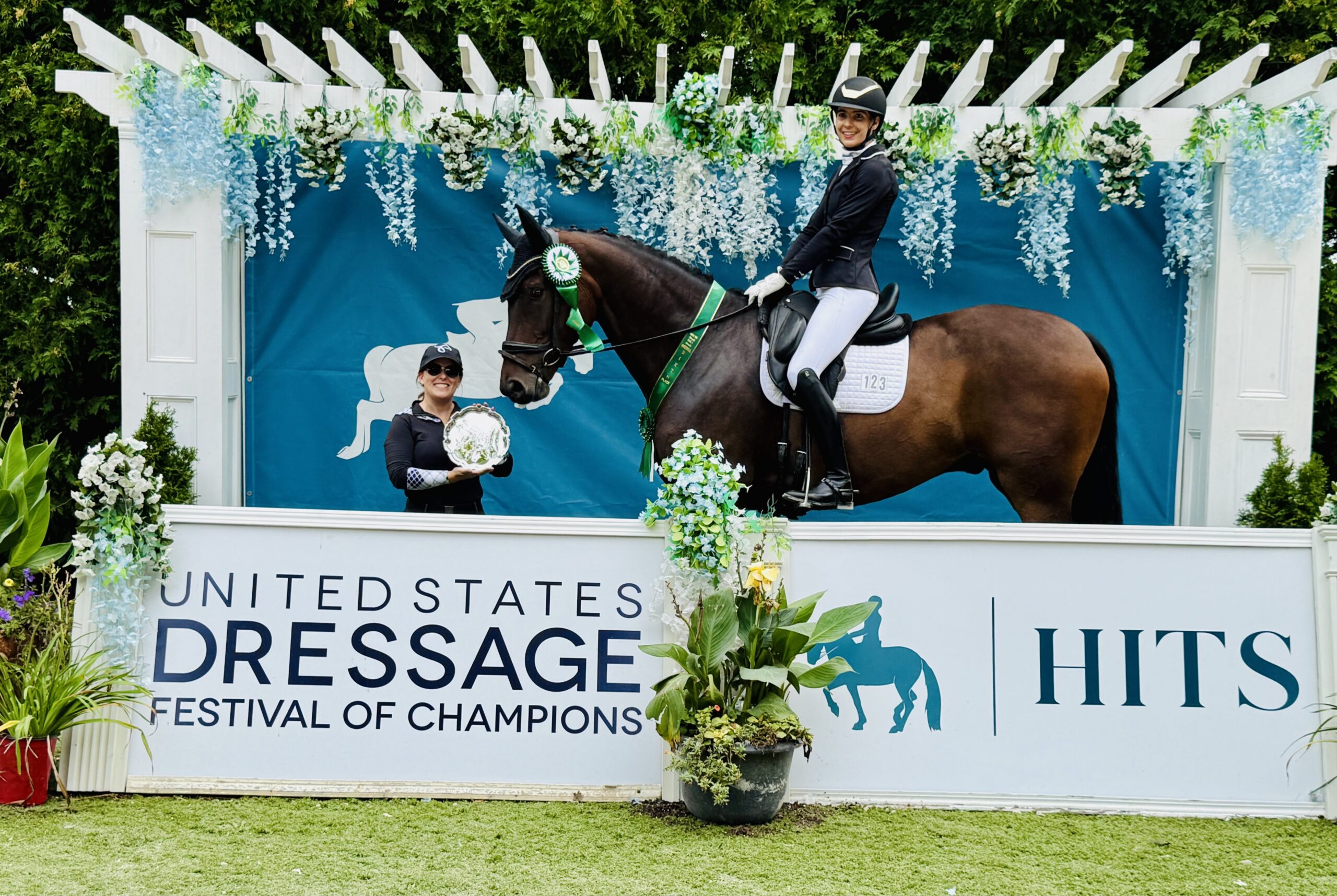
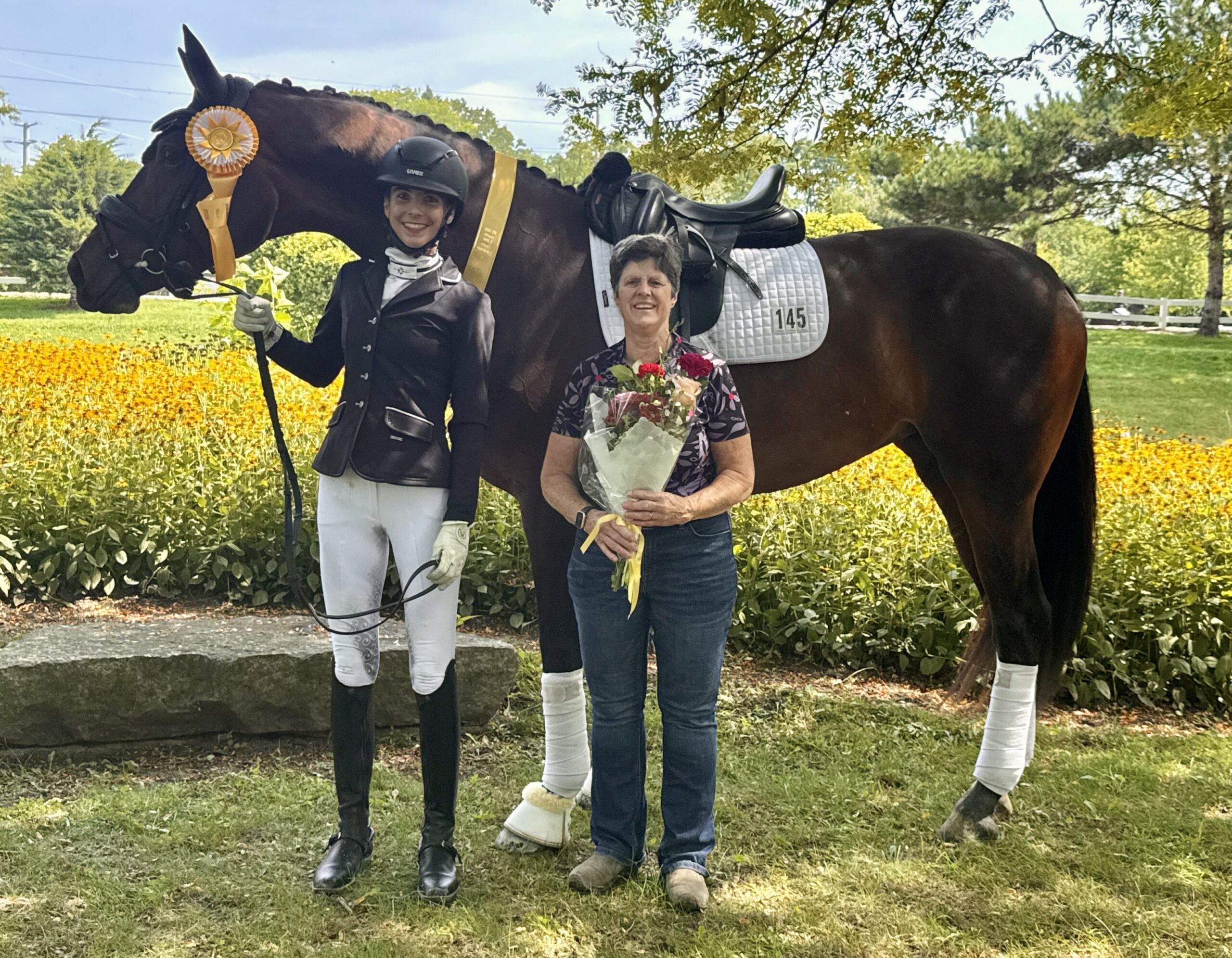
She took four of those horses to this year’s Markel/USEF Young and Developing Horse Dressage National Championships, held at HITS Lamplight Equestrian Center in Wayne, Illinois, in late August. There Batchelder won two titles: the Markel/USEF Four-Year-Old Dressage National Championship with homebred Hanoverian Frisky Business RH (Five Star x SPS Lovelyn, by Londontime), and the Markel/USEF Developing Horse Prix St. Georges Dressage National Championship with 7-year-old Belgian Warmblood Twan Vita Nova (Secret x Briliant, by Gribaldi), a gelding Batchelder owns with Andrea Whitcomb.
In addition, she placed third in the 6-year-old championship with her own and Katharine Feehery’s Ilona-D, a Danish Warmblood (Janeiro Platinum x Ivita DN, by Bogegardens Laurino), and another homebred, RH Sirius Brown (Sir Sinclair x Florence Royal, by Florencio I), was the highest-placed U.S.-bred horse in the 5-year-old division.
We caught up with Nora just after the show to talk about her two champions, the other exciting horses she took to Lamplight, her small but successful breeding program, and what’s next for the rest of her string.
Looking Back at Lamplight
Dressage Today: Let’s start by talking about your 4-year-old homebred, Frisky Business RH.
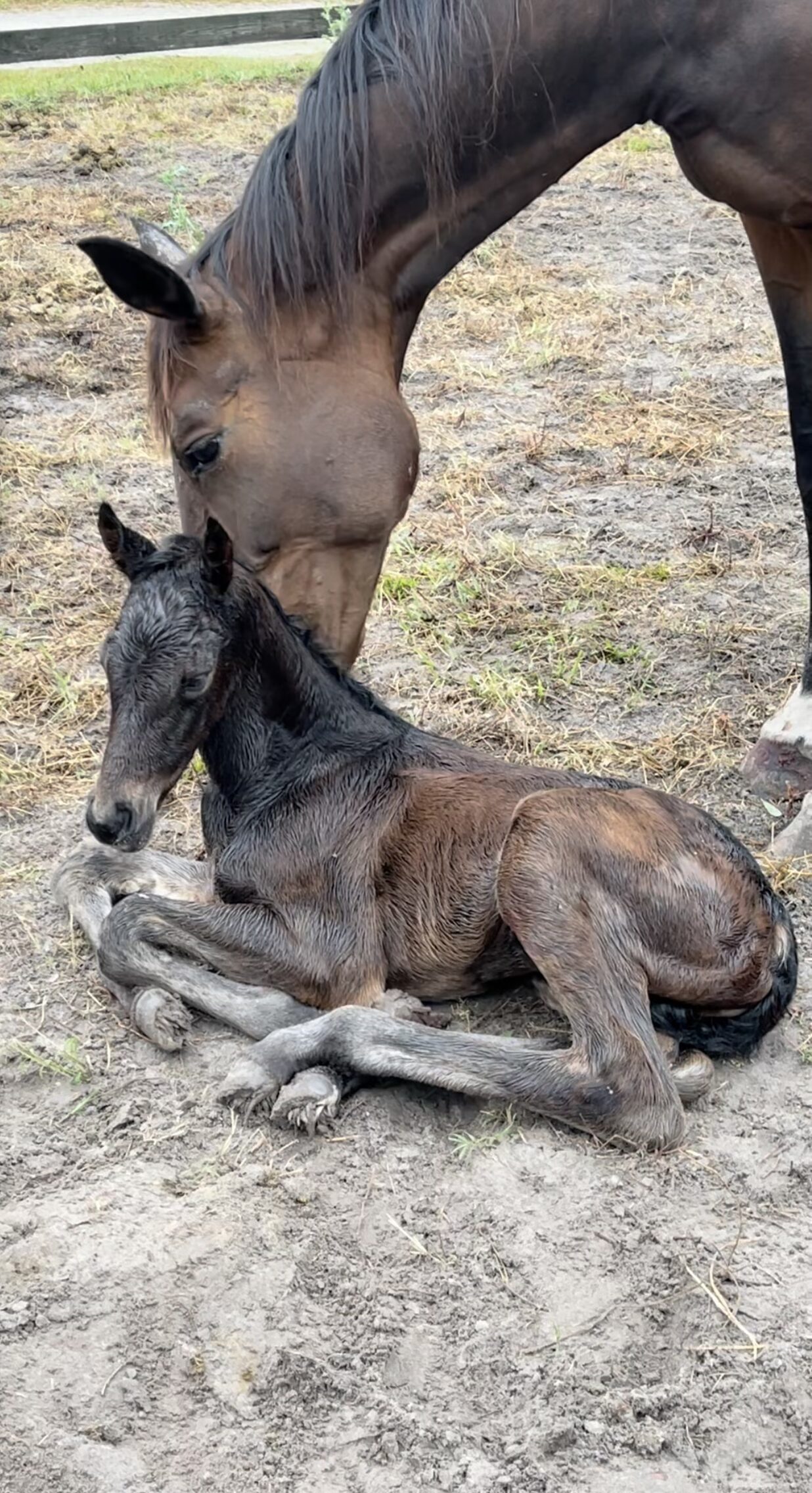
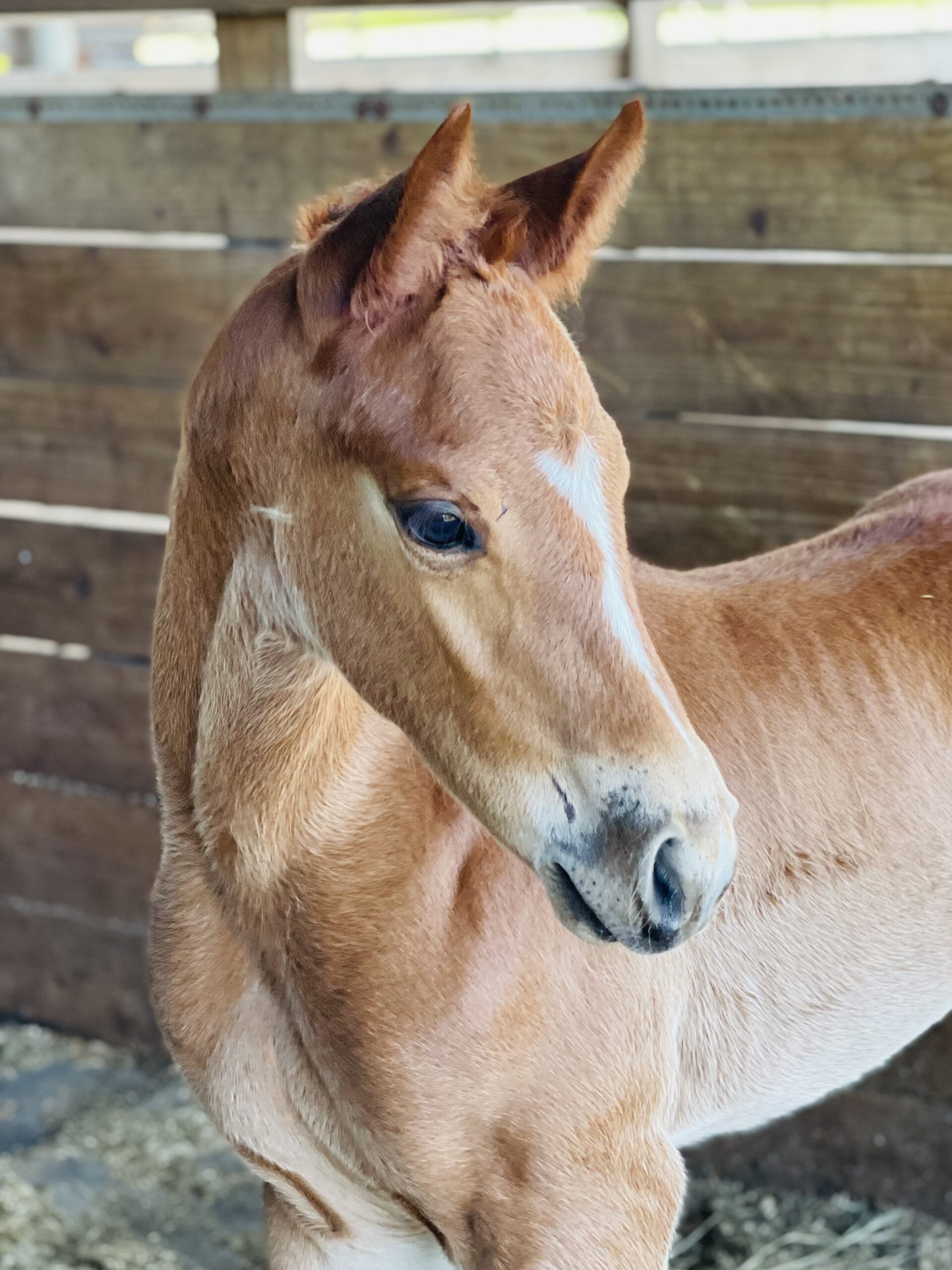
Nora Batchelder: She’s super cool. I love riding her. She’s so much fun, and it’s fun when the judges see what you feel. She feels so amazing, and I love the partnership I have with her. It’s really cool with the ones we’ve bred. I was there when she was born, or just a few minutes after, and I’ve known her for her whole life. We rode her mother, too, so it’s fun to watch them grow up out in the field and then get to ride them, especially when it’s something as cool as this week.
DT: Did you compete her dam, SPS Lovelyn, as well?
NB: I didn’t compete her. She’s one my dad picked out in Germany, and we thought maybe she’d be a broodmare or a riding mare. I rode her for a while, but she had an old injury, so it just made sense for her to go be a broodmare.
DT: And this isn’t Lovelyn’s first foal?
NB: No, this is her third foal. I have an 8-year-old out of her by Don Olymbrio doing all the Grand Prix work, and she’s super fun and cool, and I have a 5-year-old out of her by my old Grand Prix stallion, Bretone. I showed him at Grand Prix for, I don’t know, a dozen years. That 5-year-old is super cool and really smart too. Lovelyn’s babies are just so smart, which is really fun. They learn really quickly. They’re clever, and they like to do it, and they’re easy to train. They all feel like they’ve been ridden in a past life.
DT: What was “Frisky’s” weekend like at Lamplight?
NB: She’s so brave. She walks onto a showground like she owns the place. She’s a cool combination, because she’s very forward to ride, but also very safe. She doesn’t do anything. After the awards, I rode her back down to the barn with the cooler on, and there was a giant Brook Ledge truck there to take other horses home, and they let the air brakes off right as we were walking by. She’s just perfect. She just walked right past it, like, “I’m fine. No one can touch me.” She’s so confident in herself, which is really fun.
DT: Did any judges’ feedback stand out to you?
NB: They were really positive about all three gaits, and the harmony and the partnership, which is really rewarding to hear, because we try so hard to work on the communication and make everything easy. When it looks easy like that, it feels like you’re going in the right direction. I really believe in her and love riding her, and it’s so nice when the judges agree.
DT: Your Developing Prix St. Georges champion, “Twan,” how long has he been with you?
NB: I got him as a 4-year-old in Europe with my cousin Andrea Whitcomb—well, second cousin once removed, but she’s been a big supporter of mine my whole life and for a while with the horses. She and I owned Faro SQF together, and we did the 2019 Pan American Games, so it’s really cool to have another horse with her.
We did the 5- and 6-year-olds at Lamplight, and this year he’s 7, so we could have done the 7-year-old test, but I thought the Developing Prix St. Georges would be the better test to let him shine. He’s so trainable and confident in the work. He’s really good at the harder stuff.
DT: What’s it been like bringing him along?
NB: I think just getting him strong enough to do everything has been the challenge. He’s very clever and very smart—I like the smart ones—but it’s been about building up his muscles enough that he can sit for the pirouettes and strong enough for all the Prix St. Georges-level work. That’s what we’ve been working on this year.
He has a lot of power and can be very expressive, and I can get him a little up and hot, and he looks amazing. But at this show, I rode him a little underpowered on purpose. I wanted as clean a test as possible—nice and quiet—instead of going for the fanciest he can look. He’s young, and I wanted him to be confident and show the harmony and our partnership. We can add more of the fire later.
DT: You had two other horses at Lamplight, too. Can you talk about them?
NB: Yeah, the 5-year-old I took (RH Sirius Brown), another homebred, was the highest-placed U.S.-bred 5-year-old, and Frisky was the highest-placed U.S.-bred 4-year-old. Getting one of those is really cool—I’d never won one before—and this year we got two.
Then the 6-year-old (Ilona-D), she’s really cool. We bought her in Europe, like Twan, as a coming 4-year-old, with a long-term client, Kathy Feehery. Kathy rode with my dad for a long time, and now she rides with me, but I’ve known her my whole life. She wanted a horse for me to ride that would just be fun. She has kind of old- and new-school breeding, so she’s related to almost every horse I’ve ever ridden.
She was a really good girl at Lamplight. We were psyched to get her on the podium, too. We didn’t do the 4-year-olds with her since we’d just gotten her and weren’t quite ready, but we did the 5-year-olds, and now the 6-year-olds, and I was proud of her—she nailed all her changes at the show. With 6-year-olds, you can do the work at home, but it’s always a question of whether it’ll all happen in the ring. She did great.
On Prioritizing Young Horse Classes
DT: Tell me a bit about your program in general.
NB: We’re in Williston, Florida. We live here year-round now. We used to go back and forth between here and New Hampshire, but quite a while ago we sold the farm in New Hampshire because it was hard to move everything back and forth.
I do a lot of training. I have about 18 horses in training, and about half of them are mine and half are client horses. I have just the two broodmares, Lovelyn and “Florence.” The 4-year-old was out of Lovelyn, and the 5-year-old was out of Florence, so it was cool to have one from each mare at Lamplight.
We try to breed them both every year, but it doesn’t always work—sometimes we have two, sometimes one, sometimes none. My parents used to run a big breeding farm and bred a lot of foals. I just do a little bit now, just the two mares, because I have so many riding goals. It’s hard to do everything, so I do a little bit of breeding and a lot of riding. We used to stand our own stallions, but we don’t do that anymore, so it’s fun trying to pick the right match for each mare. It’s been exciting this year to have the two high-score U.S.-bred horses and a winner.
DT: You’ve clearly prioritized young horse classes and the championships. Why has that been important to your program?
NB: I have quite a few horses, and I pick the ones that feel ready. Some aren’t quite ready yet, whether it’s their training, or they’re just not mature enough in their brain to handle it at that age. Frisky was super precocious; I didn’t start her until September of last year. She’s a smart girl, way ahead of schedule.
I like the young horse classes, because in a lot of ways, they’re more forgiving. You can go out there and ride your horse, and if they lose focus, or the flower box is scary at the start of the test, the judges tend to let you get away with that a little more. You can teach them to go for it in the ring without worrying so much about making mistakes, which I think is a great thing.
I also think the tests are well designed; they ask the right questions for each age. For my training program, it feels like the horses are naturally ready for those tests at those ages. And going to Lamplight is just so much fun—the quality of the horses, the quality of the riders, the venue, the people who run the show, the USEF staff, the Markel sponsorship. It always feels like a big deal to be there. It’s on the calendar every year as a goal.
DT: Has training—and loving to train—young horses always been part of your background?
NB: I think what most of us love about this is the partnership with the horses. It’s so much fun knowing them their whole lives, or meeting them when they’re 3 or 4, and developing that relationship and way of communicating up through the levels. I find that really rewarding. I ride so many horses, and when you really get to know them, we have kind of a shorthand. I can get so much done in a short amount of time because we have that relationship.
A lot of times, less is more with young horses: 15 to 20 minutes, three days a week, and they learn so much, so quickly.
I just love training horses. I like training them when they’re babies, and I like training Grand Prix horses, and I just like horses. I have a corgi, but other than playing with my corgi, horses are it for me.
DT: With 18 in training, do you have help with the riding—a working student or assistant?
NB: No, not really. I rotate. I try not to ride all 18 in one day, but sometimes I do. I’m busy, but it’s a good thing.
DT: Do you have any big fall goals for your string?
NB: Probably not a lot of showing—mostly training. After Lamplight every year, the ones I take there get a bit of a break and then focus on what we’re working on for next year. I’m going to get a passport for Twan and think about maybe doing some small tour CDIs with him. He does some of the Grand Prix work already, but he’s young and needs time. So maybe we’ll do a little bit of CDI showing, and at home we’ll keep working on the rest.
DT: Any other horses in the barn you’re especially excited about?
NB: I have Nova; we did the USEF Grand Prix Dressage National Championship with her this year. We have some things to work out, but she’s only 11, so she’s still young and has a lot of Grand Prix left in her future. She keeps getting better and better, so I’m very excited about her.
I also have the 8-year-old out of Lovelyn, Dark Chocolate. We call her “Dinky” because she’s very short. She’s a little bit extra spicy. The work at home is really good, but we need to figure out how to horse show it, because she gets a little wild at a show. It’s not so much about the work; she just gets excited about being somewhere new, so I need to take her on more low-key field trips. She’s a cool horse, kind of like Frisky, but not as confident yet.
I have a lot of other nice young horses, too. I’m supposed to sell some of them, but I’m not very good at that. I have a 5-year-old by my old Grand Prix stallion who’s super smart; he already does tempis, and it’s so easy for him. I ride him like the other babies, maybe three days a week for 20 minutes, and he just learns so fast.
I also have a lot of great client horses. I think I’m going to take a small group of them to regional championships this fall. I love them all.