




 Team Prac
The best dressage riders often appear both remarkably stable and remarkably fluid at the same time, especially at the sitting trot. But what at first looks like a contradiction is actually a sign of efficient organization. These riders aren’t holding themselves together in the saddle. They are continuously organizing themselves around the horse’s movement.
When support comes from balance, coordination and skeletal organization rather than muscular holding, stability and suppleness stop competing with one another. Each begins to support the other. These are classical ideals in dressage.
It seems, however, that something has been lost in translation when riders try to achieve these ideals. Many dressage riders work incredibly hard off their horses to stay in shape for their time in the saddle. They strength train. They stretch. They practice yoga or Pilates. They stay fit and active and are committed to improving themselves physically and mentally for the benefit of their horses. These are important and considerate steps toward correct and fair riding.
But despite this tremendous effort, many of these very fit riders still experience stiffness in the saddle, difficulty sitting the trot, and fatigue through their lower backs and hips. Or they might find that they’re constantly holding themselves together to find stability in the saddle, which prevents the correct application of aids.
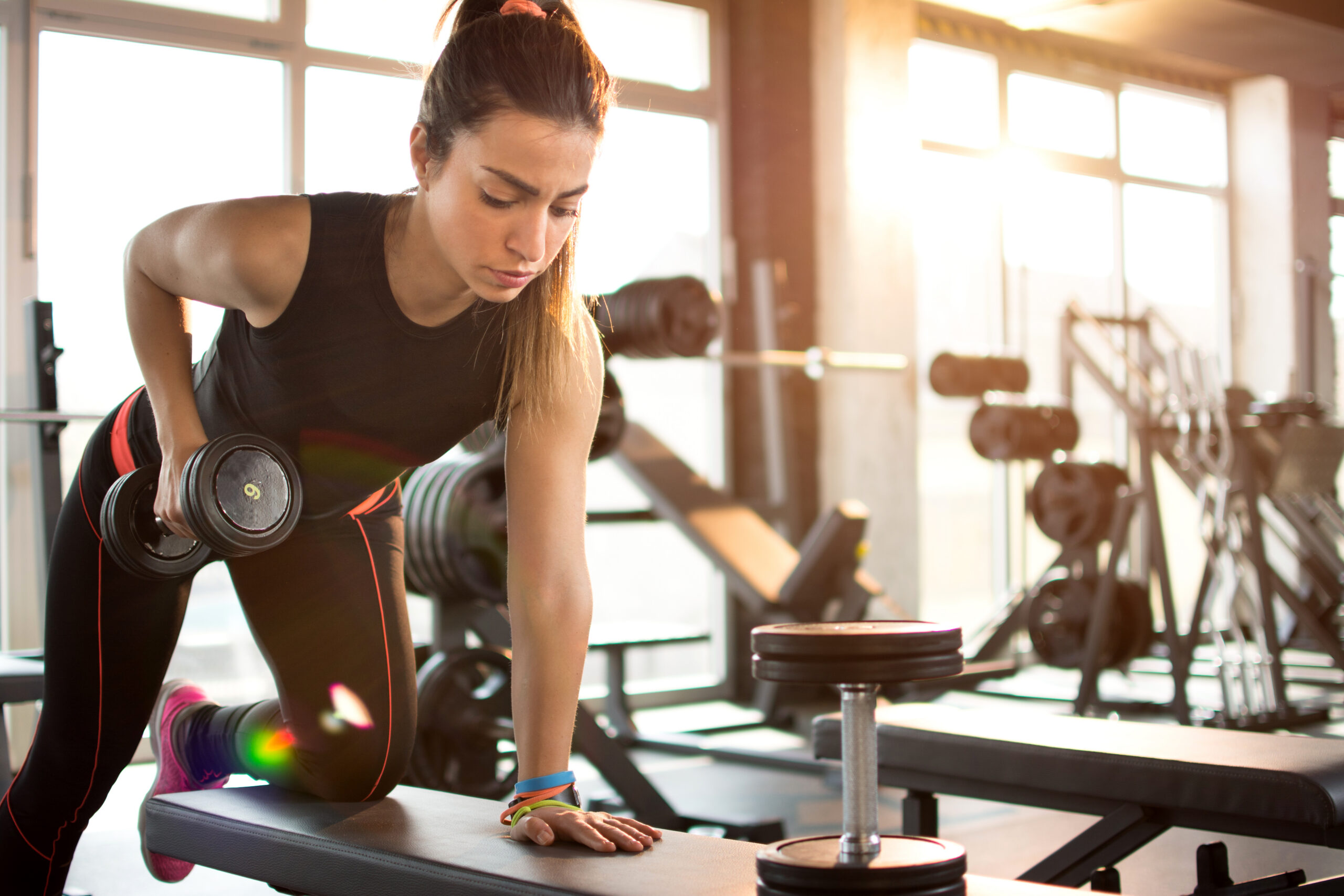
Ironically, one likely reason for this is that there’s been too much emphasis on the conventional ideas of core strength. Many riders unknowingly overuse their core muscles in an attempt to create stability, but true stability doesn’t come from bracing or the absence of movement. It’s created from your ability to continuously organize yourself around the horse’s movement with the least possible muscular effort.
Wake Up Your Body’s Intelligent Relationships
Many riders are surprised to learn that stability in the saddle doesn’t always need to be consciously manufactured. For example, try this simple experiment: Stand comfortably and notice the tone throughout your body. Then raise both your arms overhead like you’re reaching for something on a high shelf. Most people will notice an immediate change in their trunk and torso as the body naturally organizes itself in preparation for the movement.
Or try something even subtler. Stand quietly with one hand resting lightly on your abdomen and slowly look upward with your eyes. Despite not consciously engaging any muscles, you will likely notice a spontaneous change in tone throughout your body as you do this.
These responses reveal that the various human body systems share intelligent relationships that have developed through function and evolution. The nervous system is constantly organizing our balance and movement in ways that often occur below conscious awareness.
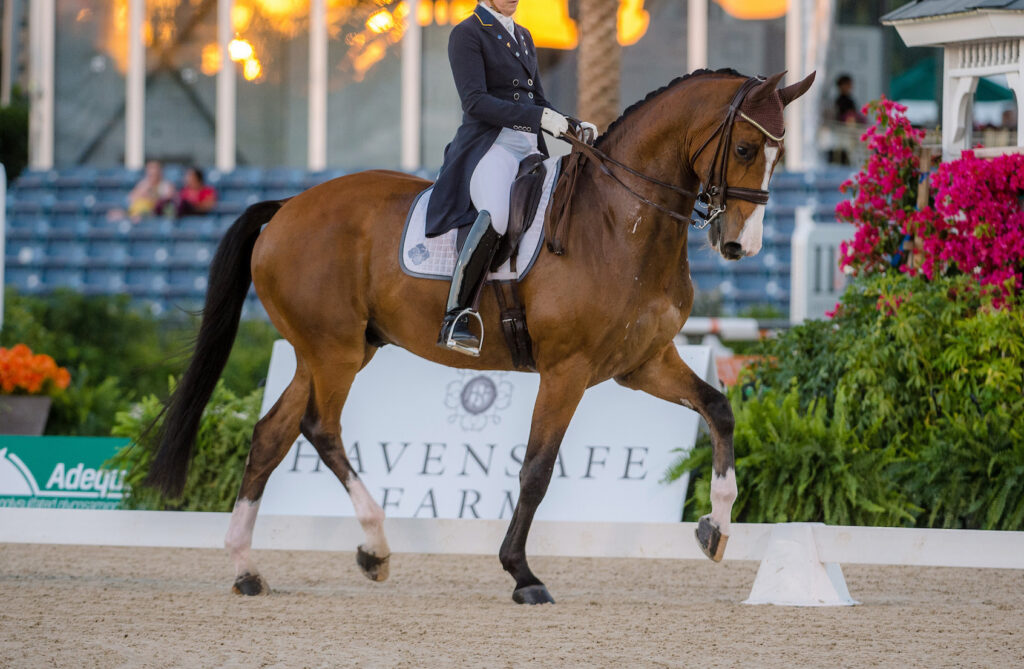
The Feldenkrais Method® can help riders rediscover these natural relationships. This somatic education system uses gentle, mindful movement to help riders improve their balance and coordination by developing deep self-awareness and reducing unconscious muscle tension.
Essentially, it helps restore the body’s ability to organize itself efficiently and appropriately. Riders often report that it makes them feel more supported and stable while also lighter and freer.
Don’t Confuse Rigidity for Stability
When riders attempt to lock themselves into position using excessive muscular effort, they frequently lose the suppleness, elasticity and pelvic mobility necessary to follow the horse’s movement harmoniously.
This is especially true in sitting trot, where riders will quickly find themselves fatigued and out of breath. Additionally, bracing in the saddle will cause your aids to become too loud and your body will become organized around gripping instead of becoming responsive, springy and efficient.
Research increasingly supports this perspective. A 2021 study, co-authored by equine biomechanics expert Hilary Clayton, BVMS, PhD, Dipl. ACVSMR, FRCVS—whose personal work has long emphasized the importance of rider pelvic organization and coordination—found that pelvic mobility and control were more closely associated with harmonious riding and equine welfare compared to static balancing in the saddle. It also concluded that horses ridden by riders with better pelvic mobility demonstrated fewer conflict behaviors and greater harmony under saddle.
Benefits of the Feldenkrais Method
In my program, I combine key aspects of the Feldenkrais Method® with my experience as a German Equestrian Federation trainer to focus on coordination, skeletal support, balance and efficient movement patterns to help riders feel stronger and more stable without unnecessary tension. Stability is viewed as the foundation for freedom rather than its opposite.
When the trunk is appropriately organized, the pelvis, legs and arms can remain supple and responsive. Stability becomes the condition that allows movement to express itself fully. The goal is not less support. The goal is a different kind of support. The best dressage riders are not trying to be stable or supple. They are continuously organizing themselves around the horse’s movement.
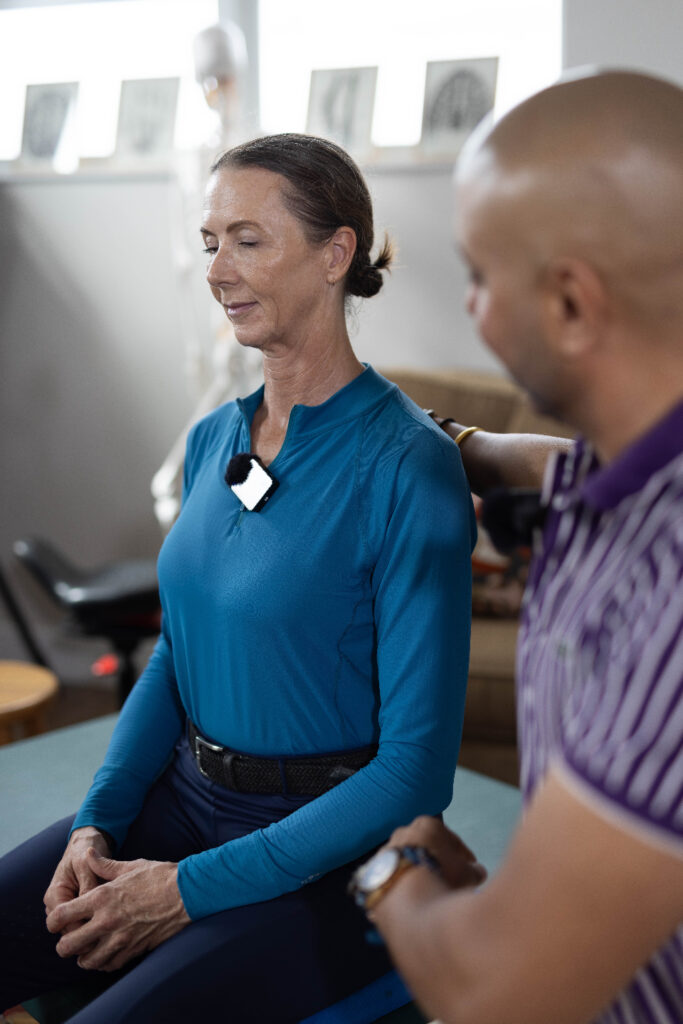
When stability and suppleness emerge together, horses can more easily find self-carriage and progress as happy athletes. For riders, the result is often a seat that feels both more secure and supple, which allows them to receive and transmit force more efficiently, move in greater harmony with their horses, and better absorb movement—especially at the sitting trot.
The experience of this youthful suppleness and freedom of movement can feel surprisingly emotional—and not because you’re chasing youth necessarily. It’s because it allows you to rediscover sensations you might have thought were behind you: fluidity, ease in sitting trot, elastic support, a responsive center, quiet power—and overall trust in your body again.
For More:
About Dave Thind
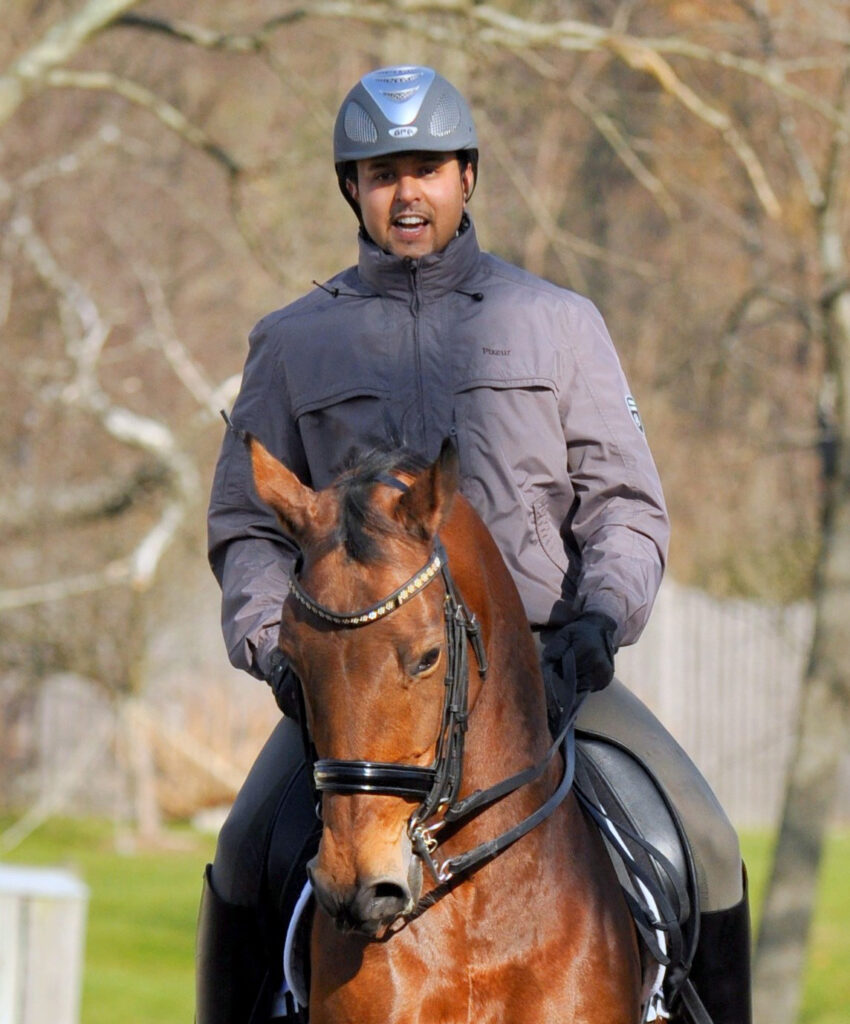
Born in Canada and trained in Germany, Dave Thind makes his home in Walpole, Massachusetts, as owner of Aspire Farm since 2013. Thind has himself competed at the Grand Prix level in dressage and jumping. He is a noted equestrian biomechanics authority, with several published articles and appearances as an expert guest or lecturer to his credit. He received his German ‘Trainer A’ license in 2007 with a nearly perfect score awarded to him from the German National Federation. He holds an International Trainer Passport Level III and is an Authorized Teacher of Feldenkrais Awareness Through Movement. You can learn more about the Dave Thind Method here.
To read Thind’s full Team Prac bio that includes his career highlights and fun facts about the dressage trainer, biomechanics expert and lifelong horseman, click here.