




 Team Prac
The sun bears down on your black jacket, and beads of sweat trickle from under your helmet. Your horse’s muscle-lined shoulders and braided mane glisten in the early afternoon rays, giving you a much-needed boost of positive energy in that hushed field of play where all eyes are turning towards you. The bell rings, and you and your steed trot lightly, calmly and steadily through the open white gate into the dressage arena.
At X, you stop, drop your head and hand, and salute the C judge. This step, you know, makes a critical first impression as you offer your respects to those who will judge your 3* test today. Not just to the C judge in front of you, but to all your judges: C, H, M, B, E… and the newest one, AI.
Futuristic? Not so much. At the 2026 Fédération Equestre Internationale (FEI) Sports Forum in Lausanne, Switzerland last spring, international delegates and experts alike shared their hopes and ideas about embracing artificial intelligence (AI) as a judging tool. Globally, comments were enthusiastic, as participants looked to the technology’s potential to bring precision and objectivity into the evaluation of a sport that’s remarkably subjective—and intensely criticized. AI, they say, could bring greater fairness and transparency to dressage. And—as the technology expands and improves—it might even help resolve crucial welfare debates.
It’s an exciting opportunity across equestrian sports, decision-makers agree. Still, there’s an important caveat: despite all their precision and potential, machines cannot—and should not—replace human judges.
“We’re closely monitoring the development of AI and looking at how it might possibly assist with evaluating technical aspects of tests,” FEI Director of Dressage, Para Dressage and Vaulting Ronan Murphy tells Dressage Today. “But we have really formed an opinion that we do not want an AI solution to replace a human; that’s the first thing.”
AI in the Arena: Strengths and Weaknesses
Dressage judges work from codified criteria, scoring on numerous qualities like collection, harmony, suppleness, movement quality, and technical aspects during a brief test involving two athletes of two different species—a nearly superhuman task. Multiple judges make results more reliable, but human eyes and brains simply cannot catch or process every nuance.
AI systems, meanwhile, can analyze movement frame by frame, including details that are too quick or subtle for people to assess reliably, says Gabriel Lencioni, DVM, an animal-welfare PhD candidate at the University of São Paulo in Brazil.
To draw conclusions from what it sees, AI turns back to the thousands of examples humans use to train it for this specific task. As such, before a system can evaluate dressage reliably, it needs standardized, human-verified examples of each criterion.
“AI can carry a lot of biases, depending on how the system is trained,” Lencioni explains. “So it’s really important to have a standardized dataset and a ‘ground truth’ for what we say is happening.”
That groundwork starts with the FEI clarifying its own judging guidelines. “We have to be clear on exactly what we want from each movement, so we can form a basis for a technical code of points that could then be used to educate a machine,” Murphy says.
Even then, AI remains better suited to measurable features than abstract qualities such as artistry and beauty.
“Yes, it can detect accuracy, count the changes, everything like that you want,” retired 5* dressage judge Mariette Withages said during the Sports Forum. “But if a horse is through and supple? That’s another question.”
Tech Assistance: The AI “Safety Net”?
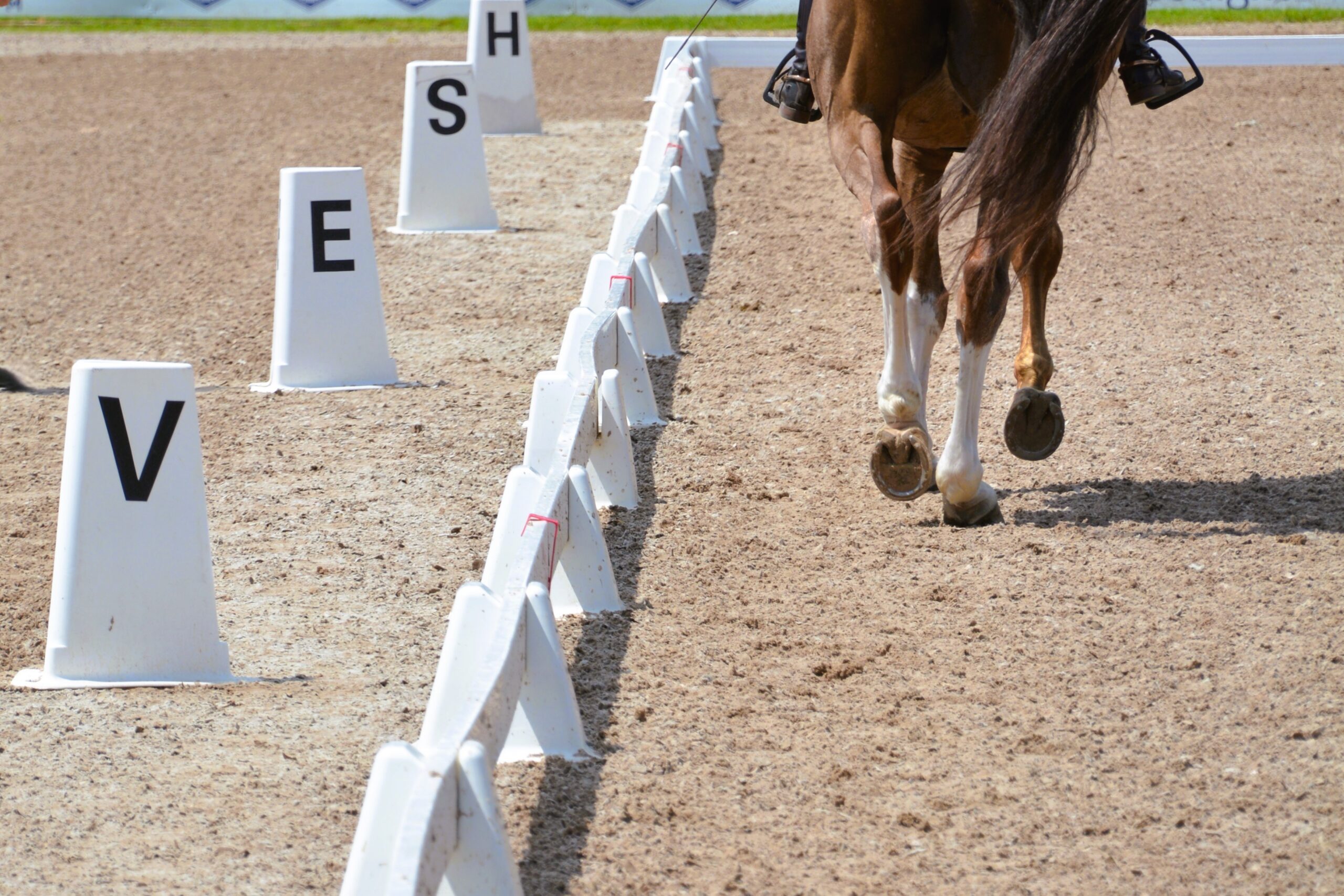
For now, the FEI envisions AI in a supporting role: tracking the horse’s path and, eventually, measuring circles and distances, counting passage steps and one-tempi changes, and flagging clear technical errors.
The FEI has already begun experimenting with two-dimensional camera tracking, which follows horses’ paths around the arena. After using similar technology during jumping competitions, it tested the tracking system during Grand Prix dressage at the London and Mechelen World Cup events in December 2025.
“We know it works,” says Göran Åkerström, DVM, FEI Veterinary Director. “But now we need to see how we can develop this to the next stage, looking at things like: How many steps were taken in the passage or pirouettes, and what distance did the horse move? How big are the circles the horses are making?”
Technology already assists officials in other subjectively judged sports, including figure skating and gymnastics, Åkerström says. “But dressage is more complex, because we have both an equine athlete and a human athlete,” he tells DT.
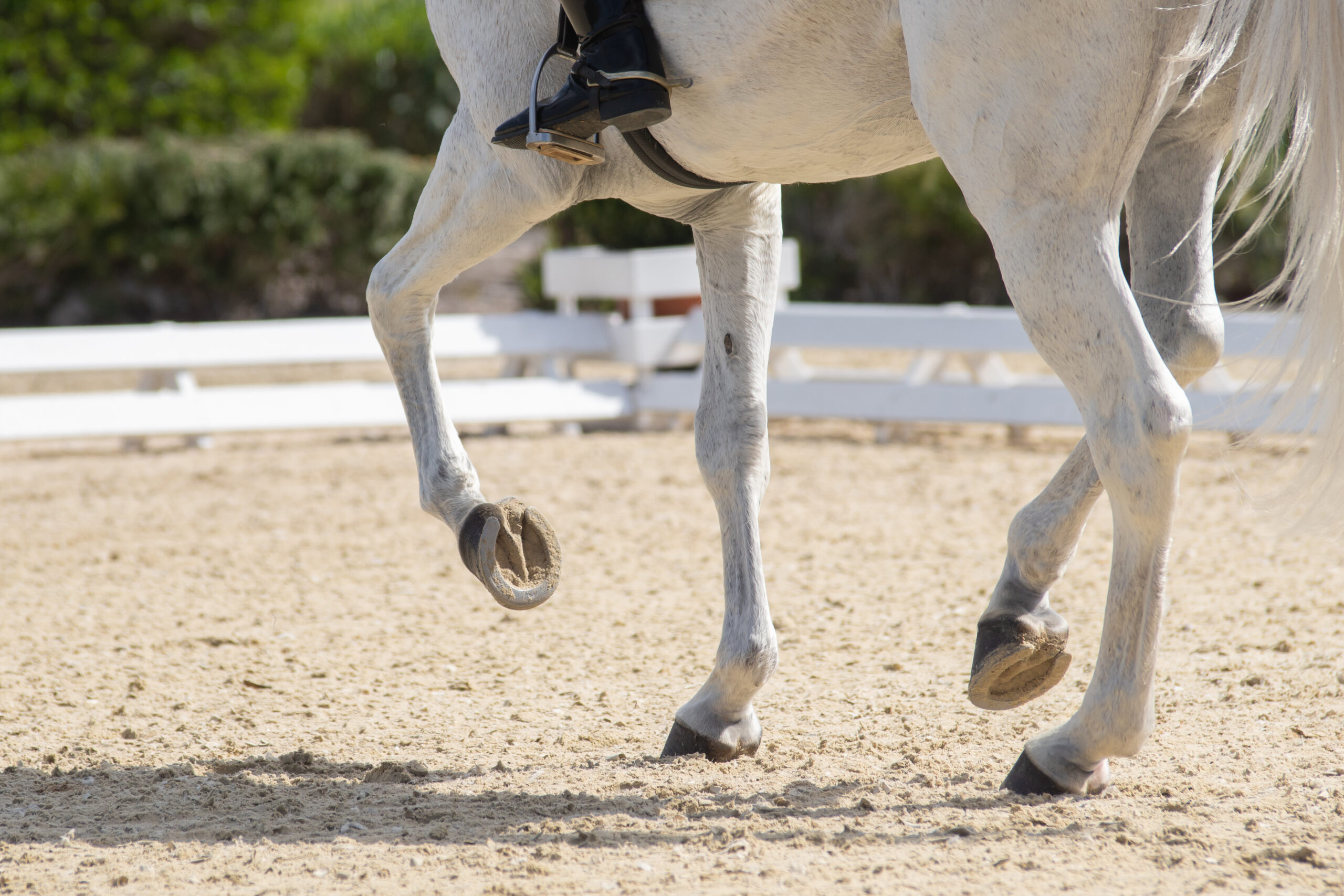
Such a system could function like the Judges’ Supervisory Panel (JSP), according to Raphaël Saleh of France, president of the Ground Jury at the Paris 2024 Olympic Games and member of the FEI Dressage Strategic Action Plan Working Group. At major championships, this panel reviews scores and video footage to correct definite technical or counting errors—not to reassess subjective qualities. Because JSPs are mandatory only at the highest-level events, AI could potentially provide such a “safety net” much more widely.
“If we have artificial intelligence, we could have it at all shows and for all levels,” Saleh told Sports Forum delegates. “It could really help make it clear for everyone.”
Welfare, Evidence, and Social License
Eventually, as AI and equine behavior research advance, AI might even help officials assess equine welfare—and provide evidence that the sport is protecting its horses.
Lencioni has spent the last few years training AI to recognize signs of pain in horses standing in stalls, with the aim of extending the work to ridden horses. “We aim to build this AI tool as an objective way to measure and benefit equine sports,” he says.
Potential applications include analyzing facial expressions, gait asymmetry, and head and neck position. But first, researchers must reliably distinguish signs of pain or distress from normal athletic effort. “One of our strategic focus areas is trying to decipher the difference between competition exertions for equine athletes and conflict behaviors—particularly those caused by the way a horse is ridden,” Åkerström says. “The difficulty is that this is not a clear area.”
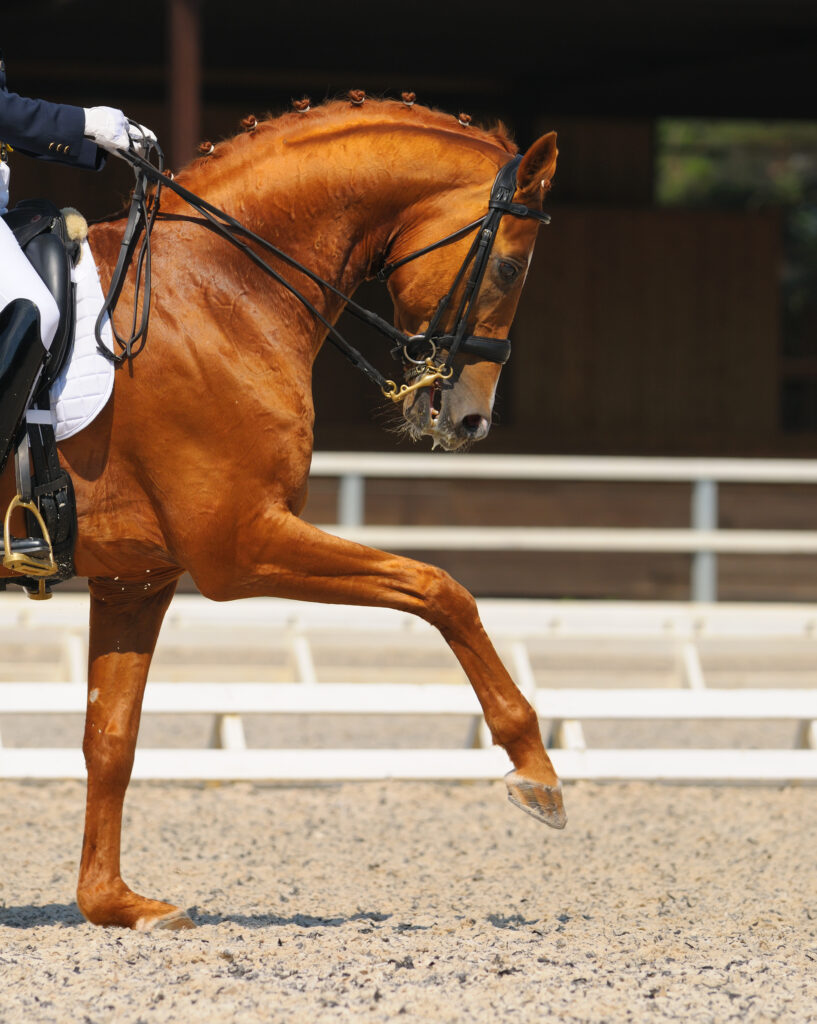
Sue Dyson, MA, VetMB, PhD, DEO, FRCVS, former head of Clinical Orthopaedics at the Animal Health Trust Centre for Equine Studies, in Newmarket, England, agrees. She co-developed the 24-behavior Ridden Horse Pain Ethogram, and she cautions that facial expressions must be assessed over time. Ears held back or a repeatedly opened mouth can be significant, for example, whereas a single image might mislead. Dyson and her colleagues are currently working on an AI program that assesses ridden horses’ facial expressions. Automated lameness evaluations based on gait asymmetry might be more problematic, however, because many high-level horses move asymmetrically but are actually pain-free.
Head and neck angles may prove more straightforward to measure, according to Dyson. “At the moment, many horses are winning upper-level dressage with their heads behind the vertical, which is contrary to FEI recommendations for judges,” she says. AI could flag those horses—and even help train judges to recognize the position themselves.
Reliable welfare measurements could also support dressage’s social license to operate by making decisions more transparent and demonstrating whether reforms actually improve horses’ experiences. “If you want to show that, critically, you’re supporting and enhancing horse welfare, AI holds real potential to help identify the change you’re having, and provide an important evidence base for that change,” Roly Owers, MRCVS, CEO of World Horse Welfare, in Norfolk, U.K., tells DT. “For us, that’s a real positive.”
Take-Home Message
AI is unlikely to replace dressage judges, but it could become a valuable second set of eyes, our sources say. By measuring paths, distances, steps and other technical details, it may help judges catch errors and apply rules more consistently. Eventually, it might also support welfare assessments—but only once researchers can reliably distinguish pain and conflict from normal athletic effort in horses.