




 Team Prac
Whether you are shipping your horse to Florida for the show season or moving permanently to a new home across the country, careful planning is necessary to ensure the health and safety of your equine partner. From selecting the right shipper to packing your equipment, there are many questions that need to be answered throughout the process.
In Part 1 of this two-part series on traveling long distance with your dressage horse, our four experts help you navigate the many factors to consider including transportation options, when it’s best to travel and how you can help prepare your horse for his journey.
Choosing a Mode of Transport
Plan early: As soon as you have a long-distance trip on the calendar, you’ll first need to determine if you want to ship your horse by land or air. Time is your friend here, especially during peak season when countless horses are traveling to and from states like Florida and California, so the sooner you can decide if you need to work with a professional shipper, the better your chances of reserving a transport spot on your ideal travel dates. “In the spring, everyone is leaving Florida, so it’s very difficult to find a spot on the flights available,” Karin Ahlqvist, transport manager for international horse-transport company The Dutta Corporation, explained.
Transport: You need to consider all aspects of how your horse is ultimately going to get to his final destination. This usually involves a combination of privately owned trailers, commercial air-ride trailers with air suspension for a smoother ride and/or air travel. For a local show or a short haul, your personal trailer is probably the easiest mode of transportation, but air-ride trailers are better if your horse will be traveling for a longer journey.
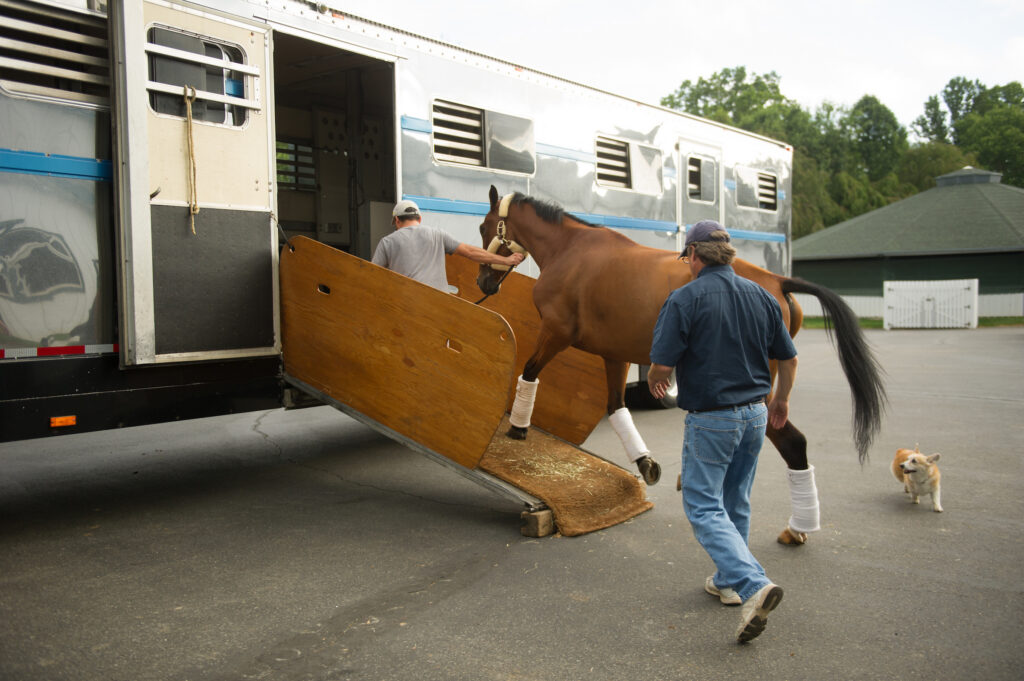
While flying takes time at the airport, but Ahlqvist says there are times the wait is worth it. “The cost is the biggest reason why people don’t fly. It’s expensive—almost as much as it costs to fly to Europe—to go even a short distance like from Maryland to Florida,” she noted. “In the end it would put more stress on the horse than taking an air-ride trailer. Even for short flights, horses have to be at the airport very early.”
Ahlqvist encourages owners to consider what their horses are used to and will be most comfortable with depending on their temperament and any health concerns. Nervous horses or those who’ve never flown before will likely find traveling by air-ride trailer much less stressful. Once you’ve determined your mode of transport, you might also have to decide whether your horse needs a full box or if a half stall will suffice. If you have the choice, select the stall type your horse is most accustomed to traveling in.
Scheduling Your Horse’s Travels
Now that you have your method of transport, you need to decide when your horse is going to travel.
Consider the ideal ship date: When scheduling your trip, keep in mind that many required vaccines need to be done at least 30 days in advance. “A horse that is up to date on shots doesn’t need as much preparation time,” Ahlqvist said. “Additionally, a well-traveled horse doesn’t need as much recovery time as an inexperienced horse that might find the new experience quite stressful.”
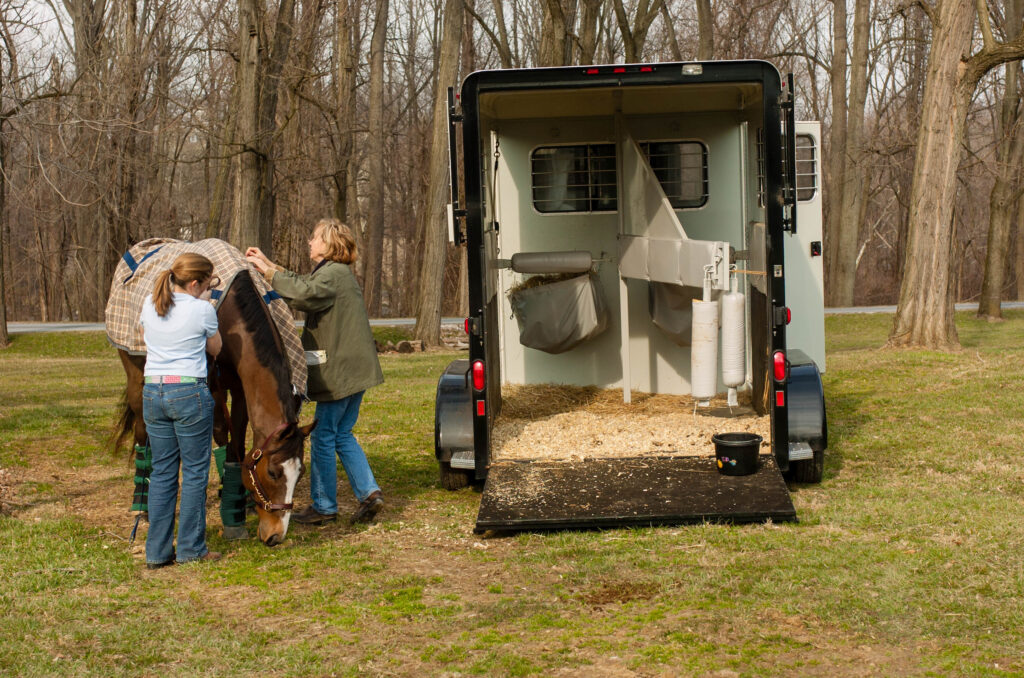
Account for show dates and schedule downtime: This is most important if you’re going to be attending a horse show or other major event soon after you arrive at your destination, as you have to account for the change in your horse’s work schedule. Ruben Palomera, former groom to U.S. Olympians Debbie McDonald and Adrienne Lyle, points out that horses can benefit from a lighter workload before their trip.
When dressage trainer and Florida resident Caroline Roffmann attended the 2012 National Young Horse Championships in Lamplight, Illinois, she planned her trip around her horse’s work schedule and picked a Tuesday ship date for her weekend show. “I allowed him to rest the day of shipping with just hand-walks and grazing,” she noted. “Upon arrival, I hand-walked and grazed him later in the day. The next day we hacked and had an easy day. The third day after arrival, we rode lightly and headed toward normal work.”
Packing and Preparations
Now, you’re ready to start gathering everything your horse will need for his journey.
Coordinate shots and medical paperwork: Coordinate with your veterinarian and shipping company to make sure your horse is up to date on his shots and you have all the appropriate paperwork for his journey.
Pack securely: Whether you’re flying or trailering, Meaghan Byrne, dressage trainer and former groom to international competitor Catherine Haddad-Staller, advises making sure every bit of your equipment is packed securely. “Use trunks with secure lids and make sure nothing is falling out or loosely packed. When loading the equipment into the plane or trailer, make sure to use bungee cords or rope to secure everything in place,” she noted. “If something comes loose and rolls under your horse’s feet, it can be very dangerous and cause serious injury.” Even if it doesn’t interfere with your horses, you also don’t want to ruin your expensive equipment.
Check the travel temperatures and bring appropriate blankets: Look at the weather forecast and ask your shipper what the temperature will be in the transport stalls. Ahlqvist says there are no special requirements for what horses must wear on planes or trailers. “We encourage people to ship their horse in whatever they are used to. However, horses don’t usually wear blankets when they fly because it’s air-controlled and can get pretty warm inside. If they do, it’s a very light sheet, but we usually recommend going without. You always can store a blanket for them to use when they get off-loaded.”
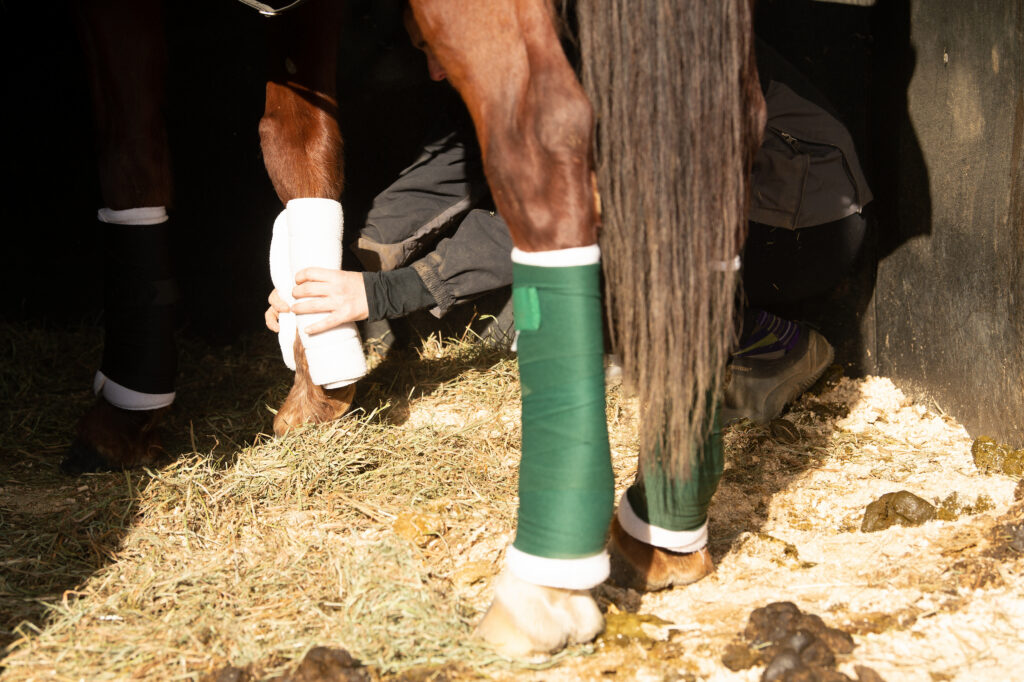
Plan to wrap or boot your horse appropriately: Horses who are frequent fliers and accustomed to wearing wraps, tend to wear them in flight. “But horses that don’t fly a lot don’t usually wear wraps, and the partitions make it hard to adjust them if a horse kicks,” Ahlqvist said. If your horse typically wears wraps or boots when trailering, use them on long-distance trips. “If your horse isn’t used to wearing boots or wraps during shipping and you put them on and he starts kicking, it can cause injury,” she cautioned.
Gather maps and bring a GPS: Even if you are traveling by plane, you will most likely have to trailer to the airport. “Make sure you have the address of each stop along your trip,” Byrne advised. “Print out directions ahead of time and have your GPS handy. Technology is a wonderful thing, but it can malfunction. There is nothing worse than being in a remote area and losing your GPS signal, so always have a backup plan that includes written directions to your destination and appropriate contact numbers.”
Takeaway
Once you have your equipment secured, your medical paperwork in order, travel gear prepared and your GPS in hand, you’re ready for the final countdown to travel day. Remember that your veterinarian, shipper, barn manager and trainer are all great resources for a long-distance trip with your horse, and you shouldn’t hesitate to ask them for professional advice when planning.
In Part 2 of this series, we’ll look at your horse’s nutrition, hydration, grooming, insurance and post-travel therapy needs during and after his long-distance journey.