



 Team Prac
Coordinating all the moving parts of yourself and your horse is no easy feat. However, imagining your horse’s body as three separate sections can make things more manageable. Here, Stephany Fish Crossman, a LEVEL 3 Ride With Your Mind Accredited coach, rider biomechanics expert and Team Prac dressage trainer, describes the horse’s thirds and how you can positively influence your horse with your position.
Q&A
Q: Could you explain how horses’ bodies can be divided into thirds (front, middle and back), and what riders can do to fix the third that is disconnected?
Michelle R., Florida
A: It’s a step away from rider biomechanics, but it’s a way that we start to integrate the levers and pulleys of the rider with the levers and pulleys of the horse.
If you were to imagine dividing the horse into thirds, from the horse’s chest to right behind the elbow is the front third. Right behind the elbow to the swirl where the stifle meets the belly is the middle third. We sit on the middle third. And then from the swirl back, that’s the back third.
Between each of those thirds, we have a seam where those two thirds meet. The back third and the middle third is the back seam, and the front third and the middle third is the front seam. A horse’s center of gravity is in the center of the front seam. The better riders stay close to the horse’s center of gravity, the better a package they are for the horse to carry, the less they are affecting the horse’s balance in a negative manner, and the more they are able to affect the horse’s balance in a positive manner.
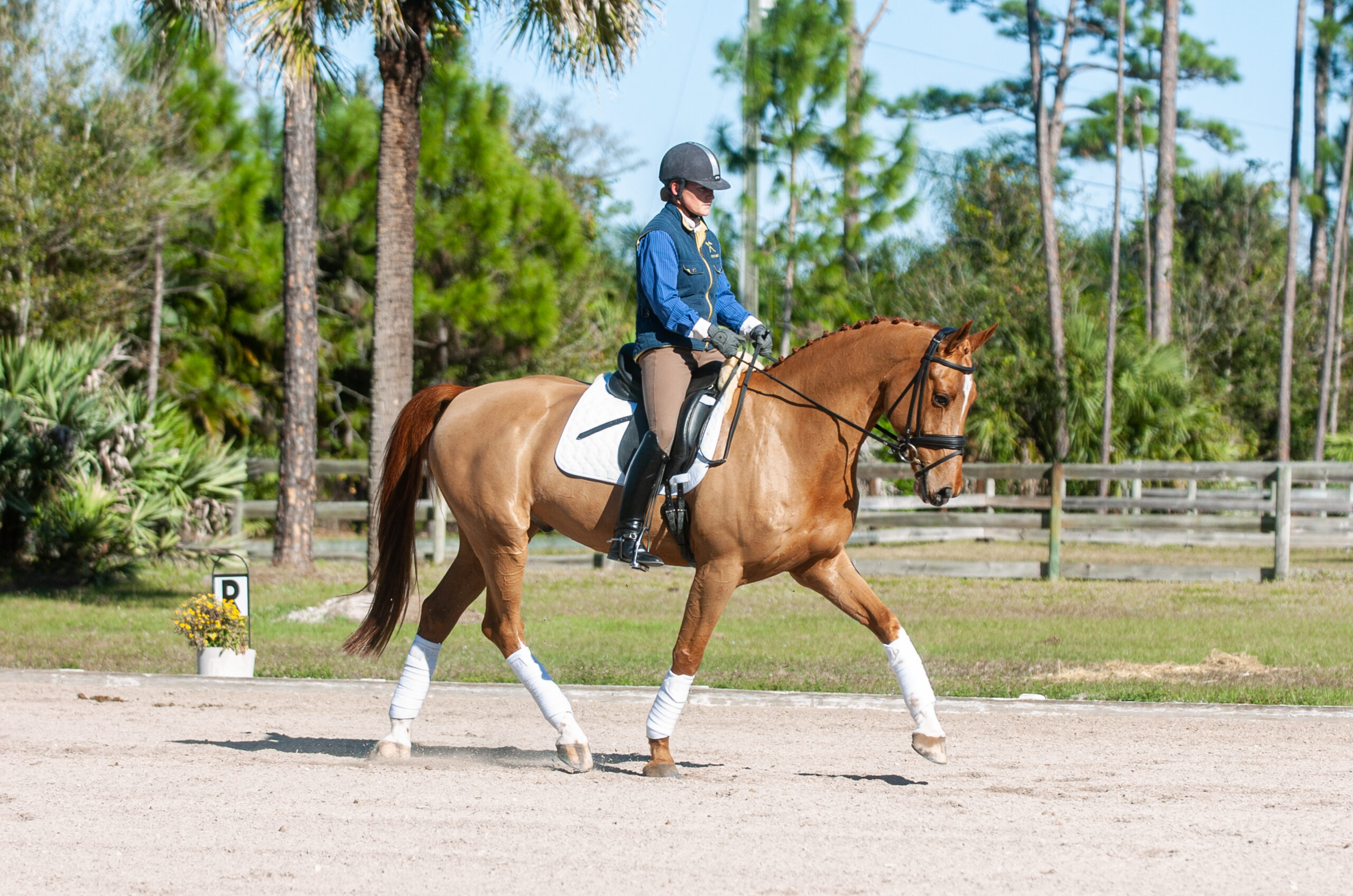
Thinking about the different parts of the horses, the front third is usually the trickiest part. The neck happens to be attached to the front third, but it’s not actually part of the front third. It’s kind of like the rudder on a boat. Everybody’s probably been in a canoe. That’s a boat that doesn’t have a rudder. But if you’re lucky, you’ve also been on a yacht and that has a rudder to steer. Either way, they’re both boats.
How we manage to keep the front third and the middle third attached directly corresponds to how the horse is able to extend their neck from the top of their body. There’s that balance that they get from their neck.
There are numerous ways riders use their seats to help keep the thirds attached. The thighs are a big part of it. Remember that I mentioned the thighs as the seatbelt of your seat. First and foremost, the thighs are there to keep you attached, but then the more that you stay attached and develop your muscles to keep you attached to the horse without as much thought, then your thighs start to have different jobs. Collection comes from the thighs up into the torso, so that’s being able to utilize your thighs in a directional manner. It’s not visible; it’s not something people are going to see. It’s more of an isometric engagement of your muscles. You can literally start to draw the horse’s body together with your thighs because they are part of your seat.
That’s kind of a basic way of giving you an example of how the rider’s levers and pulleys can help to keep the horse’s thirds attached and traveling together in a balanced manner.
For More:
This Q&A is an excerpt from our Dressage Today+ Members-Only VIP Webinar: Rider Biomechanics 101.
Dressage Today+ members can watch the full recording of the webinar here. To sign up for Dressage Today+, click here.
For more articles with Fish Crossman, click here.
About Our Expert: Stephany Fish Crossman
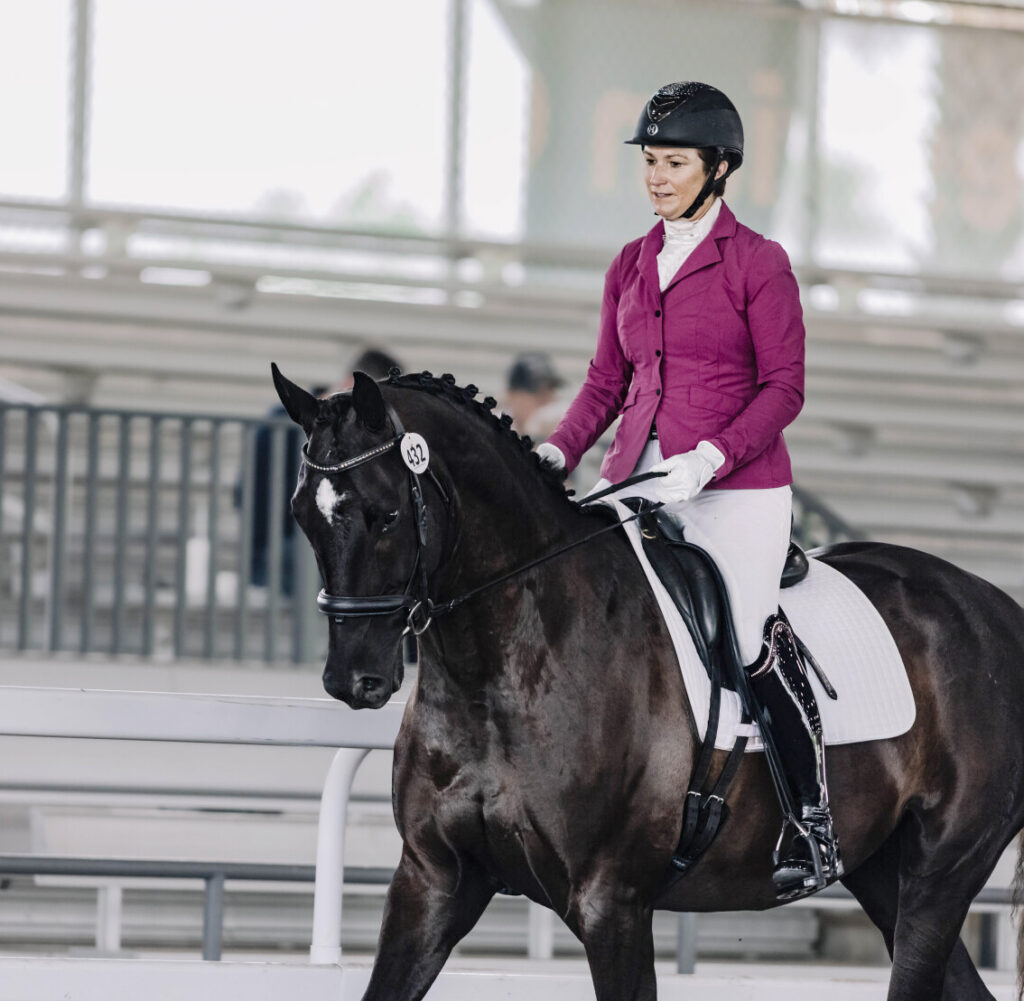
Stephany Fish Crossman, who co-hosts the Dressage Today Podcast, began riding as a young girl in Maine, and hasn’t gotten off a horse since. Besides a brief stint in the hotel industry, Fish Crossman has worked for and with trainers at all levels, from grass roots Pony Clubs to several different Olympians. She attended the former International Academy of Equestrian Studies in Warendorf, Germany, where she graduated with her National Trainer Certificate. She’s also a USDF bronze and silver medalist as well as one of only two LEVEL 3 coaches worldwide for Mary Wanless’ Ride With Your Mind Biomechanics System. She teaches clinics all around the country and runs a small training business, Serendipity Dressage, in Okeechobee, Florida.