




 Team Prac
Q: My horse and I are showing at First Level, and our centerline scores are all over the place. My gelding tends to drift as we turn onto the line, and then he sometimes anticipates the halt, so the judge’s first and last impressions of our test aren’t what I’d like them to be. How can I ride straight, accurate centerlines that earn good scores while showing off his gaits and our partnership? And how can I best practice centerlines at home?
~ Debbie N., Colorado
A: You’re definitely not alone, Debbie. A lot of dressage riders at all levels struggle with similar problems on the centerline. We actually don’t get better at riding straight by drilling straight, straight, straight all the time. Instead, we get better at going straight by teaching our horses to properly bend and respond to the aids.
You need to make sure you educate your horse, so he knows the correct response to the degree of leg pressure you apply. Additionally, you need to make sure your receiving aids are there to collect your horse’s forward energy.
To help with all these things, I recommend doing lots of leg-yielding, leg-yield zigzags and turns on the forehand. Incorporating shoulder-in on the centerline can also be helpful. My longtime trainer and mentor Charles de Kunffy constantly had me do shoulder-in on centerline—even with 5-year-olds who I could hardly get around the arena—because it’s about getting the horse between the aids.
Charles taught me that you have to get to the heart of the problem as to why your horse isn’t straight, and a lot of times it’s simply because he’s not equally strong and educated in his hind legs. That’s why your horse might drift or rush through the tempo.
Also keep in mind that anything you feel in the reins is a direct reflection of what’s happening or not happening in your horse’s hind legs. You need to work on strengthening his hind legs and getting them better connected equally to both sides of the bit.
Avoiding the Drift
The first two things I focus on in preparation for riding the centerline is making sure I’m sitting equally on both of my seat bones and that my horse is connected from his hind legs to the bit.
To maintain straightness, think about riding your horse in a corridor—almost like a safe house—that you strive to stay centered in. Your femurs serve as the roofline, and your calves are the walls. Then, focus on keeping your horse inside the house using the stability of your seat and legs.
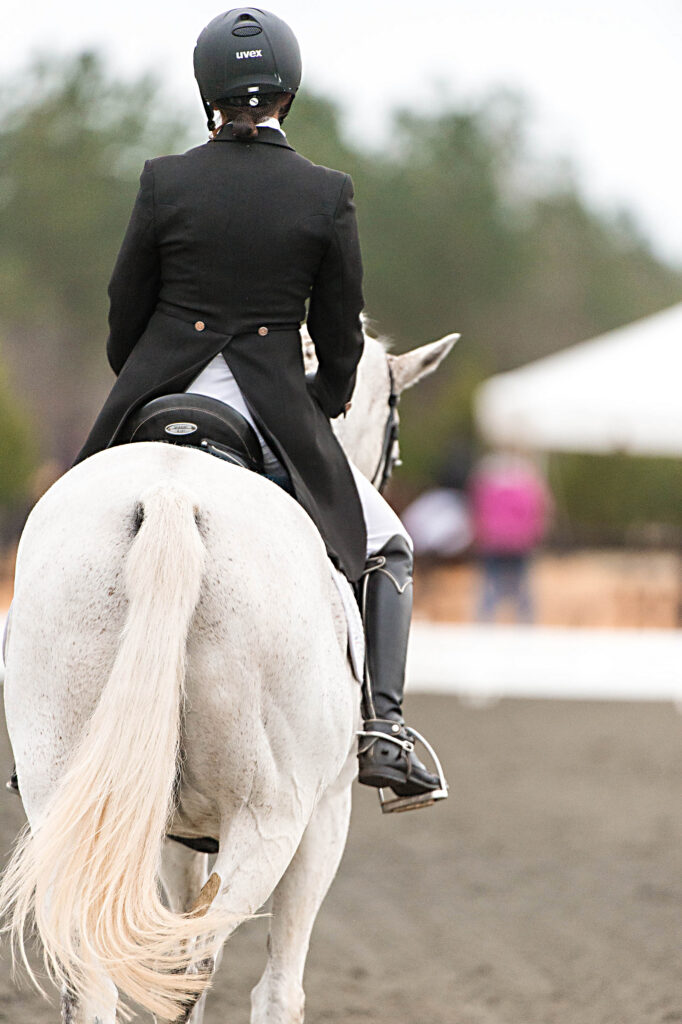
To address drifting, I suggest working your horse off the rail. One of the main reasons horses drift on the centerline is because we allow the rail to do some of the work we should be doing. A lot of times when riding on the rail, horses will be responsive off the inside leg, but because the wall prevents them from swinging their hind ends to the outside, it’s easier to neglect making sure your horse is responsive off your outside leg.
Then, when you go out into the open ocean of the centerline after relying on the wall to do half your job, what happens? Your horse starts to drift. So, this is a clear indication that you’re not using your network of outside aids correctly and have been relying on the wall to cheat a bit.
Incorporating more centerlines into your work at home will push you to use both of your legs more evenly, and this will help you become more aware of the moment your horse starts to drift.
It’s also important to consider if one of your legs is stronger than the other, as your horse might drift toward your weaker side. If you tend to pull on one rein more than the other, or your horse is stiffer to one side, that can also result in drifting.
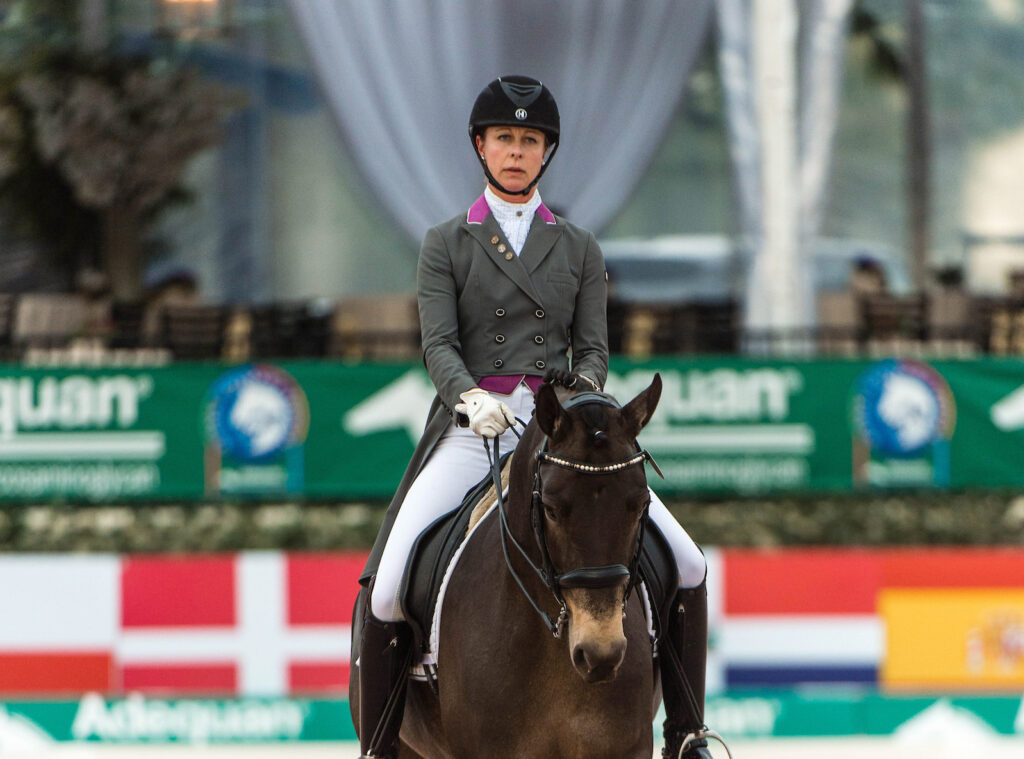
Try to become more aware of your aids and make sure to balance the active aids—your leg, seat and hands—with your receiving aids, which are the cues you use to channel your horse’s forward energy. If your horse starts to fall to the inside or outside as you’re turning up the centerline focus on finding that ideal balance between the aids.
To test my active aids, for example, I make sure my horse is obedient off my inside leg. If I slightly apply that leg, and one of his ears flicks back toward me, I know he’s listening. When you add inside leg, you also want your horse to be soft in his rib cage and engage his hind legs.
It’s equally important to make sure that you receive your horse’s energy into your outside thigh and outside elbow and ring finger. This allows you to capture his energy and keep it contained, so he’s not overly responsive off the inside and doesn’t leak to the outside.
Practicing turns on the forehand can help your horse become more obedient to your inside leg while also making sure you can organize him and receive that energy into your outside aids.
Preventing Anticipation on Centerline
To address your horse’s tendency to anticipate the halt, I’m a big fan of practicing lots of transitions on the centerline. Back when I was riding with Gyula Dallos in Budapest, we did a thousand centerlines—and we did transitions all along the centerline. Before I trained with Gyula, I think I was almost saving the centerline for special events, my tests, and that didn’t work out very well.
Practice riding more centerlines and quarterlines at home and incorporate trot-walk-trot-halt transitions on those lines. This will teach your horse to be more on your aids and less on the test; you want him to anticipate your cues, not the pattern he’s practiced a thousand times.
The leg-yield zigzag is a great exercise to get your horse listening, on the aids, and not anticipating the centerline for X, halt, salute.
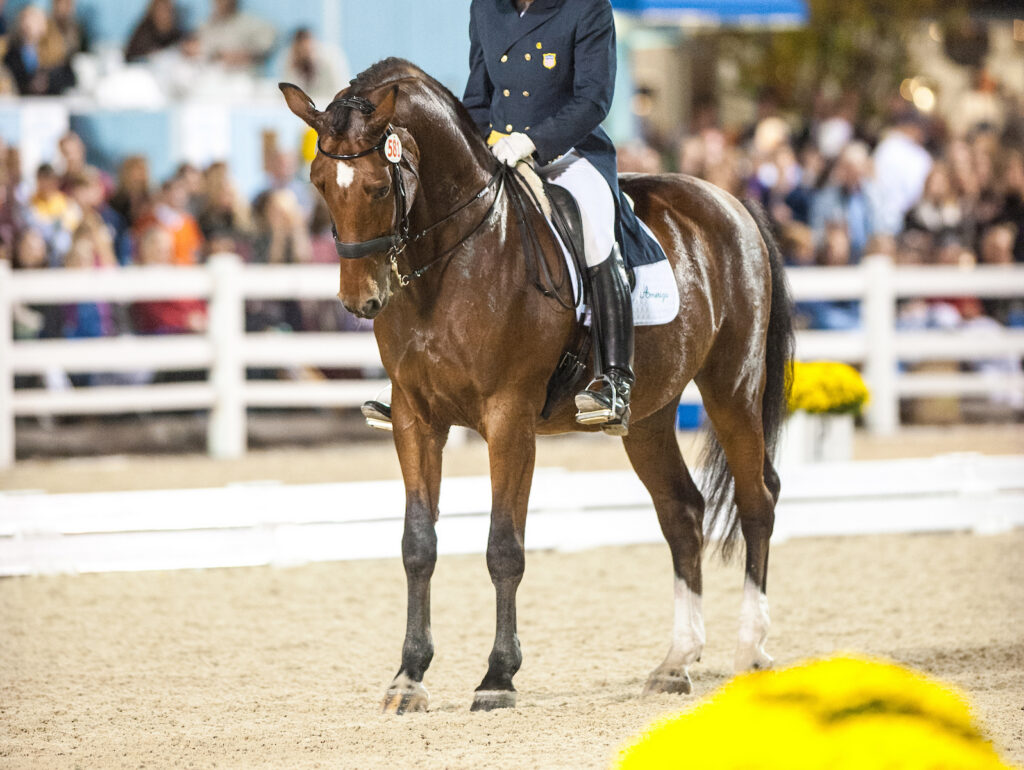
All of this work will eventually help you show off on the centerline by transitioning between working trot, lengthening trot, working trot, lengthening trot, working trot, halt, back to trot. As you build up your horse’s education, you’ll be able to click into that fancier trot with more impulsion, which helps maintain straightness, and that impulsion allows for a bigger swinging step without loss of balance.
Ultimately, you’ll improve the quality of your horse’s gaits by helping him become stronger in his hind legs and more obedient to the aids. Then, you’ll be able to ride with more impulsion, suspension and swing, and you’ll be able to better commit to your line of travel.
Do You Have a Question for Team Prac?
Do you have a training question? Team Prac—our group of top trainers representing dressage, hunters, jumpers and eventing—is here to provide useful and impactful advice to help you improve in your particular discipline and develop a harmonious partnership with your horse. Learn how to sign up for Dressage Today+ for only $3.99 a month to submit your questions to our Team Prac members here.
What is Dressage Today+? Click here to learn more about all the benefits you’ll enjoy as a member of Dressage Today+!
For More:
About Team Prac Member JJ Tate
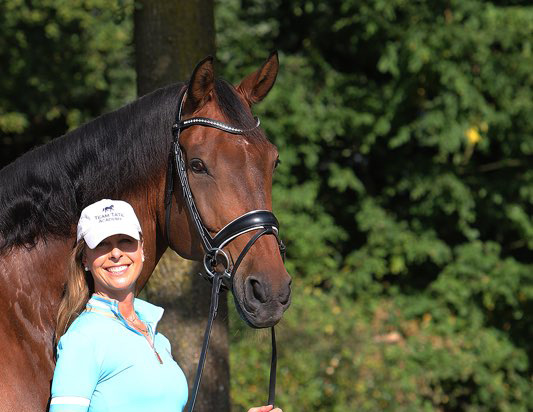
JJ Tate began to take her place among the country’s dressage elite early on in her career, making her FEI debut at just 16 years old. Earning numerous national and regional titles, she has trained and competed with more than 29 horses at the FEI levels, including eight at Grand Prix.
She represented the United States in the 2007 FEI World Breeding Championships for Young Dressage Horses in Verden, Germany. Tate was also a World Cup finalist and was long-listed for the World Equestrian Games in 2006. She is on the U.S. Equestrian Federation’s (USEF) Developing Riders List.
Known for her classical education and elegant riding, JJ is a top competitor whose devotion to the very highest standards of horsemanship and integrity make her a positive role model in the contemporary dressage world. JJ Tate runs her training program and Team Tate Academy out of her Blue Ridge Farm in Landrum, South Carolina.
Click here to read JJ’s full Team Prac bio that includes her career highlights, favorite horses and fun facts about the Grand Prix dressage rider.