




 Team Prac
Q: I am potentially interested in scribing. What do judges look for in a scribe?
~ Holly
A: A good scribe makes all the difference in the world to me as a judge. On the other hand, if I have to micromanage my scribe, it makes the day twice as hard and long. My job is to judge—not to make sure my scribe writes my comments down correctly, or that she’s keeping up with me with the correct test sheets in the right order.
Here, I’ll outline the most important qualities judges seek in their scribes.
1. Be Organized
Organization is one of the most important aspects of being a dressage scribe. This means you need to constantly be aware of the time, so if necessary, you can gently nudge the judge to let her know that you’re five minutes behind or ahead.
It’s also crucial for scribes to stay on top of which horse-and-rider combination is being judged and what test they’re riding. This is why it’s so important for riders to come down the centerline to C and share their number and what test they’re riding with the judge. We don’t necessarily know who you are, and sometimes the test sheets get mixed up.
2. Write Exactly What the Judge Says
To be successful as a scribe, you need to write exactly what the judge says—not interpret her comments. Years ago, I was scribing for a German judge, and he kept saying, “Needs to be rounder.” It was Training Level, so the horses weren’t expected to be on the bit, but he kept saying this, so I kept writing, “Needs to be rounder.”
I was with him almost the entire day before I realized he was saying that the rider’s circle needed to be rounder. But it wasn’t my place to interpret what he was saying, so I wrote what I was told.
3. Keep Up with the Movements
It’s important to stay with the judge throughout the test. If I don’t know my scribe when I’m judging, I will start the first few tests by checking in every so often. I might say, “I’m on movement four. Are you?” or, “I’m on movement 12 now. Are you with me?” This is just to make sure we’re in the same place.
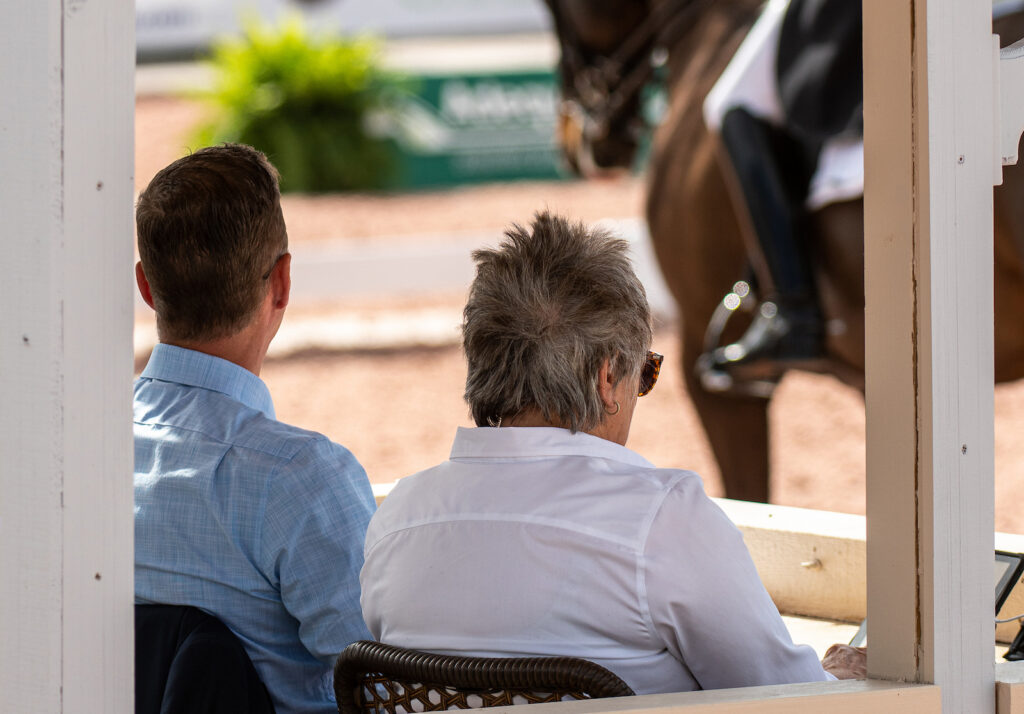
If the scribe is still learning how to keep up, I will check in with her on every other movement because it’s easy to get out of sync at first.
4. Don’t Be a Chatterbox
Another crucial component of being a scribe is learning to stay quiet. Especially at local shows, I don’t want you to tell me all about the horse and rider who just came into the ring. I shouldn’t know if it’s a 28-year-old former Grand Prix horse who’s now being ridden at Training Level. Don’t tell me how the combination scored last week or who they train with. This information interferes with my ability to be truly objective.
Judges also appreciate scribes who don’t chat at the end of a test when we’re trying to write our collective marks or further comments. We are still reflecting on the test and are focused on giving the most appropriate scores possible.
5. Write Legibly or E-scribe
Judges, show organizers and competitors appreciate scribes with legible handwriting. It’s pointless for me to make comments if the rider can’t read them. Of course, we also realize scribes can get tired, especially when the judge has a lot to say.
When I judge, I try to make two comments for every movement; I like to include something that the rider did well and something she needs to improve. And sometimes that can be a lot of writing in one little box on the scorecard. So, depending on my scribe, I might get to the point where I simply explain why the rider’s score was a 6 on a certain movement rather than a 7.
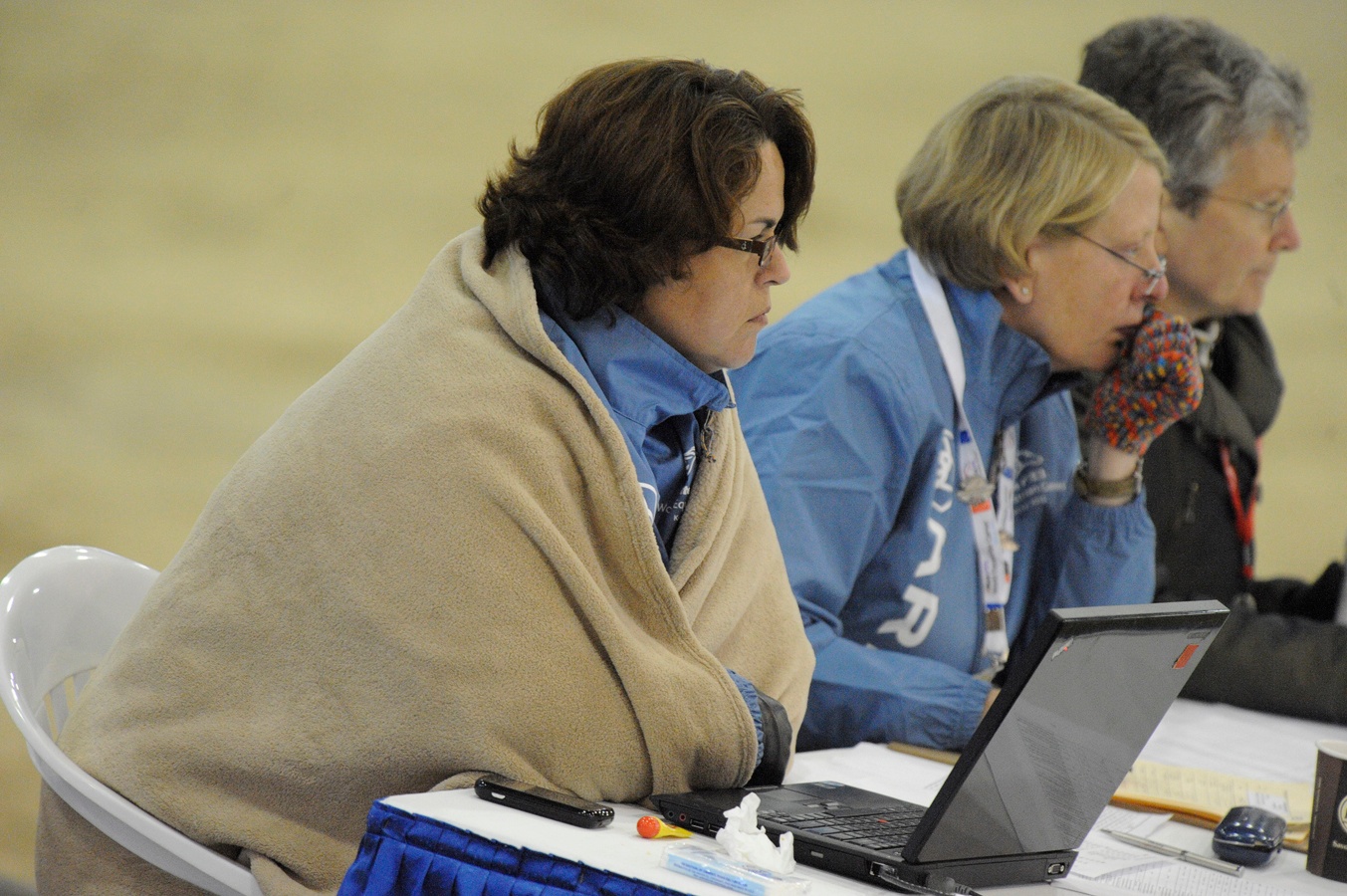
At some shows, we use electronic scribing—or e-scribing—where the scribes type the judges’ comments in a specific software program on a laptop or tablet. For people who are fast typists, this can help them better keep up with the judge. There will inevitably be typos, but for the most part riders can still figure out what the judge was trying to say.
If you scribe for 50 tests throughout the day, and there are 15 movements in every test, that’s a lot of typing or writing, and you’re going to make some mistakes. For example, I might say the horse’s poll is low, and in the moment, the scribe accidentally writes that the “pole is low.” The rider will still be able to understand what I meant.
6. Know What Abbreviations to Use
I also encourage my scribe to abbreviate because it’s much faster. If I refer to the rider’s circle, for instance, it’s much quicker to just draw a circle. For transitions, you can abbreviate to “fluid trans.” When referring to rhythm, it’s faster to use “RHY,” and for behind the vertical, we use “BTV.”
There are other standard abbreviations USDF uses that good scribes are knowledgeable about.
7. Maintain a Basic Understanding of Dressage
Additionally, it’s helpful for scribes to have some understanding of dressage. I’ve had moms who’ve watched their kids ride but have never ridden dressage themselves volunteer to scribe. That makes it harder because they don’t have the background or experience of actually riding a dressage test or calling one to truly understand the sport.
It’s equally helpful for scribes to have a general understanding of the test being ridden. In Third Level, for example, it’s good for them to know we’ll be evaluating collection, flying changes and half-passes.
8. Think Ahead
Judges also appreciate scribes who plan ahead of time and ask questions before the competition starts to help the day run smoother. Most judges give you their comments first and then the score. But not all of them, so that’s a good question to ask in advance.
You also might ask how the judge would like you to handle an error if a mistake is made or what to do if you lose your place during the test. If my scribes get lost, I don’t want them to tell me where they are. I will tell them what movement we’re on, and we’ll figure out the scoring afterward.
Some judges prefer their scribes write the collectives and further remarks; other judges prefer to do it themselves. So, it’s important to be on top of all these little details.
Ask the L
Do you have an Ask the L question for Aviva? If so, you can email her at horsepenhillfarm@aol.com.
For More:
- Learn more about the art of scribing here.
- Read more Ask the L’s with Aviva Nebesky here.
- Listen to the Dressage Today Podcast, hosted by Aviva and Stephany Fish Crossman, here.
About Aviva Nebesky
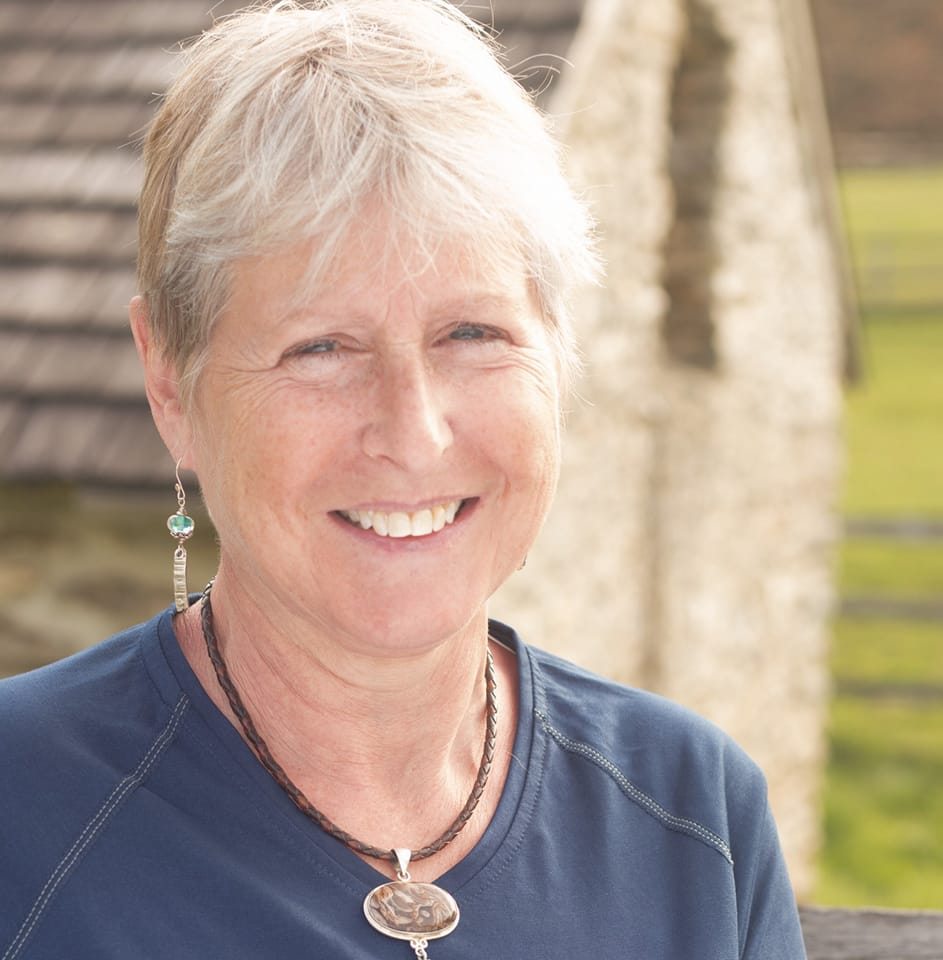
Aviva Nebesky started riding in her 30s, but horses rapidly took over her life and she went on to graduate with distinction from the USDF “L” Program. She actively trains and competes in dressage while maintaining a busy teaching and judging schedule throughout the mid-Atlantic. She has her USDF Bronze Medal and the Fourth Level scores towards her Silver and has competed internationally representing the USA at the Maccabi Games in Israel in 2022.
Aviva regularly works with eventers, working equitation riders, Western Dressage riders and traditional dressage riders and also cohosts the Dressage Today Podcast with Stephany Fish Crossman. With a master’s degree in social services and Social Research and decades of work in the field of physical rehab, Aviva specializes in working with adult amateurs with fear issues.