




 Team Prac
Q: What exactly do my horse and I need to have in place to successfully move up from Training to First Level?
~ Deanna
A: While we could probably talk about the answer to this question for an hour, USDF did it for us by explaining what is required for both levels. First and foremost, I’m going to suggest you review the Training and First Level tests. At the top of every test, you’ll find its intended purpose.
For Training Level, it states, “The horse demonstrates correct basics by showing suppleness, both laterally and longitudinally, moving freely forward in a clear rhythm with a steady tempo and readily accepting contact with the bit. Correct geometry and lines of travel should be shown.”
Now, let’s talk about the purpose of First Level. “The horse demonstrates correct basics, and in addition to the requirements of Training Level, has developed improved balance, lateral suppleness and throughness, as well as the thrust to perform a lengthening of stride.”
To summarize, you’ve met the requirements for Training Level if:
- Your geometry is correct.
- Your horse is bending correctly.
- Your horse can maintain relaxed balance. (Note: In Training Level, we’re talking about level balance. So, your horse should be able to perform balanced transitions throughout the test without being on the forehand.)
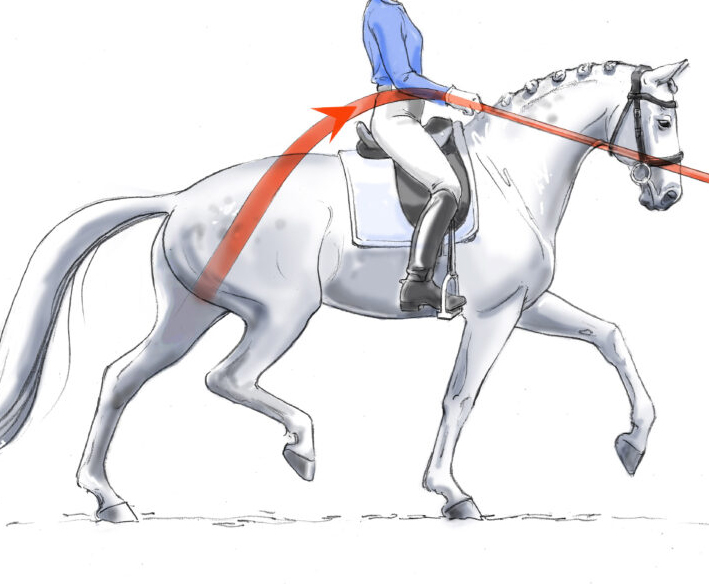
At First Level, all of these requirements should be a little easier. Keep in mind, however, that our horses aren’t machines, so they will come in and out of balance. Even if you watch the Olympians and Grand Prix riders, there are moments when they’re not in ideal balance and you see glimpses of insecurity in the connection or irregularity in the rhythm. The goal overall is to see fewer blips in First Level, compared to Training Level.
Balance and Self-Carriage for First Level
By First Level, we want to see a horse who can consistently stay in level balance and on the bit, which is about more than just creating an outline. It means the horse is stepping from his hind end into the bridle and then recycling that energy back again. It’s all about balance and self-carriage.
Now, we don’t expect to see the self-carriage of a Grand Prix horse at First Level, but we do expect the horses to be in some degree of self-carriage. You start teaching your horse about his balance at the Intro and Training Levels, so it’s fair to expect a little more self-carriage by First Level.
That’s why you’ll find things like smaller circles, trot lengenthings and leg yields at this level, because these movements require more lateral and longitudinal suppleness, a consistent connection and the horse’s ability to push off more with his hind end without losing the balance. It’s important to remember that when we’re talking about suppleness, we’re also talking about straightness, because your horse can’t be supple if he’s not straight.
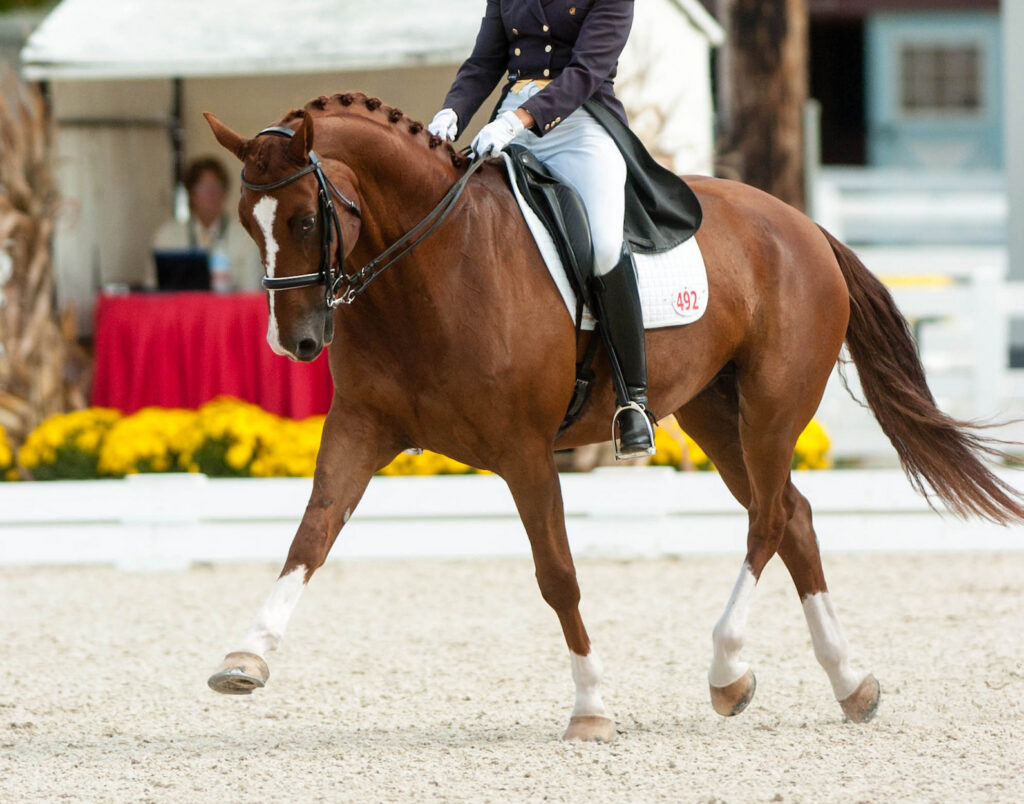
Early on in my dressage career, I had an instructor once ask me what it meant for my horse to be straight on a circle. It might sound ridiculous, but it was a really profound lesson for me. Being straight on a circle means the horse’s inside hind leg and inside front leg are on one arc, and the outside hind and outside front legs are another arc that’s slightly longer than the inside arc.
This requires a horse to step longer with his outside legs than he does on his inside legs. Most horses, however, naturally want to maintain the same size stride with both the inside and outside legs. In order to do that on a circle, they have to become crooked in their bodies, so they either pop their shoulders out or bring their hindquarters in our out.
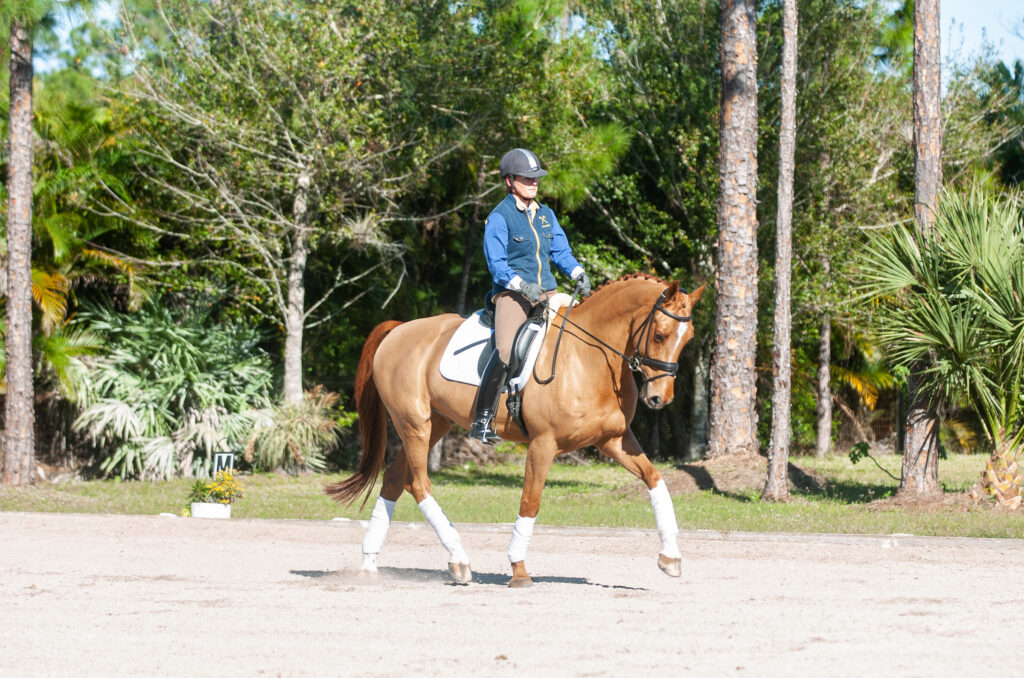
Therefore, it’s important to keep in mind, that you must achieve straightness before suppleness as you progress to First Level. If your basics aren’t correct, everything else is going to be harder. The basics are simple, but they’re not easy!
For More:
- To read more with Aviva Nebesky, click here.
- You can listen to our Dressage Today Podast, hosted by Aviva and Stephany Fish Crossman, here.
About Aviva Nebesky
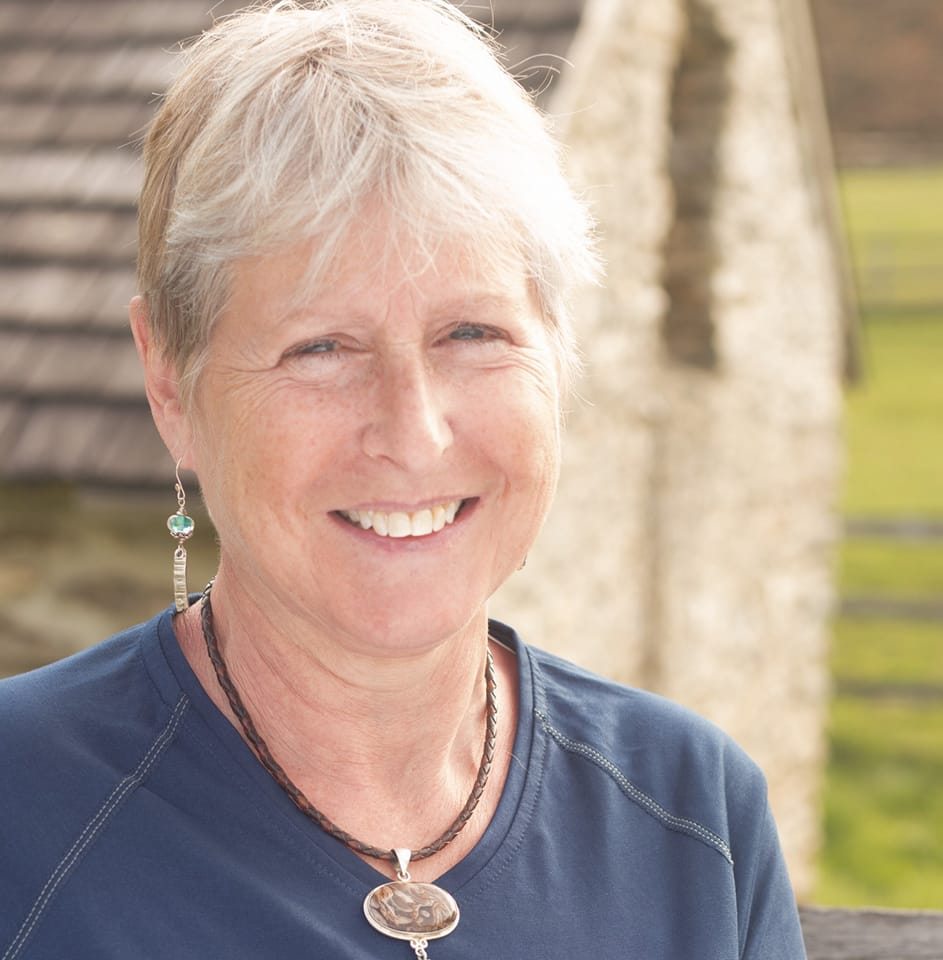
Aviva Nebesky started riding in her 30s, but horses rapidly took over her life and she went on to graduate with distinction from the USDF “L” Program. She actively trains and competes in dressage while maintaining a busy teaching and judging schedule throughout the mid-Atlantic. She has her USDF Bronze Medal and the Fourth Level scores towards her Silver and has competed internationally representing the USA at the Maccabi Games in Israel in 2022.
Aviva regularly works with eventers, working equitation riders, Western Dressage riders and traditional dressage riders and also cohosts the Dressage Today Podcast with Stephany Fish Crossman. With a master’s degree in social services and Social Research and decades of work in the field of physical rehab, Aviva specializes in working with adult amateurs with fear issues.