




 Team Prac
Q: At what point is a rider ready to adjust the length of his or her dressage stirrups? A friend told me recently that I should be riding two or three holes lower so I could have “more leg.” All I get when I do that is a wobbly leg. How can I prepare myself for longer stirrups, and when should I begin to lower them?
A: There are many opinions among trainers on “correct” dressage stirrup length. It is safe to assume that there is a range of stirrup lengths appropriate for dressage. You mention lowering your stirrups two to three holes; unless your stirrup lengths are very short, this may be a bit radical for your situation.
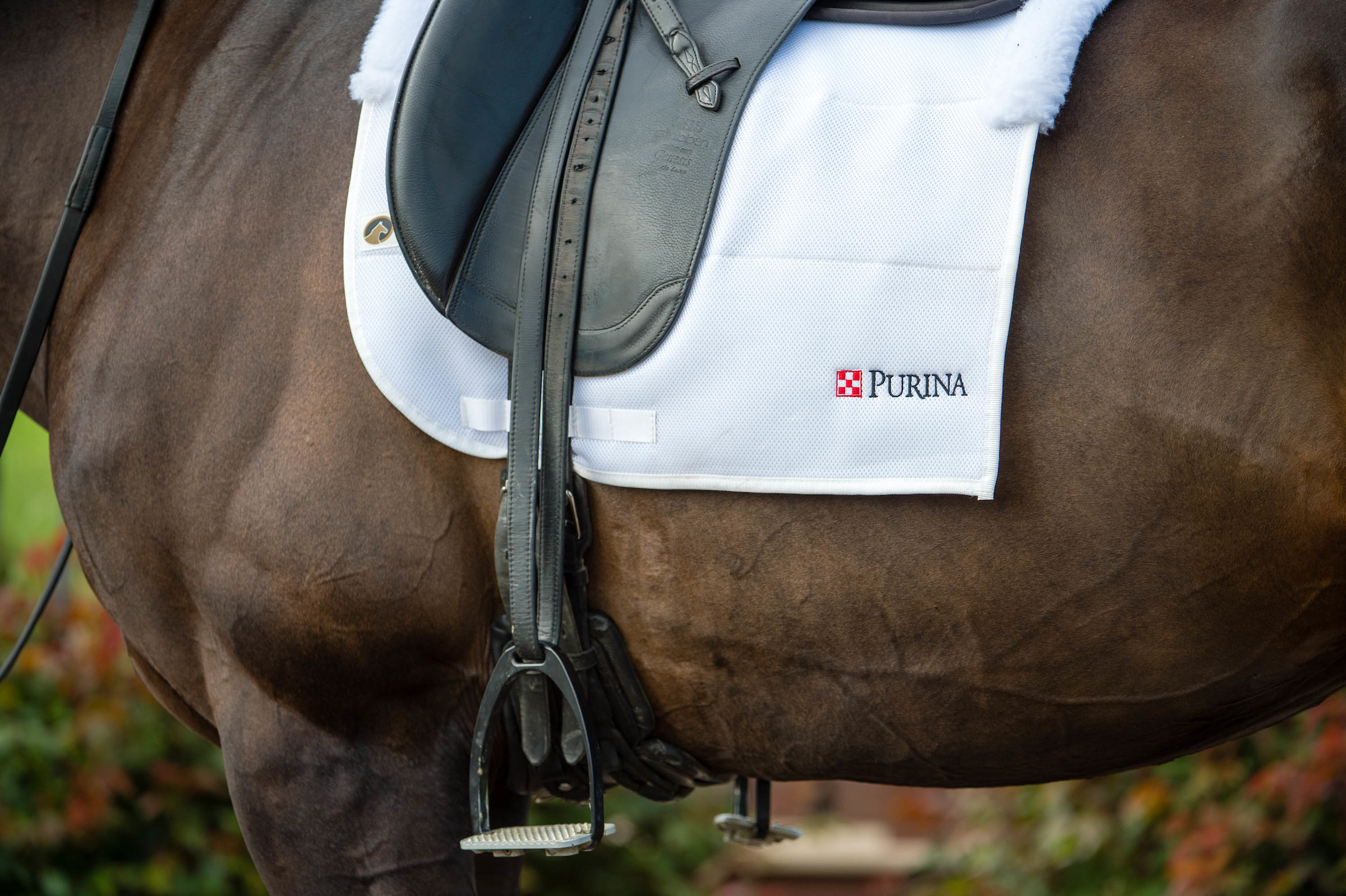
Many factors affect stirrup length—the length of your leg, the size and shape of your horse’s barrel, the level at which you’re riding, the type of saddle you use and your own preference. The following guidelines may help you evaluate your situation.
You know that your stirrups are too short if any of the following situations are true:
- Your knees are forward against the knee roll even when your heels are down slightly.
- Your heels are pushed way down when your knee is in a proper position.
- Your upper or lower leg is consistently pinched against the horse.
- You cannot get your lower leg around the horse.
Your stirrups are on the long side if any of the following situations are true:
- Your heels are not down even when your thighs are stretched downward.
- You cannot clear the front of the saddle when posting.
- You frequently lose a stirrup, especially at the sitting trot.
- You have to reach for them with your toes down.
Sometimes, at the beginning of a lesson, I ask a student to ride without stirrups for five minutes. A tense rider needs to stretch his or her inner leg muscles by lifting the knee away from the saddle for a few seconds and allowing it to fall into a deeper position farther back. Concentrating on one leg at a time and then on both legs simultaneously works well. After a few minutes of stretching and relaxing, the legs are usually more comfortable in a deeper position. At this point, I check the length of the stirrup. The bottom of the iron should be between the anklebone and the heel.
There are a number of factors to consider when deciding whether you can ride more effectively with stirrups on the shorter or longer side. For young, green, spooky or rough-gaited horses, it is helpful to ride with stirrups one or two holes shorter than you would on horses schooling upper-level movements. When a rider’s legs are long relative to the horse’s barrel, shorter stirrups allow him to make contact with the horse’s sides without lifting his heels. When the rider’s leg is short relative to the horse’s barrel, longer stirrups may be necessary.
Most novice riders err on the side of having their stirrups too short. This seems especially true for riders who ride dressage, but also who ride jumping and/or eventing. I do not like to see people riding on their tiptoes. Likewise, I do not like a lot of bend in the knee with the heels jammed down. A good rider can ride effectively with the stirrups two holes too short or too long.
If you are having trouble lowering your stirrups, it may be a problem with your upper leg. Instruction on a longe line can be an excellent opportunity to work on your legs. I recommend that you find an instructor who produces elegant riders and get some help on the longe line. This personal feedback can help you zero in on what may work for you.
Steven Wolgemuth, U.S. Dressage Federation bronze, silver and gold medalist; winner of many national titles, all-breed awards and top honors at dressage shows on the East Coast; owns and operates Graemont Farm in Manheim, Pennsylvania.