



 Team Prac
For almost as long as I’ve been riding, I’ve focused on my posture and balance. If my horse starts to get a bit heavy or gets behind my leg, I always go back to finding my position in the saddle and ask myself how I could sit better to help my horse’s balance.
The higher you move up the levels, the more core stability you need, but being able to separate the parts takes awareness. For instance, your legs and arms will try to balance what your core doesn’t balance. So when a rider has a core instability somewhere—it can be in the pelvis, the midsection, the upper chest or the upper back—it always affects what her arms and legs do. Once you have a strong base of support, your legs and arms can independently give an aid without your body pitching forward or back.
In her book Centered Riding, Sally Swift talks about the building blocks of an effective position. Being able to isolate the muscles in your lower and middle abdominals is key to maintaining proper alignment, as does being able to open your chest muscles and contract those of your upper back. Working toward balance and symmetry in these muscle groups leads to a rider who can use independent aids from supple hips and legs as well as soft rein aids from a balanced upper body.
In Part 1 of this two-part series, I explained why sitting for too long can impede your position and provided mounted exercises that you can incorporate into every ride to loosen up your hips and lower back, as well as exercises and posture tips you can practice out of the saddle to offset the time you spend at your desk. In Part 2, I’ll walk you through two new exercises to help improve your leg position and develop soft, supple contact.
Exercise 1: Improve Your Leg Position
For riders who need to improve their lower leg position, I first check to see that their seat and balance are correct. This is generally where a loss of position in the lower leg starts: Some riders grip with their knees or sit with their upper body too far back, which sends their legs and feet too far forward to counterbalance. But riders must pay attention to their leg position as well. Maintaining a good ear–hip–heel alignment is what you’re aiming for.
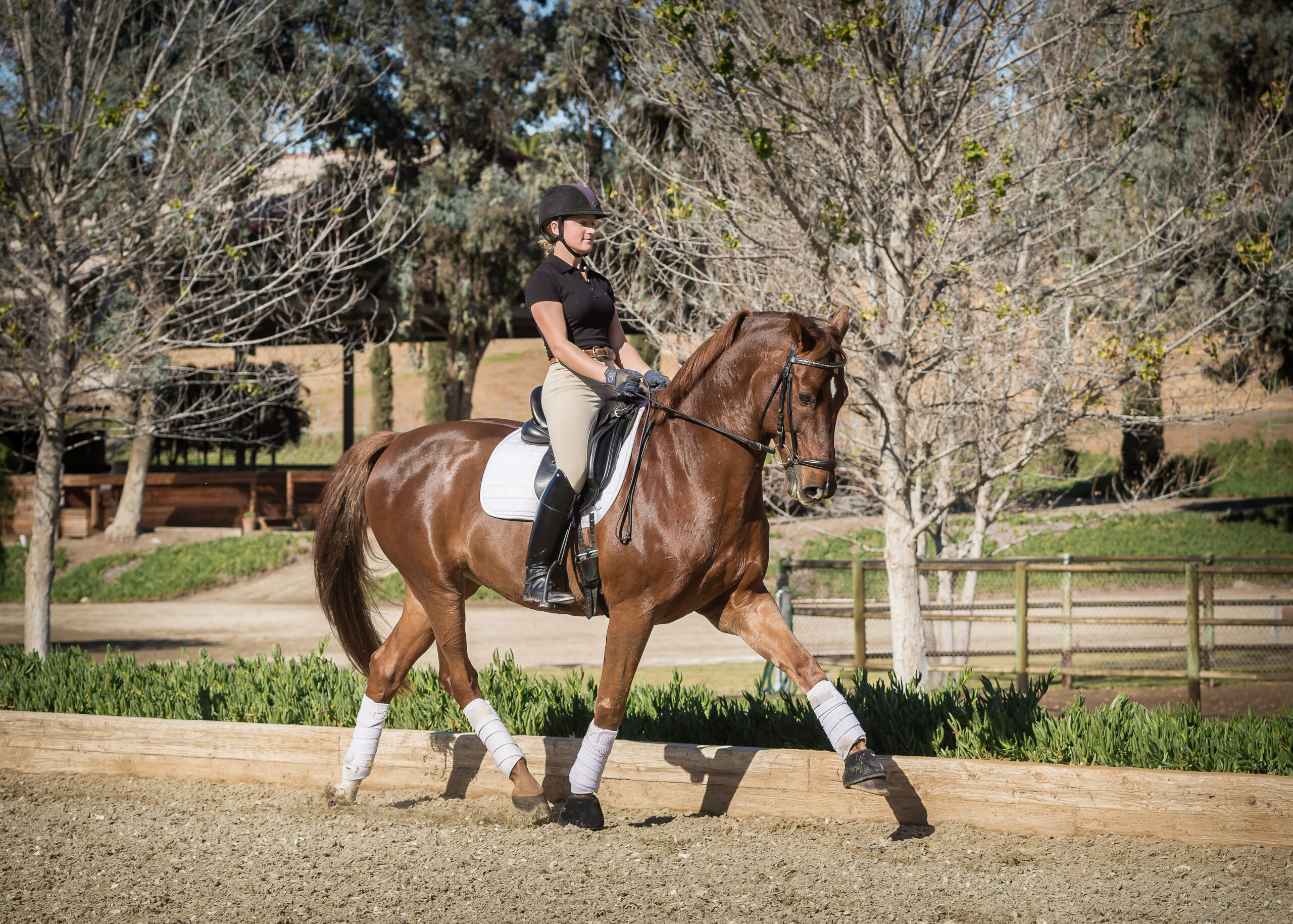
Riding with the backs of your legs or hamstrings helps to align your thigh downward. This exercise accomplishes a couple of things: It engages your hamstrings and it helps to lengthen your inner thigh muscles down to the knee. Here’s how to ride it:
1. While sitting in the saddle, imagine there is a large, soft tennis ball behind each of your knees. Lightly flex your hamstring muscle in the back of each leg so as to hold your imaginary tennis balls in place. Try to maintain the feeling of keeping the tennis balls behind your knees for your entire ride.
2. Stretch your heels down, without bracing or creating tension, maintaining a nice elastic feel down the leg.
3. If you find yourself losing your stirrups, you might need to shorten your leathers until you can achieve more supple hip, knee and ankle joints.
Exercise 2: Create an Elastic Feel
Our goal as riders is to create a place in the contact that you want your horse to come to without tension. Once you’ve begun to establish a secure, independent seat, you can start to develop a soft, supple contact.
1. With correct upper-body posture—chest open, shoulders down, into heavy elbows—make sure you’re holding your reins completely and not grasping them with the tips of your fingers.
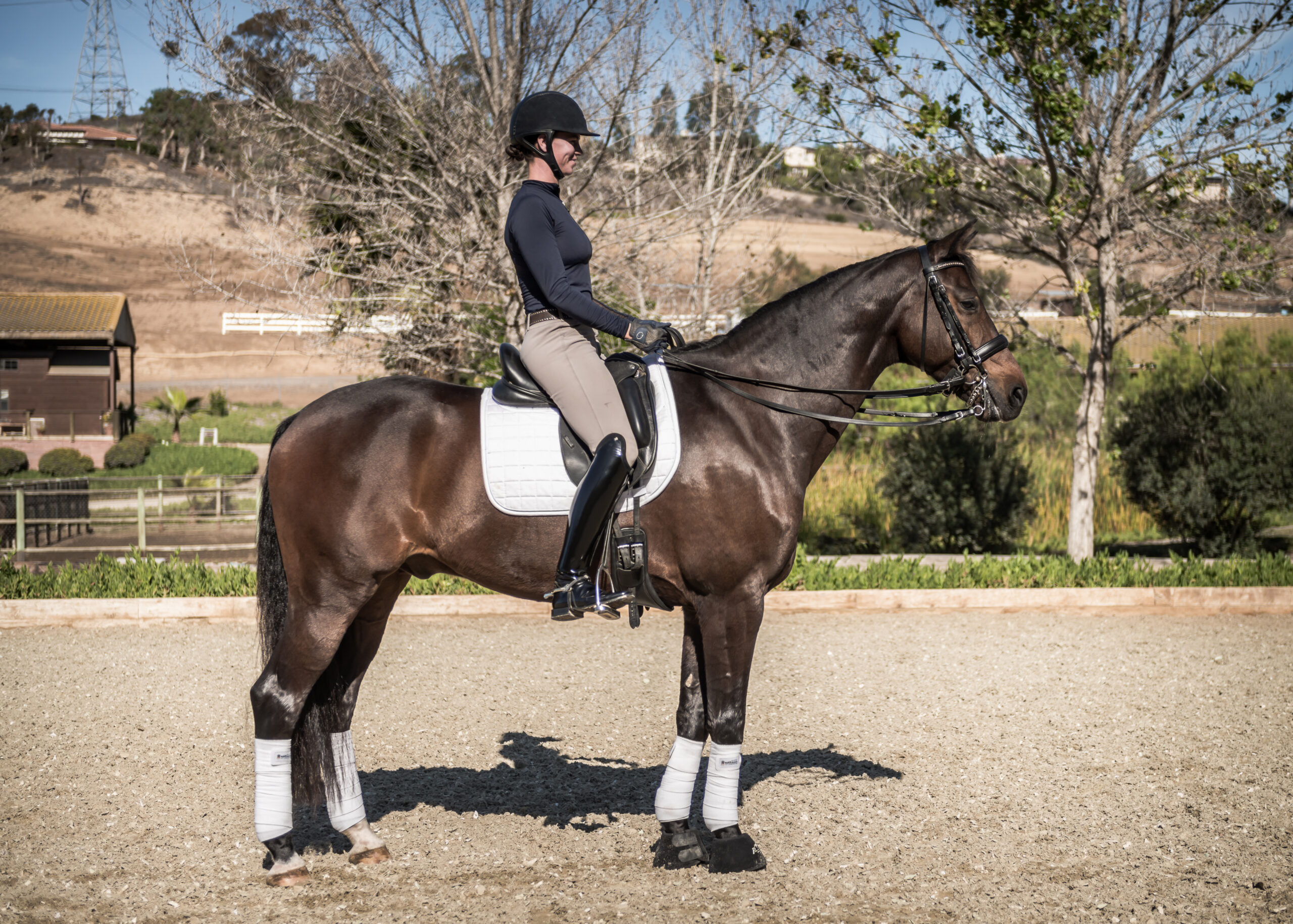
2. Firmly, but without tension, close all four fingers and turn your hand upright with your thumb on top.
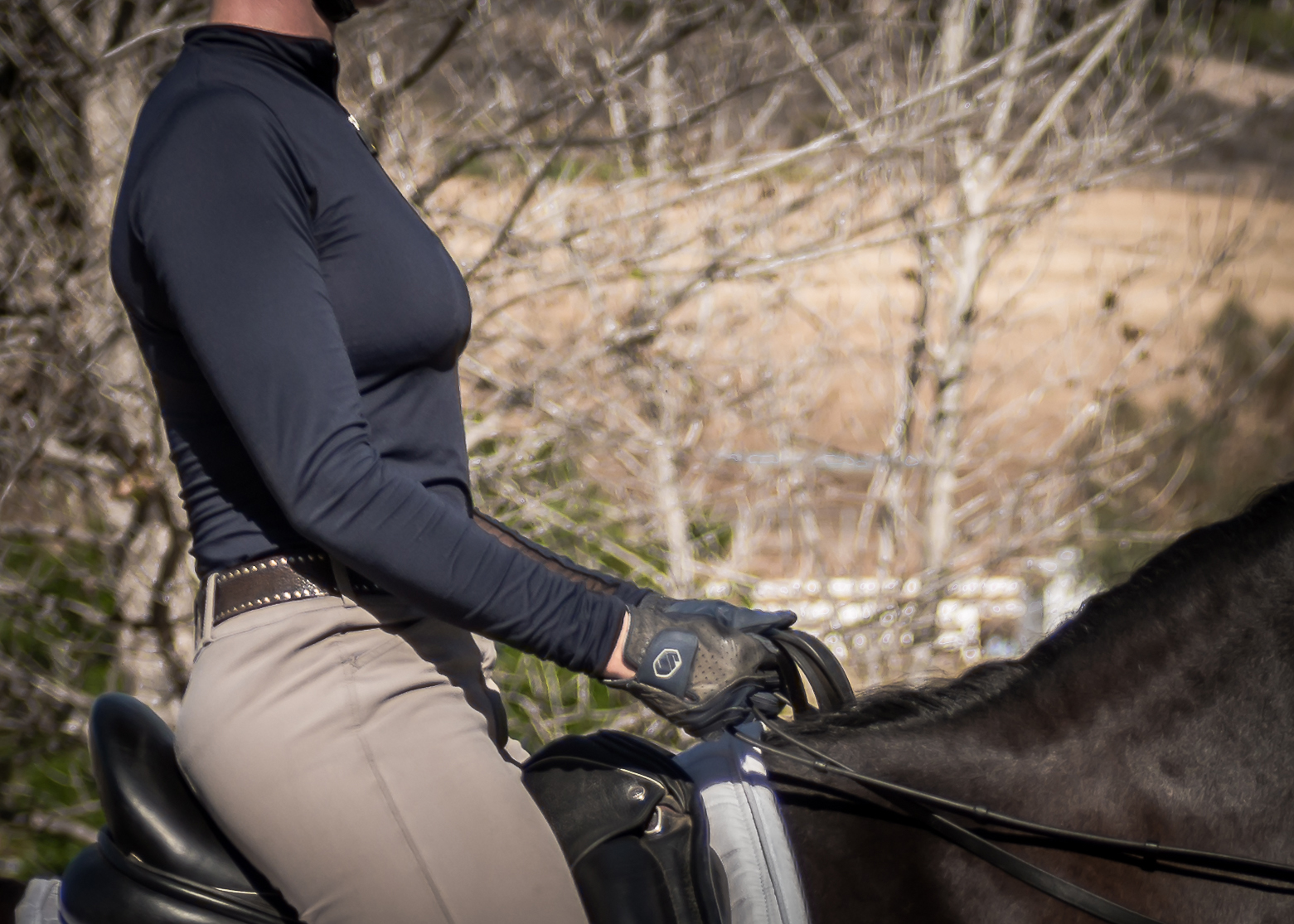
3. Now the important part: Close each thumb flat down on the side of your index finger. To maintain the proper feeling in your hand, your thumb should feel firmest of all.
4. Develop a good connection in the rising trot. Each time you touch down in the saddle, think of dropping your shoulders into your elbows (with an elevated chest and sternum) and giving your thumb a squeeze to help create the correct feeling to your horse’s mouth. This exercise should be subtle enough that no one sees it, but you’ll be surprised at how establishing this correct arm/hip position in the beginning can really influence the rest of your ride, because it allows your wrist to softly communicate with the horse’s mouth.
Only when we have established an independent, supple seat with the appropriate postural muscles to maintain our balance can we start to truly achieve an elastic connection with our horse.
Becoming a More Effective Rider
When I look at a horse and rider, I look at how they move together. Does some part of the rider look disconnected or imbalanced or does she interfere with the horse in some way? Is she sitting on her seat bones, and does the middle of her body stack above her hips? How do her legs drape around her horse? What about her head position? I like to see a cohesiveness in the movements, that the joints in the horse’s body look like they’re working together with the joints in the rider’s body. Horse-and-rider combinations usually reflect one another’s dysfunction, so a horse with a tight back often has a rider with a tight back and/or hips. Or a horse that is pullings usually correlates to a lack of balance in the rider or the combination of horse/rider.
If a rider has a good seat, a good leg position and an engaged core, that rider is more likely to be effective. Riders sometimes try to find their balance by squeezing their legs or driving with their seat instead of allowing the horse to come up to them. You create expression, balance and suppleness in your horse through your good position and by not losing your place of balance in the saddle even if your horse loses his.
Your horse will always follow your weight. So if you’re sitting out of balance—for example, heavier on one seat bone or collapsed through your hip—the horse will generally follow your weight, no matter what your leg or hand may be telling him to do. It’s the job of the rider to communicate her aids clearly to the horse. And it’s the rider’s responsibility to know how much of an aid she is using and what the response is from the horse.
Thanks to Zoetis for our coverage of the 2026 FEI World Cup Finals. It includes lead-up events, rider interviews, competition reports, photos and more!
For More:
- Read more about our coverage of the 2026 FEI World Cup Finals in Forth Worth, Texas, here.
- To read Part 1 of this two-part series, click here.
- To read more with Shannon Peters on Dressage Today, click here.
About Shannon Peters
Shannon Peters is a popular clinician and teacher as well as coach to her husband, three-time dressage Olympian Steffen Peters. Shannon began riding and competing in Western and saddle seat in her native Michigan. College took her to Boulder, Colorado, where she developed a successful dressage training business before moving to San Diego in 2002. After Shannon married Steffen in 2004, the pair started SPeters Dressage in San Diego. A USDF bronze, silver and gold medalist, Shannon is a three-time national championship competitor: on Luxor in 2007 when the two were crowned Reserve National Champions Intermediaire I; on Flor de Selva in 2009 when they took home fourth place in the Intermediaire division; and on Akiko Yamazaki’s Odyssey in 2011 after winning the Grand Prix Special at the Del Mar and Burbank CDIs in California. With Jen and Bruce Hlavacek’s Westphalian gelding, Weltino’s Magic, Shannon won Reserve National Champion in the 6-year-old division at the 2008 Markel/USEF Young Horse Championships, and Steffen won team and individual gold medals at the 2011 Pan Am Games in Guadalajara, Mexico.