




 Team Prac
Q: I hope to start competing with my horse at Second Level this year. I have scribed at several shows where it didn’t appear that the horses had much collection, yet they seemed to score well on movements—a 6 or 6-and-a-half. I know you don’t have to come in moving like a Grand Prix horse at Second Level, but I’m curious: How much collection are judges looking for?
~ Mary
A: First and foremost, it’s important to keep in mind that Second Level is the first time in dressage where you’re asked to demonstrate collection. When you’re required to do something new, the judges understand that your balance and presentation aren’t going to be 100% just yet.
Secondly, I suggest you revisit the intended purpose listed at the top of the Second Level test that USDF provides. It states, “To confirm that the horse demonstrates correct basics and now begins to accept more weight on the hindquarters as the collected and medium gaits develop. A greater degree of straightness, suppleness, throughness and balance are required to perform the movements with ease and self-carriage. All trot work must be done sitting.”
At First Level, the test instructions call for an increased length of stride, but they don’t say anything about shifting the weight back onto the hindquarters. A horse at Second Level should be able carry himself and demonstrate a true medium gait opposed to a lengthened gait. At medium trot, we want to see lift in the horse’s shoulders and that he can start to bring his hindquarters underneath him while showing some degree of cadence.
We don’t expect a breathtaking Grand Prix medium or extended trot, but we do want to see your horse start to change the way he carries himself. If he doesn’t have some degree of collection, you won’t be able to perform the movements in the test in a pretty manner.
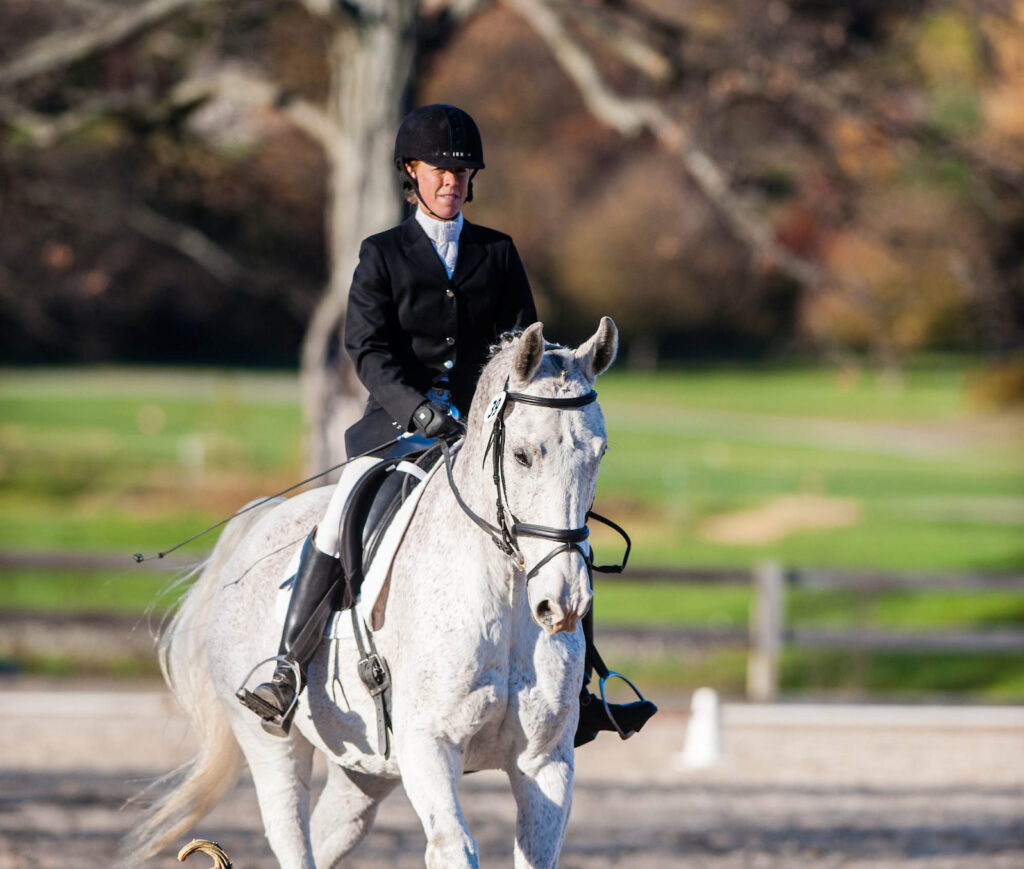
One of the Second Level tests calls for a 10-meter canter circle right in front of the judge at C, and about 95% of riders cruise around that circle with their horses on the inside shoulder; I call it drilling for oil. The other 5% ride that 10-meter circle with uphill balance—almost like a very large pirouette—with the horse’s weight behind and jump in the shoulders.
Let’s say, for example, you can proficiently ride a 10-meter canter circle while showing bend and maintaining the gait. That’s acceptable for Second Level and you would probably score a 6 or maybe a 5-and-a-half because you’re technically doing what the test calls for, so it’s sufficient. If, however, your horse starts to show a little jump in his shoulders and balance coming from his hindquarters, rather than drilling for oil on the inside shoulder, your score will be higher.
Greater Expectations
As you move up the levels, the expectations become greater, but the first time a test asks for something new, judges are more understanding of development. Unfortunately, we can’t put a magic scale under your horse to determine if he’s carrying more weight behind or if he’s in proper collection and self-carriage. So, judges do the best they can to assess how he’s carrying himself.
Second Level calls for more complex lateral work like shoulder-in and haunches-in, because these movements help develop your horse’s collection. For instance, if your horse isn’t truly sitting behind, you’re not really riding a shoulder-in.
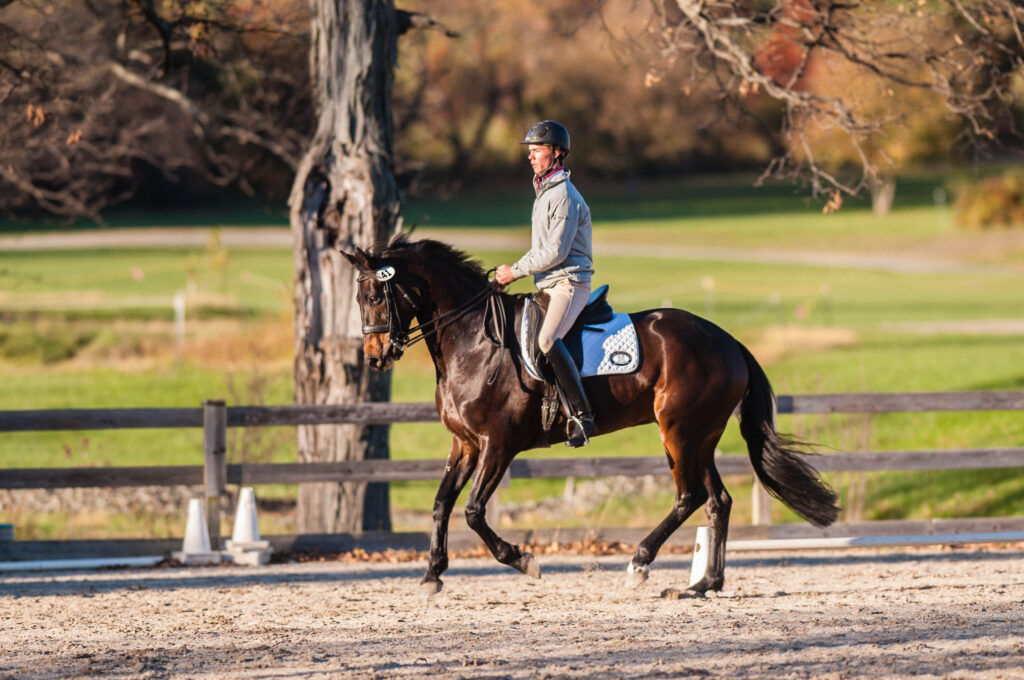
Many Second Level riders receive comments from judges about their horses’ having too much angle on one side of the neck during shoulder-in. This happens when you’re not truly asking your horse to shift his weight behind to sit and lift his shoulders. Once you achieve a higher level of collection, you’ll improve the quality of your horse’s gaits, which in turn will help him perform the movements more easily.
Subjectivity in Dressage
Dressage, of course, is a subjective sport like many other riding disciplines, so it’s important to remember that judges are human, too. Here’s a good example to consider: Stephany Fish Crossman was competing with Dante at the World Equestrian Center a few weeks ago, and they were set to ride right after Adrienne Lyle. Adrienne ended up scratching, but my point is that we wouldn’t expect Stephany and Dante to be at the same level in their training as Adrienne and her horse. No one wants to come in the arena right behind an Olympian, but it’s also about judging everyone where they are.
Judges have a clear understanding of the particular test’s expectations, so they do their best to wipe the slate clean after each rider’s final salute. But it’s hard to always maintain that objectivity after you’ve just watched a horse and rider perform movements scoring a 7 or 8, and then you have a horse who’s more of a 6-point mover.
In summary, we want to see that you and your horse are making an effort in the collection at Second Level, but we don’t necessarily expect it to be carried throughout the entire test.
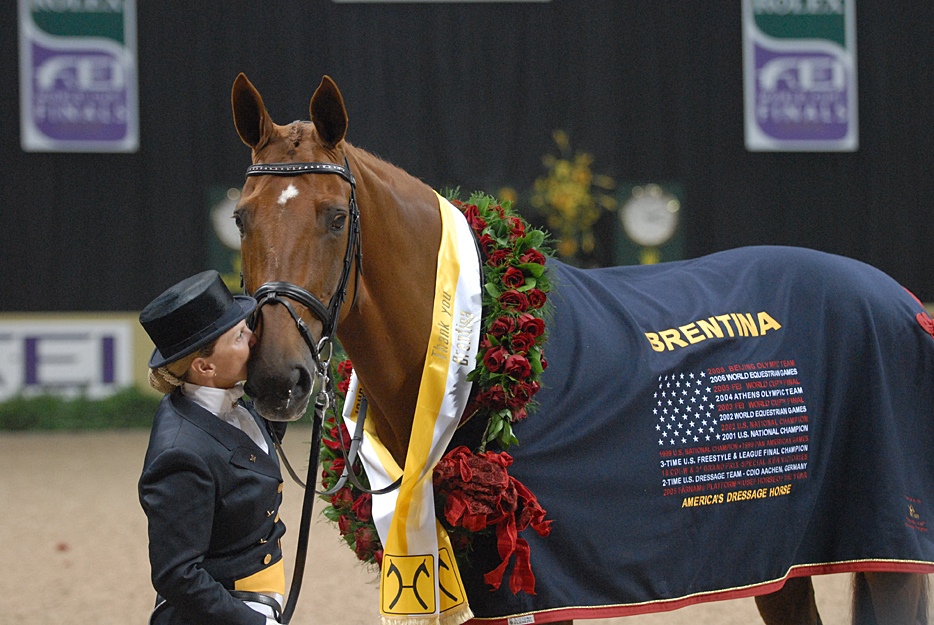
I remind my students that no one has scored a 100%. Our horses aren’t machines, and we’re not machines. I use the example of Debbie McDonald and Brentina at the 2008 Olympics in Hong Kong. McDonald was the anchor rider for the team, and she was hoping to help bring home a bronze for the U.S. But Brentina got into the arena and took one look at the jumbotron and said, “No, thank you!” And that’s OK. This happens with horses, and it’s important not to get upset with your horse or yourself.
Even when you watch Olympians perform, you still see bobbles—moments when the self-carriage shifts, they get short behind or are unlevel for a brief second in piaffe or passage. We all make mistakes, and our horses are sentient beings who may not have slept well in their stalls overnight, or maybe they heard a car backfire in the parking lot that you didn’t notice because you were so focused.
Remember, we don’t expect perfection from horse or rider all the time! Thank you for the question, Mary, and I hope this helps you and your horse on your journey progressing to Second Level.
For More:
- In a recent “Ask the L,” Aviva Nebesky helped a Training Level rider determine if she and her horse are prepared to successfully move up to First Level. Click here to learn if you and your dressage horse are ready to tackle First Level.
- To read more “Ask the L’s” with Aviva, click here.
- Listen to the Dressage Today Podcast, cohosted by Aviva and Stephany Fish Crossman, here.
About Aviva Nebesky
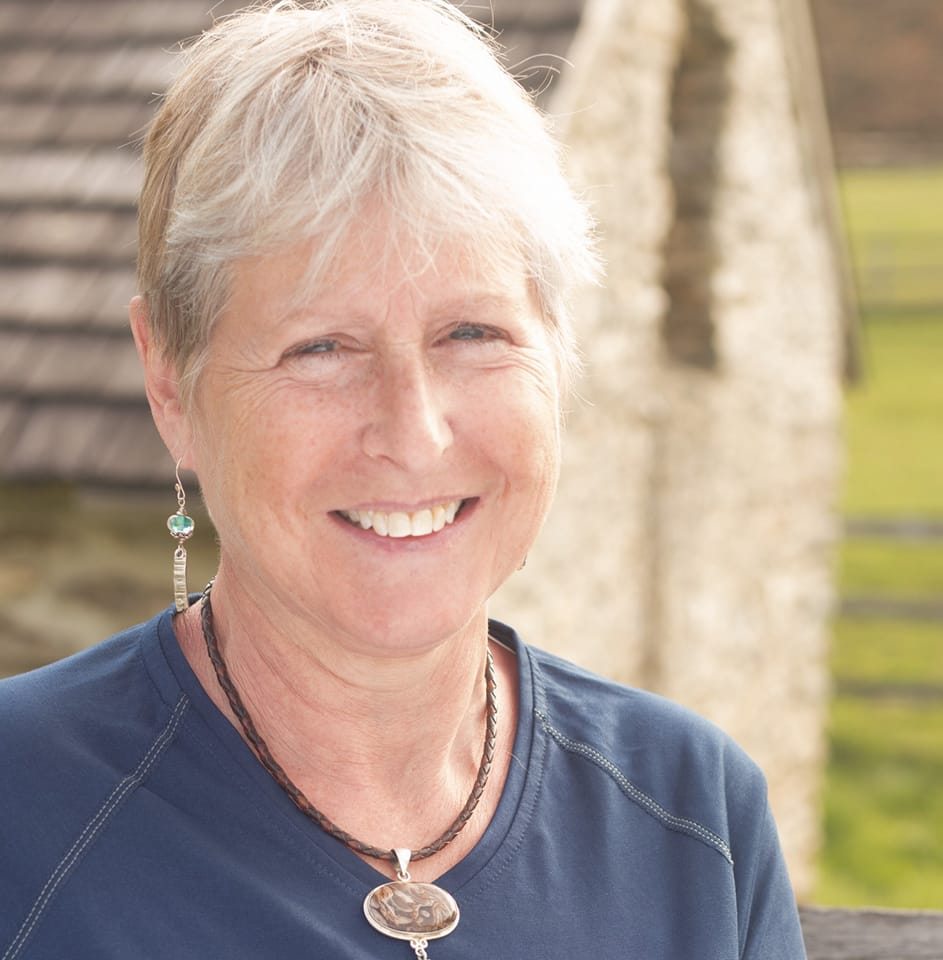
Aviva Nebesky started riding in her 30s, but horses rapidly took over her life and she went on to graduate with distinction from the USDF “L” Program. She actively trains and competes in dressage while maintaining a busy teaching and judging schedule throughout the mid-Atlantic. She has her USDF Bronze Medal and the Fourth Level scores towards her Silver and has competed internationally representing the USA at the Maccabi Games in Israel in 2022.
Aviva regularly works with eventers, working equitation riders, Western Dressage riders and traditional dressage riders and also cohosts the Dressage Today Podcast with Stephany Fish Crossman. With a master’s degree in social services and Social Research and decades of work in the field of physical rehab, Aviva specializes in working with adult amateurs with fear issues.