




 Team Prac
Sitting the trot is a hard skill to master for many riders. It can be a jarring experience—literally—on the path toward developing the necessary core strength and proper relaxation to absorb the horse’s movement.
Here, Stephany Fish Crossman, a LEVEL 3 Ride With Your Mind Accredited coach, biomechanics expert and dressage trainer, provides helpful tips on how riders can assess their positions and work toward a smooth ride during sitting trot.
Q&A
Q: What tips do you have for helping riders improve their position at the sitting trot?
Cristin O., Alabama
A: Cristin O., I’m going to tell you this: Sitting trot is hard! It just is. I’m going to quote one of my favorite Mary Wanless [founder of the Ride With Your Mind Biomechanics System] phrases, which is simply, “Embrace the weird.” I think sometimes when something feels wrong or feels difficult, we tend to shy away from it. We brace away from it. We think, “Dear Lord, this can’t possibly be right!” But we actually have to learn how to stay up with the horse’s movement.
This refers back a little bit to our previous question, in that you have to allow your hip, knee and ankle to move and flex to absorb the movement of the horse. At the same time, you have to learn how to keep your torso engaged and staying up with the horse.
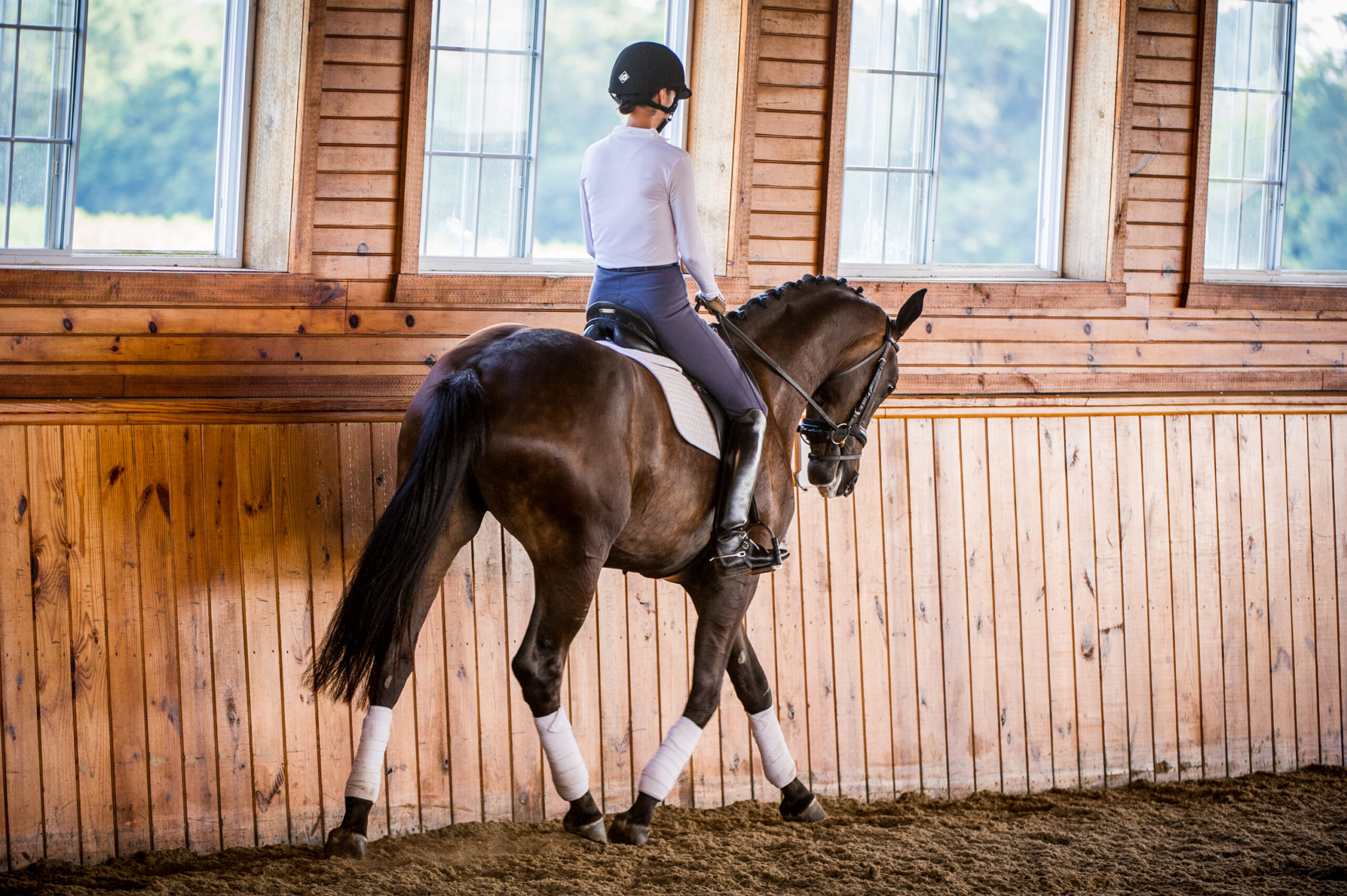
One of the best examples I can give you, if you are of a certain age (and if you’re not, you can Google it), is this marvelous toy that we had as kids called the Hippity Hop. It’s like a yoga ball with a handle. You would grab the handle and bounce yourself forward on the Hippity Hop. That’s the sitting trot mechanism in a nutshell. If you lean back against the handle, the ball’s going to go shooting out in front of you, as will your horse. If you pull on the handle and lean forward, you’re going to tip forward over the front of the ball. It’s the motion of your ankles, knees and hips bouncing you while your torso learns how to stay up on top of that ball as it’s moving forward.
I can’t be responsible for any injuries, but if you want to try it, I always say to use a Hippity Hop on the grass. They’re available for purchase in stores and online, and it’s a great practice tool to help your sitting trot.
If you only have a horse, then I like just taking your sitting trot in bitesize amounts. Do five strides of sitting trot, five strides of posting trot, five strides of sitting trot, five strides of posting trot. It will help you to recognize what you’re doing in your posting trot, and because your joints are moving in your posting trot, and it will help you learn to take that your sitting trot in small increments. Don’t wait until Second Level; learn to sit the trot before then.
For More:
This Q&A is an excerpt from our Dressage Today+ Members-Only VIP Webinar: Rider Biomechanics 101.
Dressage Today+ members can watch the full recording of the webinar here. To sign up for Dressage Today+, click here.
For more articles with Fish Crossman, click here.
About Our Expert: Stephany Fish Crossman
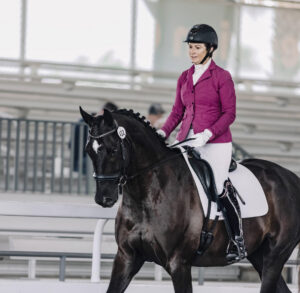
Stephany Fish Crossman, who co-hosts the Dressage Today Podcast, began riding as a young girl in Maine, and hasn’t gotten off a horse since. Besides a brief stint in the hotel industry, Fish Crossman has worked for and with trainers at all levels, from grass roots Pony Clubs to several different Olympians. She attended the former International Academy of Equestrian Studies in Warendorf, Germany, where she graduated with her National Trainer Certificate. She’s also a USDF bronze and silver medalist as well as one of only two LEVEL 3 coaches worldwide for Mary Wanless’ Ride With Your Mind Biomechanics System. She teaches clinics all around the country and runs a small training business, Serendipity Dressage, in Okeechobee, Florida.