
Lexington, Kentucky—Earlier this fall, US Equestrian released a series of Horse Welfare Guidelines to members, including those based on the familiar concept of a stoplight guidance recently published by USEF. In addition to this work, the USEF Dressage Equine Ethics and Wellbeing Task Force led by Betsy Juliano and Lisa Gorretta, has been meeting regularly to discuss changes needed nationally within the discipline of dressage.

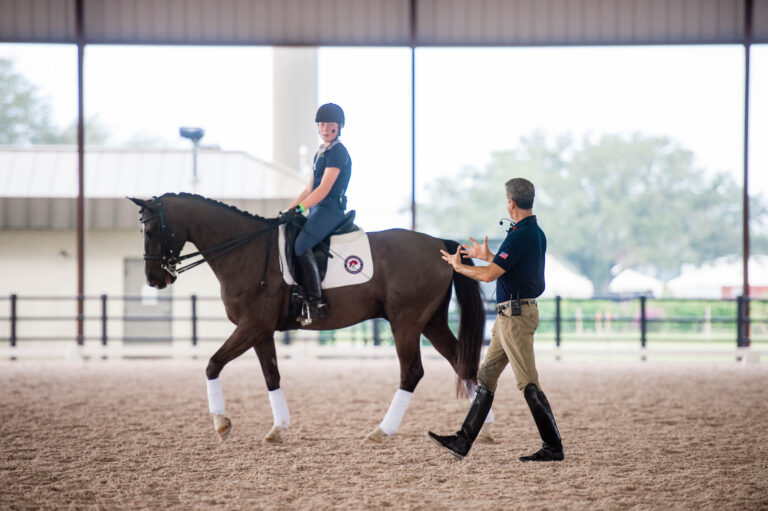
As a result of the Task Force discussions Riding Standard Guidelines have been drafted for the consideration of dressage athletes looking to progress up the levels in a harmonious way with their horses. We encourage athletes, trainers and the dressage community to review and share these guidelines and implement them into their daily practice before competing.
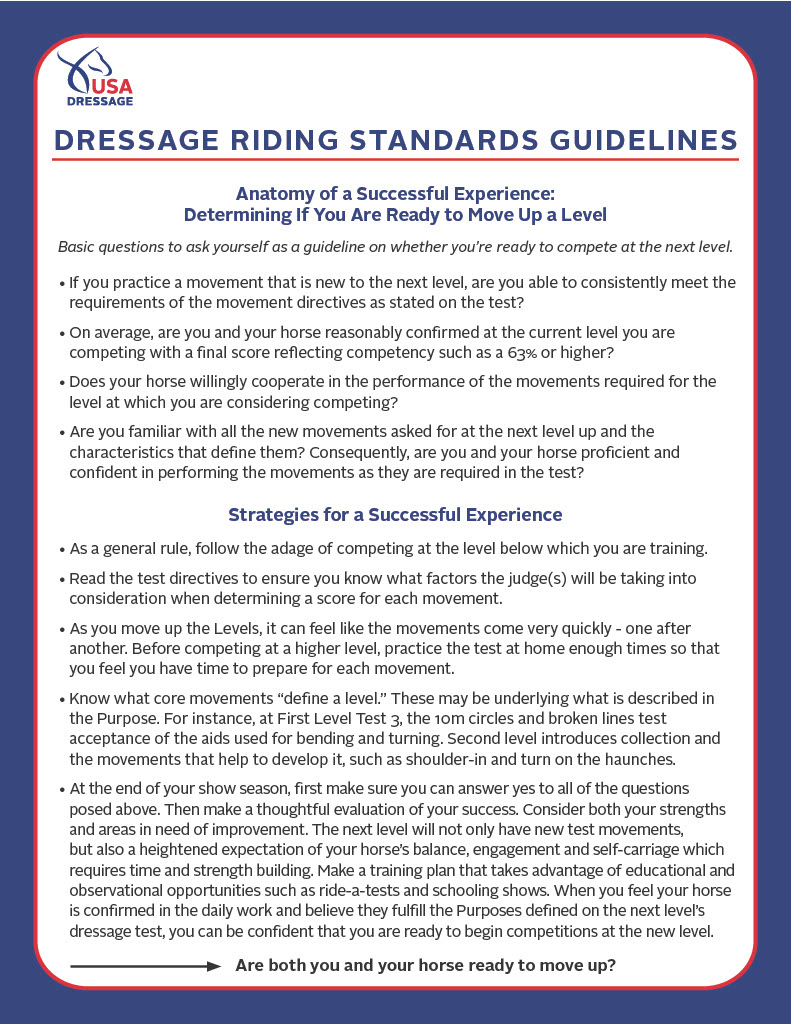
Anatomy of a Successful Experience: Determining If You’re Ready to Move Up to the Next Level
Basic questions to ask yourself as a baseline as to whether you’re ready to compete at the next level:
- If you practice a movement included in the next level of competition, are you able to consistently meet the requirements of that movement and the directives stated in the test?
- On average, are you and your horse reasonably confirmed at the current level you are competing with a score reflecting competency, such as 63% or higher?
- Does your horse willingly perform the movements required for the level at which you are considering competing?
- Are you familiar with the new movements to be asked at the next level and the characteristics defining each of them? Consequently, are you and your horse proficient and confident in performing the movements as they are required in the test?
Strategies For a Successful Experience
As a general rule, follow the adage of competing at the level below you are currently training.
- Read the test directives to ensure you understand the factors the judge(s) will be using for consideration when determining a score for each movement.
- As you move up the levels, it can feel like the movements come very quickly in succession during a test. Before competing at a higher level, practice the test at home enough times so you feel you have time to prepare for each movement.
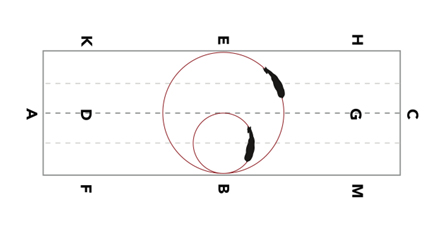
- The core movements “define a level.” These may be underlying what’s described in the Purpose listed in the test. For example, at First Level Test 3, the 10-meter circles and broken lines are intended to test acceptance of the aids used for bending and turning. Second Level introduces collection and the movements which help to develop it, such as shoulder-in and turn on the haunches.
- At the end of your show season, first make sure you can answer yes to all of the questions posed above and then make a thoughtful evaluation of your competition experiences. Consider both you and your horse’s strengths, as well as areas in need of improvement. The next level will not only include new movements, but heightened expectations of your horse’s balance, engagement and self-carriage, which requires time, training and the building of strength and fitness.
- Make a training plan which takes advantage of educational and observational opportunities such as ride-a-tests and schooling shows.
- When you feel your horse is confirmed in the daily work and fulfills the “Purposes” defined in the test, you can be confident you’re ready to begin competing at the new level.
Are You and Your Horse Ready to Move Up?
Additional topics being discussed by the USEF Dressage Equine Ethics and Wellbeing Task Force include:
- Review of tack and equipment permitted in competition, including double bridles, whips and spurs
- Review of training methods and equipment used out of competition
- Warm-up behaviors
- Frequency of showing
- Blood rules
- Coach certification
Updates and further expansion of the above areas will be communicated to membership throughout the 2026 calendar year.
For more information on the work of the USEF Dressage Equine Ethics and Wellbeing Task Force, please contact [email protected].