




 Team Prac
This is the first installment of our new series The Business of Horses, in which we talk to working professionals—trainers, riders and instructors—about how they run their operations. No two barns are built the same way, but the questions are: How do you structure your days? How do you price your services? How are rising costs and changing technologies impacting you? How do you keep the lights on, horses and clients happy, and yourself in one piece?
We’re starting with trainer and Grand Prix rider Emily Donaldson, who runs a busy training and teaching business at her Sewickley Farm in Chester County, Pennsylvania, and winters in Ocala, Florida.
PH: Let’s start with the basics. Tell me about your business.
ED: I have a dressage training business. I have a mix of my own horses, horses in training that I ride exclusively, horses that my clients ride, and I teach. I also teach lessons, and I travel off-site, so it’s a nice variety of business opportunities. I’m fortunate that I’m healthy and fit, so I do as much as I can.
PH: How many horses are in your barn now?
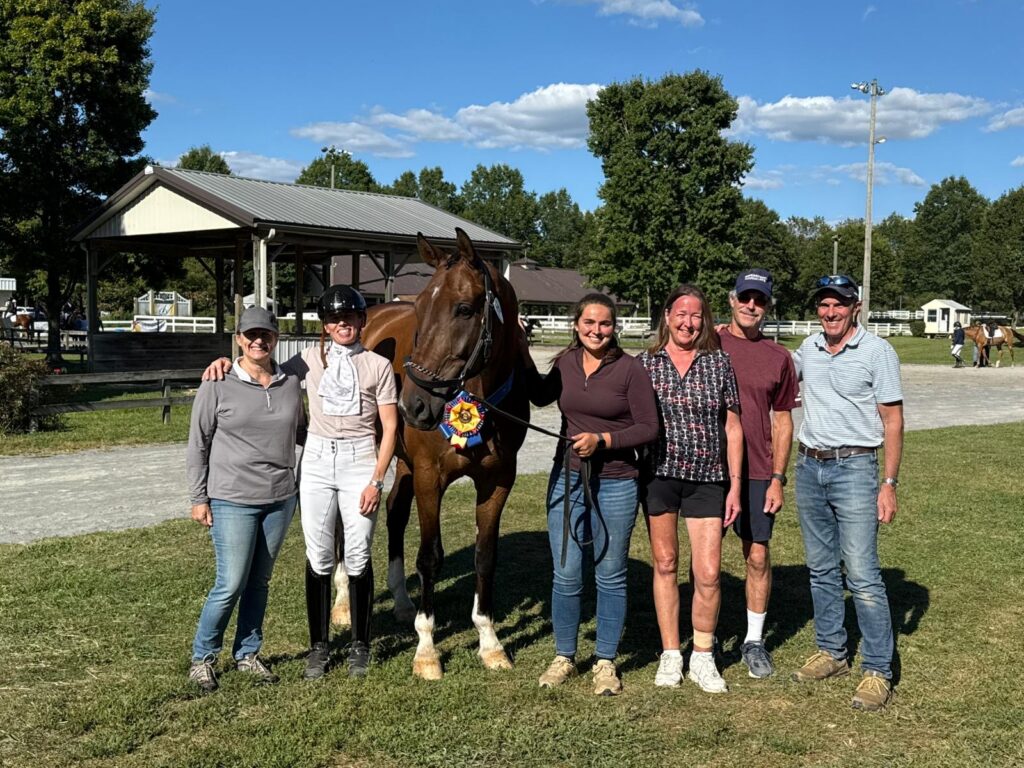
ED: We have 20 here right now. I own four and part of a fifth (part of a syndicated horse). The rest are training horses and student horses.
PH: How do you think about the time split of your day: riding versus teaching versus traveling versus barn work?
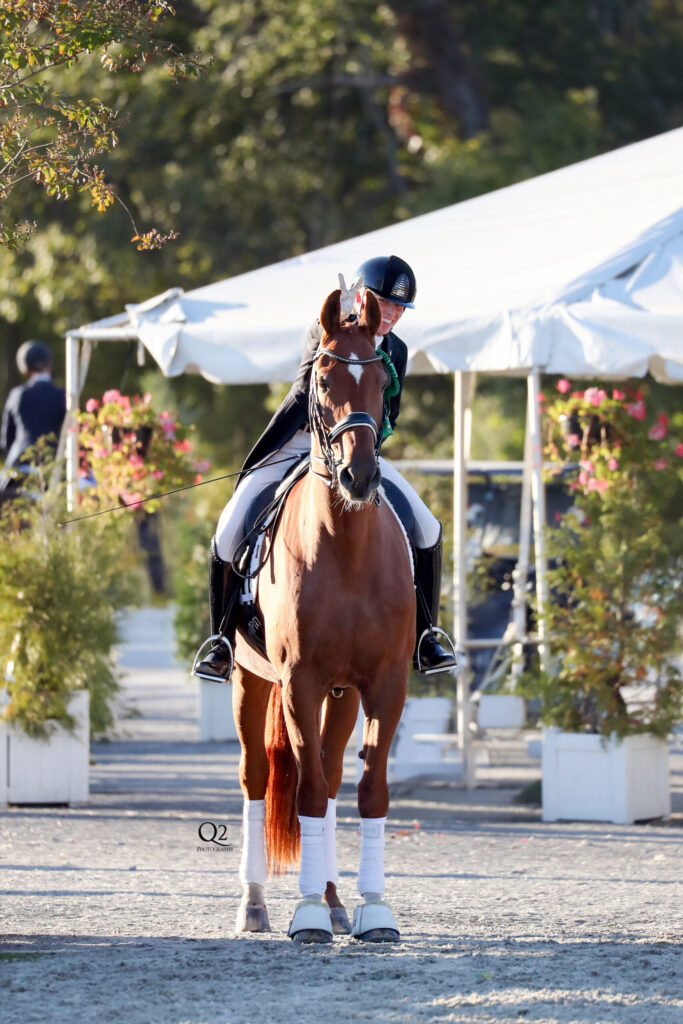
ED: Right now I ride about 7-10 horses a day. Some weeks a client might be traveling for work, so instead of teaching them, I ride their horse. I have about six horses that I’m competing, and I do training rides, too.
One day I was coming back from teaching a clinic this summer, and I calculated the number of lessons I’d taught that week, and it was close to 60.
I probably ride and teach half and half. Some days I start at 6 or 6:30 a.m. teaching, and then I usually start riding around 8 a.m. My groom, Mallory Sensenig, gets here at 7, Monday to Friday, so I usually give her time to get going before I start riding. She’s here until 3:30, so I try to use my time with her here to ride as much as I can. I teach within those hours too, and then I’ll teach until 7 p.m. at night sometimes.
PH: You’re based in Parkesburg, Pennsylvania. What do you do in the winter?
ED: I used to go to Wellington. I think I was there for about five or six seasons. Then I spent a winter at home—I had some young horses and a bit of a turnover in clients, so it didn’t make sense to go south—and that year gave me a chance to step back and think about whether I wanted to keep going to Florida, and if so, whether I wanted to do it differently.
That’s when I ended up going to Ocala the next winter. This will be our third winter there. We’ve been going to a really great facility, Persaud Legacy Farms. For my business, my clients, the horses, and the way I like to do things, Ocala has been a huge success. Last year we took 15 horses down; I think we’ll have about the same again this winter.
PH: What are the biggest challenges to running an equestrian business in 2026?
ED: Culturally, I think people are accustomed to getting what they want. Social media is supposed to help people operate, but it also creates an instant gratification mindset and pressure to keep up with clients—a fear factor, in a way, because you can lose clients. I feel pressure to perform, whether that’s teaching a lesson at the exact time someone wants and fulfilling expectations, whether they’re reasonable or not, so I run myself a little ragged. I’m getting a little better about it; I do have standards, and I will say no if something’s not a good fit for how I do things.
But I tend to be a bit of a pleaser. If Client 1 wants to ride at 6:30 a.m., OK, I’ll teach then. Client 2 wants 6:30 at night? OK, I’ll do that too. It’s hard to set boundaries. My husband and I own the farm we live on, so it’s great—I can roll out of bed, haven’t brushed my hair, cup of coffee, teaching a lesson at 6:30am and then I’ll be out dragging the ring at 9 or 10 at night. It’s good because I can fit so much into a short period of time, but at the same time, I don’t turn it off.
I also live in an area that’s really competitive. My husband, Mark Donaldson, is a veterinarian, and we talk about this—if you do something a client gets annoyed with, or there’s a miscommunication, they can leave you and go to somebody else. I’ve had people stop riding with me, and you think, “What did I do wrong?”
I know it’s a bit the nature of the business—you might help somebody for a period of time, and then they need a different kind of help—but sometimes there’s no dialogue about why they left, so you don’t have a way to change or know if you did something wrong. When I had a “real job” before this, you’d sit down and have a performance review, an exit review. In this industry, it’s like there’s this weird thing where you just stop working with somebody, and you don’t get that same check and balance of how you got here or what direction you want to go in.
I did a development clinic with Debbie McDonald a while ago, and I sat down with her and talked about the direction I wanted to go. She said it’s going to be a gradual process; you incrementally keep turning the dial, and eventually you change your business model, or you start to get the clients you want to have. I think that’s happened for me. I don’t know how intentional it was, but I’m riding better horses than I used to, and I have more competitive students than I used to.
It’s a weird industry, because there’s no formula for running a horse business, and no real standardization for how you create a healthy dialogue with clients. How do you create some standards for the industry, so your pricing is realistic?
PH: OK, let’s talk pricing.
ED: One of the flaws, going back to working myself ragged: I question if I charge enough. If I sat down and wrote out how much this facility costs, how much it costs to keep the lights on, maintain the property, feed and care for the horses, and then my time to train—either teach or ride—I’m probably not charging enough.
What happens is this little emotional pull where I feel afraid of increasing rates for fear of pushback or losing clients I enjoy working with. I teach plenty of professionals, but for the most part, everybody in my barn is an amateur. Some of my clients are more wealthy, some are less, so I have a variety of clients, and I end up in this checkmate where I’m afraid to increase my rates and charge more, because I don’t want to alienate people I like. I also feel awkward charging different rates, like a sliding scale based on income. That’s weird.
I’ve had notes on my phone about rate-increase conversations for a while. It would be a minimal increase, but I have yet to pull the trigger.
I think if the industry really took a hard look at itself—if we had something like a trainers’ union, and within an area like Chester County, where I am, rates were more standardized—then it would come down to: Is this facility better for my horse, or is this trainer a better fit for me? It would be for the right reasons, in a way.
You’d also weed out people who maybe shouldn’t be doing this. There are people teaching who probably shouldn’t be, and there’s no system in place to prevent that. Yes, we have a dressage trainer certification program, but it’s not that common, and it’s not enforced—you don’t have to do it. I haven’t done it. I want to, but I haven’t set aside the time and the money, because I don’t have to for my business.
PH: You’re working long days, but you clearly still have a lot of passion for this. What keeps that going?
ED: I really do love helping people, and that’s an aspect of my job that makes me want to keep going.
I love night check—going to the barn at night and just seeing the horses. That’s what keeps it real for me. I can have a frustrating ride, and then I take a step back and think: At the root of this, you love this horse, you care about him, and the rest of it doesn’t matter. I’ve had horses get injured, client horses get injured, and recently a client had to euthanize an older horse of hers—it really hits home how much you love the horse.
My one frustration about my current schedule is that some days are too intense and too busy. I don’t always have a buffer to just take my time. On some weekends, I will get my own horses ready and just mess around with no timeline. Finding ways to build that into the business model is important, because it helps me feel connected.
I want to train in Europe, ride better tests, think better in the ring; I have high standards for myself. But at the same time, recently I took a horse I trained to Grand Prix, my favorite horse, who we’ve been treating for ulcers and hasn’t been 100 percent, and I just did an Intermediate I with zero pressure, just to have fun. It was one of the most amazing things I’ve done, because the competitive side of me would normally think, “Why would you go show like that?” But I was thinking about how in eventing, athletes move up and down divisions all the time, and in dressage we get pigeonholed. Who cares what other people think? Professionals—and their horses—should get to have fun, too. I get on and ride bareback sometimes, just to enjoy the horse.
PH: How are rising costs affecting your business?
ED: Hay went up a few years ago, and feed prices have gone up incrementally. It adds up. I give everyone who helps me a raise every year, so I’ve taken on paying more for the products we need and paying people more, and I haven’t increased my rates. So what do I do? I just work more. It comes out in my body and my quality of life—time with my husband, cleaning my house.
Show entries have gone up, too. I’m more aware now of whether I actually need to show a horse, because I’m conscious of the cost, and it’s significant, especially if you own a few horses yourself. My farrier bill is more expensive. I’m married to a vet, thankfully, but I still get vet bills. It’s kind of wild—even at the grocery store, some things cost twice as much as they used to.
We’ve had a few years where you think, “Is this the tipping point?” But for the most part, people are still carrying on, still taking lessons, keeping horses in training. I haven’t felt a huge hit, though maybe sometimes a client won’t sign up for a clinic or won’t go to a show. I think cumulatively it’s there, even if I haven’t seen it directly. My husband does a lot of vettings for sales, and during COVID he talked about how many pre-purchase exams he did. I don’t see that changing, though maybe what people are buying is different—maybe they’re spending less or buying more locally.
Some shows I used to go to don’t exist anymore, and the shows that remain are more bare-bones—fewer amenities, fewer show photographers.
PH: What’s good about operating a horse business in 2026?
ED: As a result of COVID, people have more flexibility to work from home, and I’ve noticed a difference in clients being able to fit riding in around full-time jobs.
I take remote lessons regularly, and it’s kind of crazy that you can take a lesson with someone from anywhere in the world. It’s not the same as in-person, but it’s a great system for access to information and education. It’s something remarkable for the horse industry, that you can maintain relationships with trainers anywhere. I also have clients who I work with in person, and then we keep in touch through virtual lessons.
I was in Germany this summer trying horses for a client, and the agent I work with was joking about how, in the past, you’d be basing a purchase decision on a VHS tape, mailing physical radiographs. On this trip, I got a video of a horse one night and said, “Let’s go see it tomorrow,” and it ended up being the horse we bought. That wouldn’t have happened 30 years ago.
I’m a big multitasker. I can be in the barn and sending an email at the same time. Technology enables you to stay in communication, to give clients things even when they can’t come to the shows. You send a video through WhatsApp, and they feel like they’re part of things. There’s really no excuse not to now.
Social media makes it easy to talk about yourself, though that’s what you make of it. I was super against ChatGPT, and then I started using it, and it’s amazing what it can do. It’s a resource that can help you draft copy for social media. I like to write, and I’ve done some blogging in the past, so there’s some pride in that, but when I’m tired and don’t have the effort to write a post about a show, I think, why not use it?
PH: What would help you or your business the most?
ED: Money. More time. I’d love a little more help, a little more facility, a little more space. I think I’m a good businessperson; I have the clients I have because I’m responsible and organized.
I think about taking this business and making it bigger and still running it, though I’m a little afraid to do that because I don’t want to lose the heart of it. So I’m content with how it is, but I wish I had more time for myself and more instruction for myself. If I could be in full training I would; I love taking lessons. I have some really nice, sometimes tricky horses, and I wish I had more consistent help with them.
PH: What could you not live without?
ED: My dogs, they are my shadows and provide me with endless entertainment and companionship. Coffee, I drink too much coffee. And my husband. I couldn’t do what I do without him. He’s Mr. Fix-It on the farm, he does my bookkeeping, he takes care of the horses, and he does a million other things. What I have going on here would be different if he weren’t part of it.
PH: What’s one piece of advice you’d give someone starting out in this industry?
ED: You have to be in it for the long haul. It’s hard physically and emotionally, and I think the people who succeed are pretty grounded.
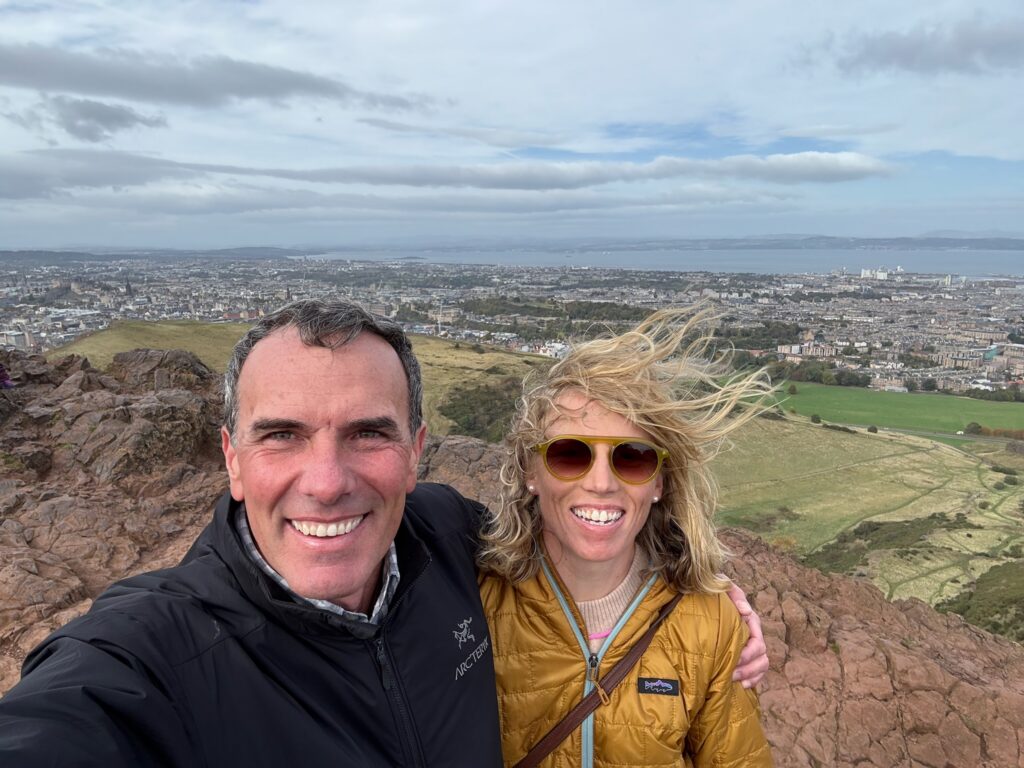
My clients have told me they like that I travel and do other things outside of riding, because it shows I’m a healthy person, and I think your quality of life makes you better at your job. You also have to be organized and have integrity—being a good person will help you overcome challenges, whether you’re in horses or any other field.
You’re guaranteed to have plenty of those challenges in horses; you need a thick skin, and you have to accept that horses get hurt and don’t always work out. You can’t put all your eggs in one basket—having diversity in your business is smart. I’m not one to spend a lot of money on horses; I’d rather have a nice handful than put everything into one, because if that one horse goes lame, then what do I have? The same goes for having only one sponsor—that’s scary.
I also believe in owning something, whether it’s a horse or otherwise, because it’s yours, and it makes you work hard—like having a kid or a dog, something you need to feed. It helps you set down roots and holds you accountable to following through on commitments.
PH: Is there anything we haven’t touched on in this conversation that you think is important to mention?
ED: One thing I’ve had to deal with is the wear on your body. I’ve been thinking about that more. I went back to doing physio remotely twice a week, because I felt tight and like I was losing flexibility and strength. Boyd Martin has been vocal on social media about what he does for his body, and he’s hard on himself, but I like that he brings attention to it, because riding one horse a day is one thing, but when you’re riding a lot cumulatively and getting thrown around, it takes its toll. People who ride a lot need to take care of themselves.
You also have to think long-term about your business model. What am I going to be doing in 20 years? What replaces riding when you can’t do it anymore, and how do you have a sustainable plan in place? My husband and I have been talking about that more recently.
It would be nice to have some structure or support system in place for trainers, so there’s at least a resource for how to do it, even if it’s still up to each person to follow through.
Are you interested in being featured in The Business of Horses? Email Lslade@EquineNetwork.com.