




 Team Prac
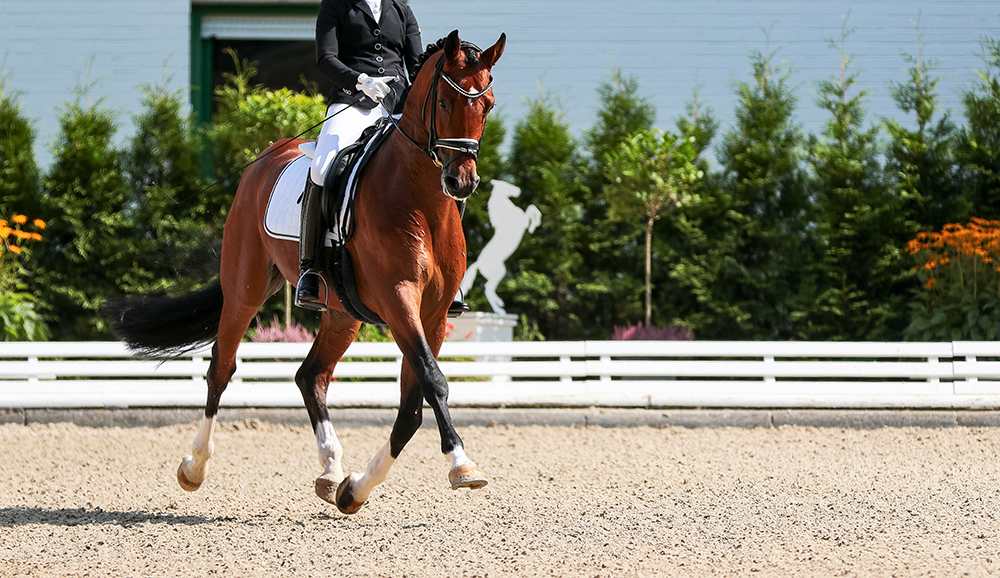
The thing I get asked about all the time, especially when I’m looking for horses for clients abroad—and I’ve watched this play out for over 25 years—is how attracted people are to horses with big gaits and cadenced trots.
You see it a lot in Europe in the young horses, and you see it here too, now that the young horse classes have gotten so much more competitive. These horses have huge walks—walks that score a 9 or 10—and big, scopey, cadenced trots that sometimes tip almost into passage. Everybody is wowed by that movement.
But here’s what I can tell you after training my 17th horse to Grand Prix: I’ve had those big, scopey movers. I’ve had the 10 trots. I’ve had the 10 walks. And with a 10 walk, you’re very unlikely to ever get that horse quick enough behind to piaffe. The same is true for the trot.
You Can Change the Trot
A couple of years ago I bought a 5-year-old who came out of the womb trotting like that. He scored 70% his whole way up the levels. When I got to the Grand Prix work, I taught him passage in a day; I could just pluck it right out of the air. All it took was a simple half-halt. But when it came time for half-steps, for him to really sit and get quick enough for the piaffe, he struggled. That’s when I realized he was never going to be a CDI Grand Prix horse. I could ride him one-handed; he was beautifully trained. I showed him through small tour and eventually sold him to a para-dressage rider. He was great. But he made my point for me.
Notice how many of the horses winning the 4-, 5-, and 6-year-old classes never show up in the Grand Prix. I’m not saying all of them, but some we never see in the big ring. Everyone gets wowed by the cadence, the scope, the brilliance, the 10 walk, but in my experience sometimes they just don’t make it to the top.
Even when I’m selling horses now, people say, “Well, it’s a little too quick. It’s a little too ground bound.” A couple of weeks ago I posted an old video of me on a very cheap horse I bought years ago, and people were like, “Why would you buy that? He looks like a hunter. He lives in the sand. He’s got no cadence, no scope.” Then I posted what he looks like now, and no one could believe it was the same horse. But I knew the pedigree. He’s by Blue Hors Farrell with Don Olymbrio on the dam’s side. He’s not bred to not do this. He had three good gaits with a nice attitude. He was 6 when I bought him, so not too old to start my way of training, and I knew I could redo a lot of it.
He is now 9 years old and has a very good piaffe and passage along with a nice, scopey trot. And when people ask me how I did it, I tell them: You have to remember, the trot is the gait you can always change. You can always enhance it. You can always make it prettier. That horse had a good walk and a good canter, and I knew I could do the rest. He’ll come out at Intermediate II this year with a completely different set of gears. He is unrecognizable to anyone who knew him before. When I sat on him the first day, I knew I could make him a Grand Prix horse, but it took a lot of work, patience and systematic training. I had to convince him to be a team player, and pretty soon we were speaking the same language.
I think there are two reasons why people don’t do this themselves: They don’t have the education or the creativity to figure out how to find that trot, and they don’t want to take the time. So when people tell me a horse is “too flat” or “too quick,” but he’s within their budget, my answer is always the same: As long as the trot is regular, in a nice rhythm, you can make it into any trot you want. If the horse has an engine and power, with a good work ethic, you can build the cadence and the scope.
What You’re Seeking
When I’m trying horses, or my clients are trying horses, I tell them you need to be able to find different gears in that trot. You need to be able to adjust the tempo. Can you make it quicker? Or is it so floaty it’s always on the verge of passage and just too slow behind? That was the hard part with the big, scopey Grand Prix horse I made; I wanted to take the “wow” movement out of him and see if I could make him flatter and quicker, and I couldn’t.
So now, when I try horses, I don’t always look for the wow trot. If I find one with built-in cadence, I ask myself, “Can I kill the cadence a little if I want? Can I make it quicker and change the tempo of the trot?” If I can’t, it’s going to be a hard road to Grand Prix.
People in this sport think they want bigger and better—bigger canter, bigger changes, bigger everything. But that leap from Prix St. Georges to Grand Prix is huge, and once you’re doing the Grand Prix, it’s like a different sport.
For example, when you’re talking about doing the canter half-pass zigzag, I’m teaching my 9-year-old to jump smaller in the flying changes, to keep it balanced, quick and tidy. The second the horse lands, I don’t have time to repair the balance in the canter. You have to land and go sideways again—and quickly! Sometimes in the training, you have to make things smaller, and you need a canter and a trot you can work with.
For some of my clients, their goals are different than mine. I don’t advise them to buy the really big-gaited horses. If they do, they usually end up over-horsed, and this is supposed to be fun for them, not challenging. I always tell them: Buy a 7 trot, or even a 6.5—something regular, with rhythm, that’s self-carried, and that feels easy to sit on in the back. I’ve seen it so many times over my career that people buy the wrong horse that’s not suited for them—these huge trots they can’t sit or package, and then it’s not harmonious, and they max out at Third Level.
And let’s get real, not all of us have enormous budgets to spend on the horses who have both the wow factor and the quickness. Those do exist, but they are usually very expensive, for good reason. I just wish more people could see past the big trots, because so many horses are overlooked, and there are so many good-quality horses in this country.
People think, “He’s not a big enough mover, and I won’t win with that.” But learn the pedigree, and then you know what you’re getting, and then give it time. That’s training, and that’s what we should all be doing. That’s the fun of it for me. I love creating my own work of art. It’s my passion, and I especially love an underdog who got overlooked.
My advice is simple: Buy something you can work with that has three good gaits, a good brain and an engine. The rest we can create through good riding and training.
About Chrissa Hoffmann
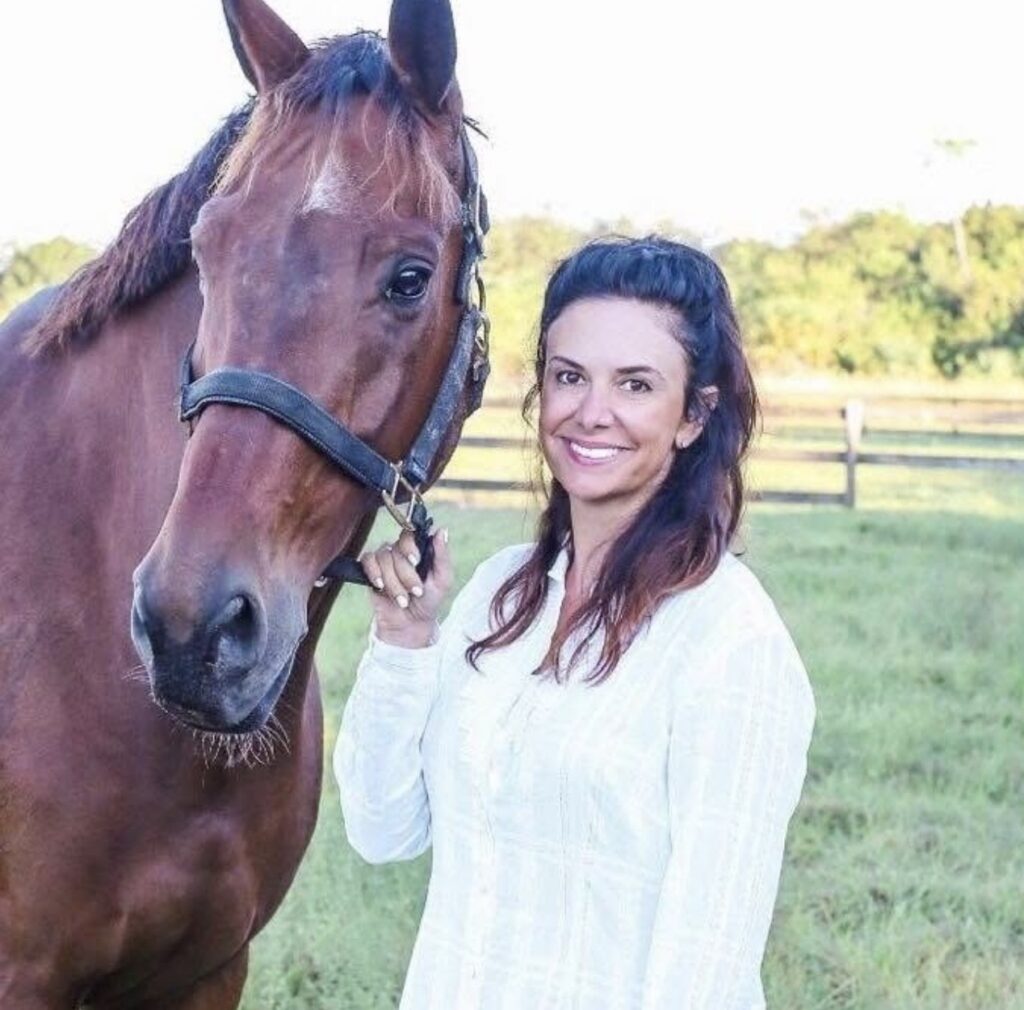
Chrissa F. Hoffmann is an international rider, trainer and competitor, and she holds the bronze, silver and gold medals from the U.S. Dressage Federation. She owns and operates CFH Dressage in Vero Beach, Florida.
Hoffmann has trained 17 horses to Grand Prix, including non-traditional mounts like American Saddlebred Harry Callahan and Morgan Dancity Savoir Faire, and she was long-listed for the U.S. Dressage Team with Ferrelli. She takes pride in developing her own horses and loves to give back to her students. She has helped seven riders earn their USDF gold medals and countless others secure their silver and bronze medals.