



 Team Prac
In her video series on EQUESTRIAN+, FEI trainer Felicitas von Neumann-Cosel reviews the training scale. After reviewing rhythm and tempo, the basis of the training scale, von Neumann-Cosel covers the next two steps of the training scale: relaxation followed by connection. She looks at these steps on the training scale from both the horse’s and rider’s points of view.
Relaxation From the Horse’s Point of View
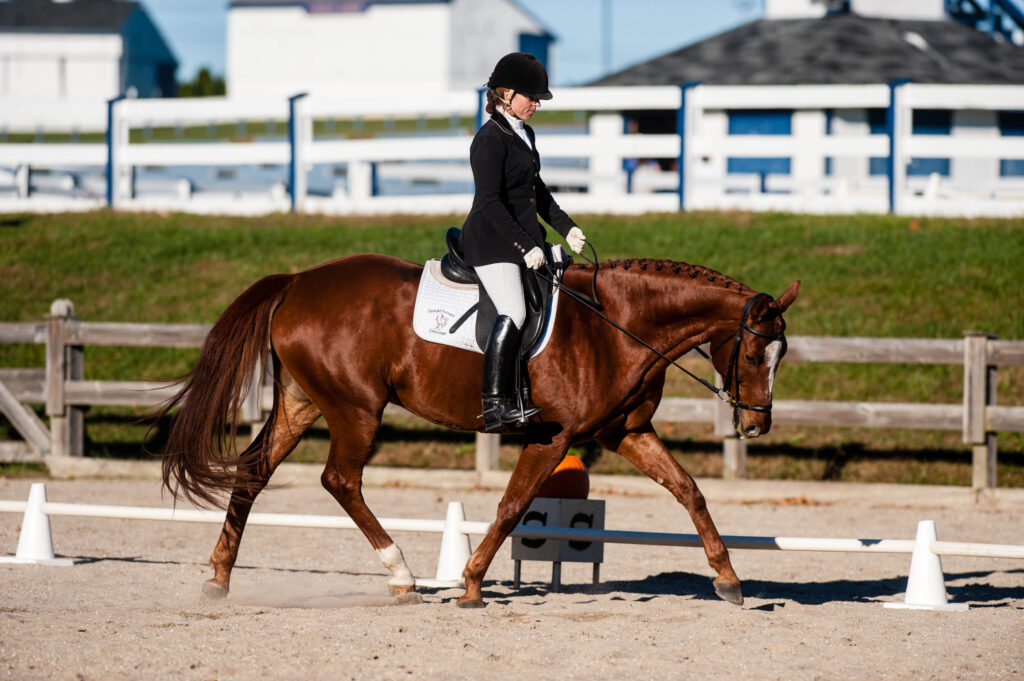
“You can hear often that the Germans like to use that term Losgelassenheit, which is really difficult to translate exactly, but it means that Losgelassenheit lets the movement go through the muscles. So, we always have to think of the interior of the horse, meaning is he relaxed and open to listen to us? If he’s in flight and fight, he will not be able to listen to us. And is his body open to swing and go forward?”
“Very clear signs of relaxation are snorting and breathing—a sign of a horse relaxing his ribs.”
Relaxation From the Rider’s Point of View
“When we talk about relaxation, I think it is very important for people to understand that when you follow the horse, you have to have a lot of positive tension and stability in your core. But any kind of negative tension will affect your ability to go with the horse negatively and therefore affect his ability to relax.”
“We are trying to show that the stability of the upper body allows for the limbs to be stable but soft. Hopefully you will see a soft leg of the rider and a stable frame of the rider with the ability to keep the hands quiet without stiffening.”
Connection From the Horse’s Point of View
“It is really important to understand that the connection is something that the horse is seeking. It is almost a feeling that the horse starts to reach into the bit like it wants to hold hands and the rider is there to receive him.”
“There shouldn’t ever be a huge amount of pulling back or a lot of pressure in the contact because then the horse is not holding hands he is bearing into the hands, which would clearly upset his balance.”
Connection From the Rider’s Point of View
“Without the rider’s ability to keep the hands in a stable place and to develop a very, very soft feel in the hand, a really good connection isn’t possible.”
“As we strive to ride better, our motor functions have to get smaller and smaller, and we have to realize the high level of sensitivity horses can have when they are engaged, light and carrying themselves.”
Watch & Learn on E+
- You can watch Felicitas von Neumann-Cosel’s entire series on the training scale here on EQUESTRIAN+.
- For additional videos featuring von Neumann-Cosel’s top tips and training strategies, click here.
- From short training tips to how-to videos and insider-access to private clinics and lessons, learn more from top dressage experts on EQUESTRIAN+.
About Felicitas von Neumann-Cosel
Originally from Germany, Felicitas von Neumann-Cosel is an established and successful Grand Prix rider, trainer and clinician. She completed her “Reitlehrer” (federally certified Master Instructor) certification in Germany and served as a USDF examiner for the Instructor’s Certification Program. Von Neumann-Cosel is based in Woodbine, Maryland, where she resides as head trainer at First Choice Farm.