




 Team Prac
The German Training Scale features six levels outlining the training of a dressage horse, and at the top of the pyramid is what many dressage riders dream about—collection. It can take years to reach collection, which is achieved when a horse is light on his forehand with his weight shifted to his hindquarters, and is engaged, traveling in self-carriage with shortened and higher steps.
Collection is built on the lower tiers of the pyramid: rhythm, suppleness, contact, impulsion and straightness. True collection can’t occur if any of those pieces are missing.
Training horses to collect begins at Second Level, using movements such as travers and shoulder-in to teach them to start to shift more weight to their hindquarters as they develop the adjustability of their gaits they’ll need as they continue through the levels.
Third Level is when a horse needs to start showing a higher quality of collection through movements such as the half-pass, flying changes, and clear transitions into and out of extended gaits. More impulsion, engagement and throughness are all required to attain this higher degree of collection.
Historically, when horses are doing Third-Level work, the double bridle is introduced in training, as it can help achieve that higher degree of collection. Riders have had the option of showing in a double bridle at Third Level until this year, when the U.S. Equestrian Federation Board of Governors passed a new rule during its mid-year meeting stating that double bridles are now prohibited until Fourth Level. The rule will go into effect on Dec. 1, 2026.
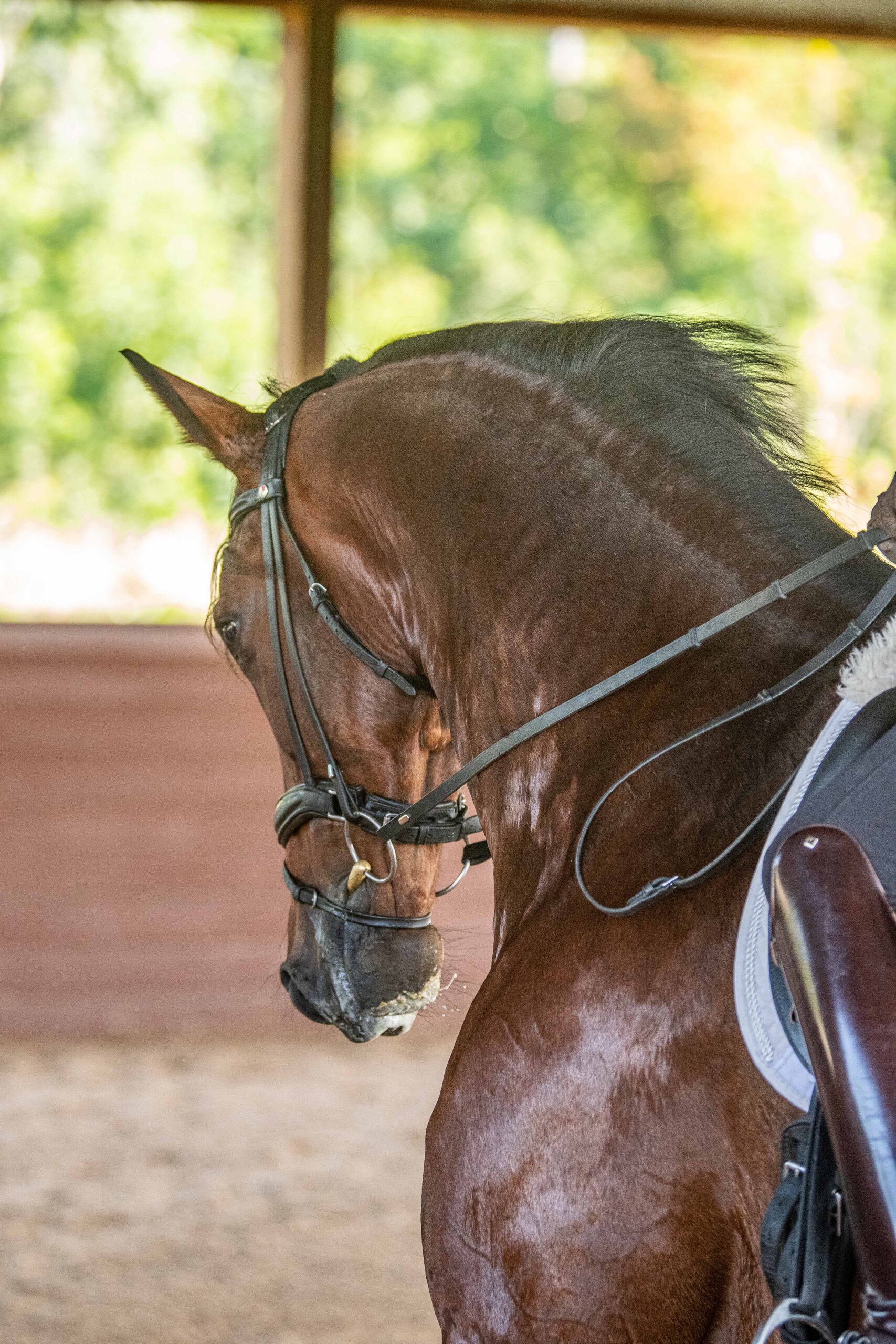
The rule change sparked a heated debate, with many riders feeling a valuable tool was being taken away from them, while others, including officials and judges, felt the change was a positive one in light of increased scrutiny about horse welfare and social license to operate.
Another reason for the change was to bring USEF rules in line with Fédération Equestre Internationale rules and to prevent the use of a double bridle on horses below the age of 6, as there is no age limit rule for horses competing at Third Level.
In the right hands, a double bridle can help a horse achieve collection by allowing the rider to use a more refined, lighter aid than in a snaffle, said Amy Bradley, a Grand Prix rider, USEF ‘R’ dressage judge and member of the USEF Dressage Sport Committee.
“You shouldn’t need the double bridle to create something,” she said. “You should already have it created. You should already have that concept of those basics created with the horse so that the double bridle just kind of accentuates it.”
In the wrong hands, the double bridle can be a harmful tool, especially if it’s used to control a strong horse or used by an inexperienced rider without the independent seat and coordination to apply it correctly.
Build on the Basics
For Grand Prix rider Petra Warlimont, who grew up in Germany but is now based in Evergreen, Colorado, following the training scale correctly is key to learning how to ride and train in a double bridle.
“If you come through Second Level, and as a rider have an understanding of collection and the horse has an understanding of self-carriage, riding in a double bridle should not be something that we need to question, because the rider and the horse should be ready for that at Third Level,” she said.
But the new rule doesn’t worry Warlimont, as she treats each of her young horses differently when introducing a double bridle.
“My 7-year-old hasn’t even been in a double bridle yet; I don’t need it,” she said.
A horse who is correctly trained in a snaffle will stretch forward and downward to the bit, having learned to trust the contact and round his neck as he softens his mouth. Once a horse is strong enough to start shifting more weight to his hindquarters, a double bridle can be introduced, with the curb bit encouraging the horse to lift the poll when used in a passive manner by the rider. A harmonious ride in a double bridle is one where the curb bit isn’t used much at all since the horse has learned self-carriage.
Though the modern dressage horse is getting lighter and more sensitive, control should never be the reason to use a double bridle, said Warlimont.
“There are certainly horses, especially with what we’re breeding now, that are strong, where you can use the double bridle for control, but you still shouldn’t. The training should be there to where the double bridle is really just there to refine your aids and not to muscle a horse into what you ask them to do,” she said. “If you don’t feel safe unless you have two bits in the horse’s mouth with a chain attached, you shouldn’t go to a horse show. I don’t think it should be a safety thing; I think it’s a skill-level thing.”
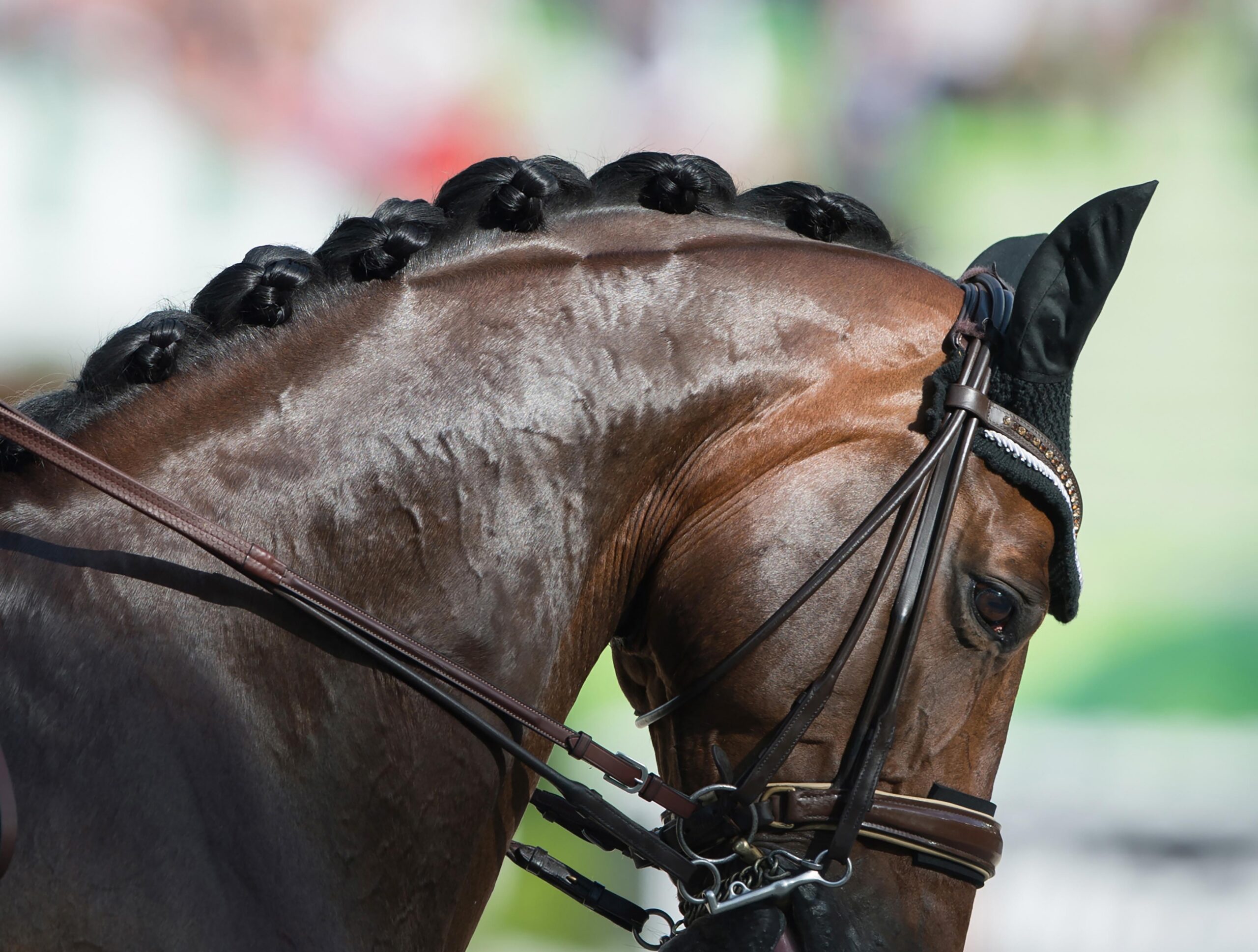
Bradley and Warlimont believe that riders and trainers should have the skill to ride through the levels in a snaffle, and when the double bridle is introduced, it shouldn’t feel much different. They typically introduce the double bridle on trail rides to let the horse get used to two bits in his mouth, then work a couple of days a week in it.
“Keeping horses in a snaffle longer really helps the rider to sense where the holes are in their training,” said Bradley. “It all depends on the horse and how well they understand the basic concepts you are trying to teach them and build upon through training. Each horse is different. I’ve had some horses work into the double quicker while others have stayed in a snaffle through Fourth Level.
“The other thing to consider is that snaffle bits in this day and age are so much more developed that they used to be,” she continued. “There are many snaffle options for riders to choose from, and many can aid in training through specific issues.”
From the Hind End
When training horses, Bradley tries not to think of using the bit to get a certain feeling; she thinks about the hind end first and works on exercises to increase engagement, while having the horse properly respond to half-halts to improve their balance. Transitions within the gaits, and upward and downward transitions from each gait, will help, as well as working on smaller circles. Use momentum to teach the horse to listen to your seat and leg aids to come back, not so much your hands.
“You want to make sure that the horses are well-established in the basics—engagement, balance and collection, all without having to use a double bridle for leverage—which some horses it’s easier on, some horses it’s not,” Bradley said. “So it’s just going to have to make you get a little creative in your training and really using exercises on these stronger horses to develop the strength from behind so that they can carry themselves.
“I try to use a lot of exercises that are really going to naturally try to set the horse back onto the hind leg rather than being so dependent on something stronger in my hand,” she said. “Use exercises to increase that strength, so that over time, they can do it more on their own, and you don’t need it to be more of a physical act by using the bridle to create these moments of lightness.”
She also cautioned that introducing a double bridle too quickly for leverage may back a horse off the bit, which will be a problem in the future when you want them to truly understand the half-halt and a higher degree of collection and balance off of your seat and a lighter hand.
As a judge, when she sees improper use of a double bridle, it shows up as horses that are braced in the base of the neck or hiding behind the contact rather than coming up from behind with proper engagement.
“You see horses that are more out behind, backs are dropped, braced in the base of the neck, and you can see that the horses aren’t properly connected to the double bridle,” she said. “A horse like that could benefit from being trained in a snaffle, encouraging a horse to stretch out to the contact and really take the connection from the hind leg to the bit. As a judge, seeing that, you can kind of see there’s a little bit of a hole in the training, and I think that’s kind of [what the new rule is] trying to prevent from happening.”
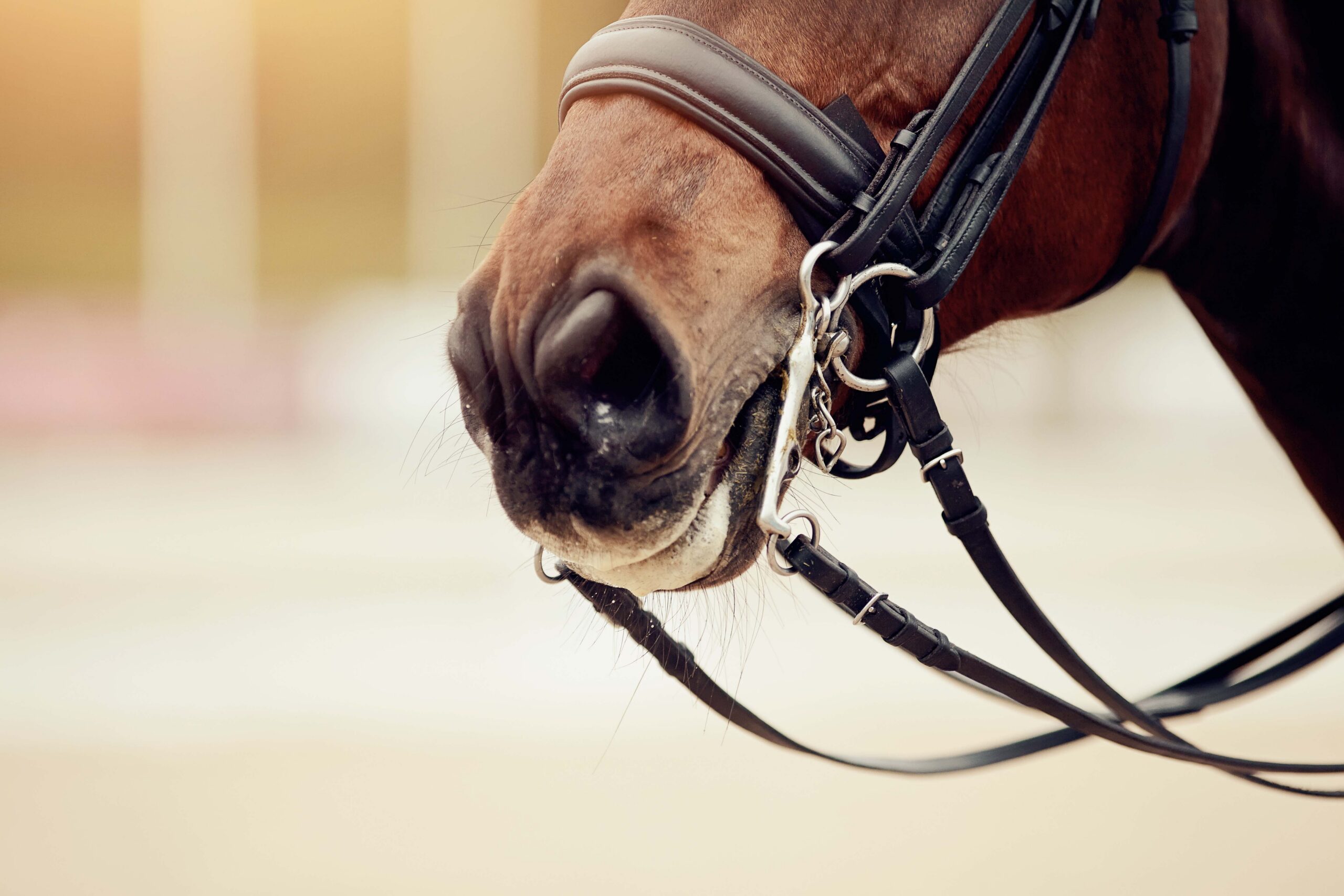
Jennifer Roth, a USEF ‘S’ dressage judge based in Tryon, North Carolina, said she often sees inexperienced riders using the double bridle as a handbrake with too much use of the curb chain.
“You can just wreck the horse’s mouth,” she said. “If the riders don’t have an independent seat, then they hang on the reins. They don’t know how to make a half-halt, or they don’t know how to correctly connect the horse from back to front in a snaffle, and so they need more control, so they go to the double. Then they’re hanging. They have too much handbrake, and then they have to use more driving aids. So you see horses get dull between this driving and constraining.”
She also sees riders at Third Level with horses who can do clean flying changes but are still lacking strong foundations.
“My hope is that [the new rule] will encourage riders to focus more on the basics, because the training scale starts with the rider,” she said. “Really, you can say, ‘Oh, the training scale starts with rhythm.’ Yeah, but the training scale really starts with the rider and an independent seat. I have a very classical upbringing, so I’m a real stickler on an independent seat and use of aids.”
Bradley, Roth and Warlimont all say that the new rule will not change how they train and prepare horses for Third Level and hope that it will encourage riders to spend more time in a snaffle solidifying the basics. While it may feel good to say you’ve ridden in a double bridle and a shadbelly, shortcuts in training will never work out.
“That’s for the wrong reason. It’s not really about what’s best for the horse and the horse’s learning,” Bradley concluded. “The problem comes by throwing [a young horse] in the double, thinking that they can train through things a little bit quicker. But in the end, there is no benefit to that. You always have to think about the time you’re going to spend going back and fixing the training that wasn’t really proper to begin with.”