
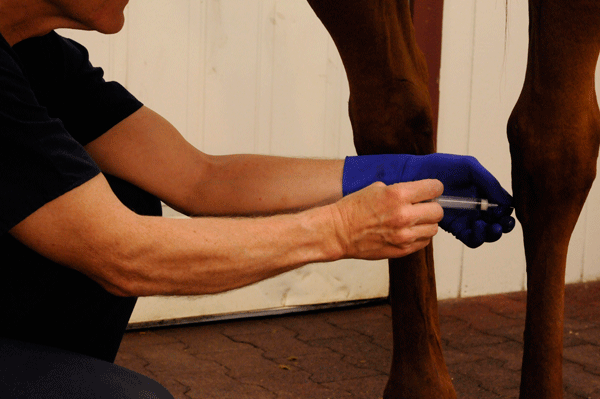
When it comes to treating an older horse who has been showing signs of lameness from a diagnosed bone chip, there are a few options. If the chip is in an area such as the fetlock joint, for example, surgical treatment might not be the best option because recovery and rehabilitation from surgery will take many months for an older horse. Instead, treating the lameness with hyaluronic acid and anti-inflammatory drugs might be a better option. That said, intra-articular medication has its own risks, and with either treatment plan, complete resolution of the lameness, with the horse returning to his previous form cannot be guaranteed. Extended rest with rehabilitation is also another important option to consider and, therefore a vet will consider many criteria before making a recommendation.
The first question a vet may ask is how long the horse has been lame. If this is a recent event, the prognosis for the surgical option is improved. For a more chronic lameness in an aged horse, intra-articular medication is probably best.
If the lameness has been localized to the fetlock with intra-articular anesthesia, the bone chip may not be causing any lameness. A chip can be imbedded in the lining of the joint capsule and not be a problem. In fact, many horses can have osteochondritis dissecans (OCD) bone fragments and remain in dressage training for many years.
Other questions may include: How long has the bone chip been present? Is there joint effusion? Is the horse positive to passive and active flexion? How lame is he? Veterinarians also have to consider other pending issues. For instance, sometimes it may not be worth the time and expense of surgery if there are other predisposing factors for new injury. For that reason, a vet may evaluate the following: the horse’s hooves, his conformation, his gaits, whether or not he has any angular limb deformity, if he toes out or in, if his pasterns are sloping or more upright and if he experiences any back soreness.
If the horse’s conformation renders him susceptible to excessive stresses, surgery may not be a reasonable treatment plan, and treatment with intra-articular medications may be a better option for extending the horse’s career.
Hyaluronic acid and cortisone can have a powerful and sometimes extended affect. However, occasional repeat treatments may be necessary. Another option would be intra-articular treatment with autologous therapies such as IRAP, which is an anti-inflammatory protein that is processed from the horse’s own blood sample. A veterinarian will also consider the level at which the horse has been performing. An expectation for the horse to continue performing at his previous level may not be realistic. All those involved can hope for the best, but ultimately a satisfactory outcome cannot be guaranteed.
Consequently, I would consider the results of a thorough lameness exam, evaluate the overall prospect for success and try to communicate a realistic expectation when offering a recommendation to the owner.
Peter O’Halloran, DVM, is a member of the American Veterinary Medical Association and the American Association of Equine Practitioners. Based in Dickerson, Maryland, he is a veterinarian with Monocacy Equine Veterinary Association.