
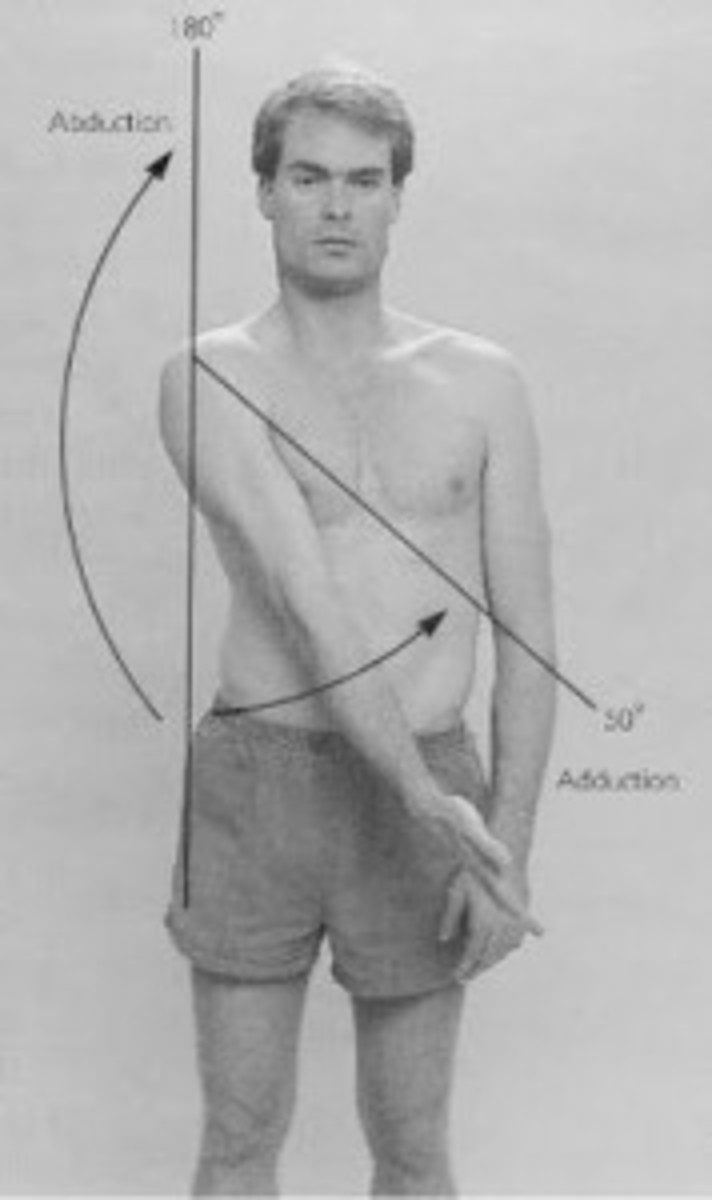
Many of us are familiar with abduction, but the term “adduction” is less common. The “L” binder notes that few people out of the judge program use the term to describe the biomechanics of the horse, however, it is very important to understand as a dressage rider/judge/trainer. It is one of the most important factors (short of purity of gaits) in a horse’s proper way of going.
adduction (duk?shn),
the movement of a limb toward the midline or axis of the body. The process of bringing two objects toward each other; the opposite of abduction.
—-
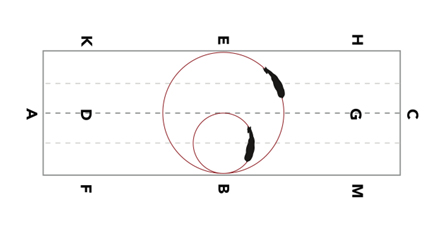
Adduction is extremely important in understanding the horse’s correct way of going – in particular: in the lateral work, on circles and when turning.
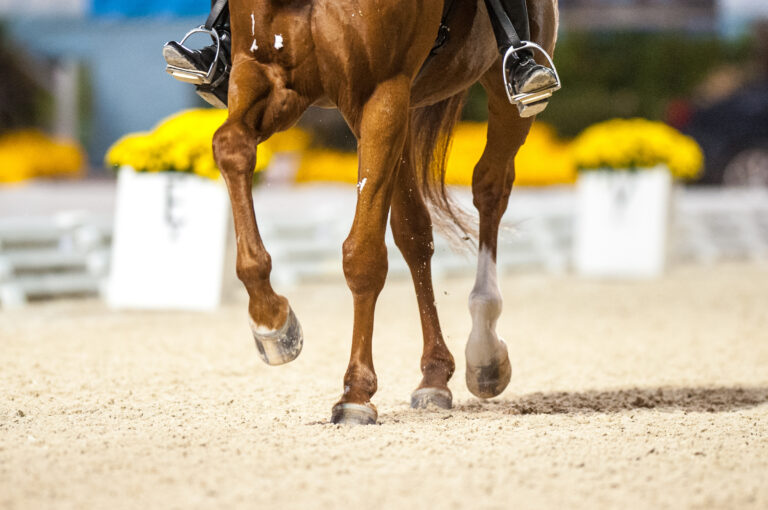
Note that a horse going on a correct, bending line, will adduct his inside hind and outside front legs. A horse that is not using his body correctly will not adduct those legs and will be unable to balance himself correctly.
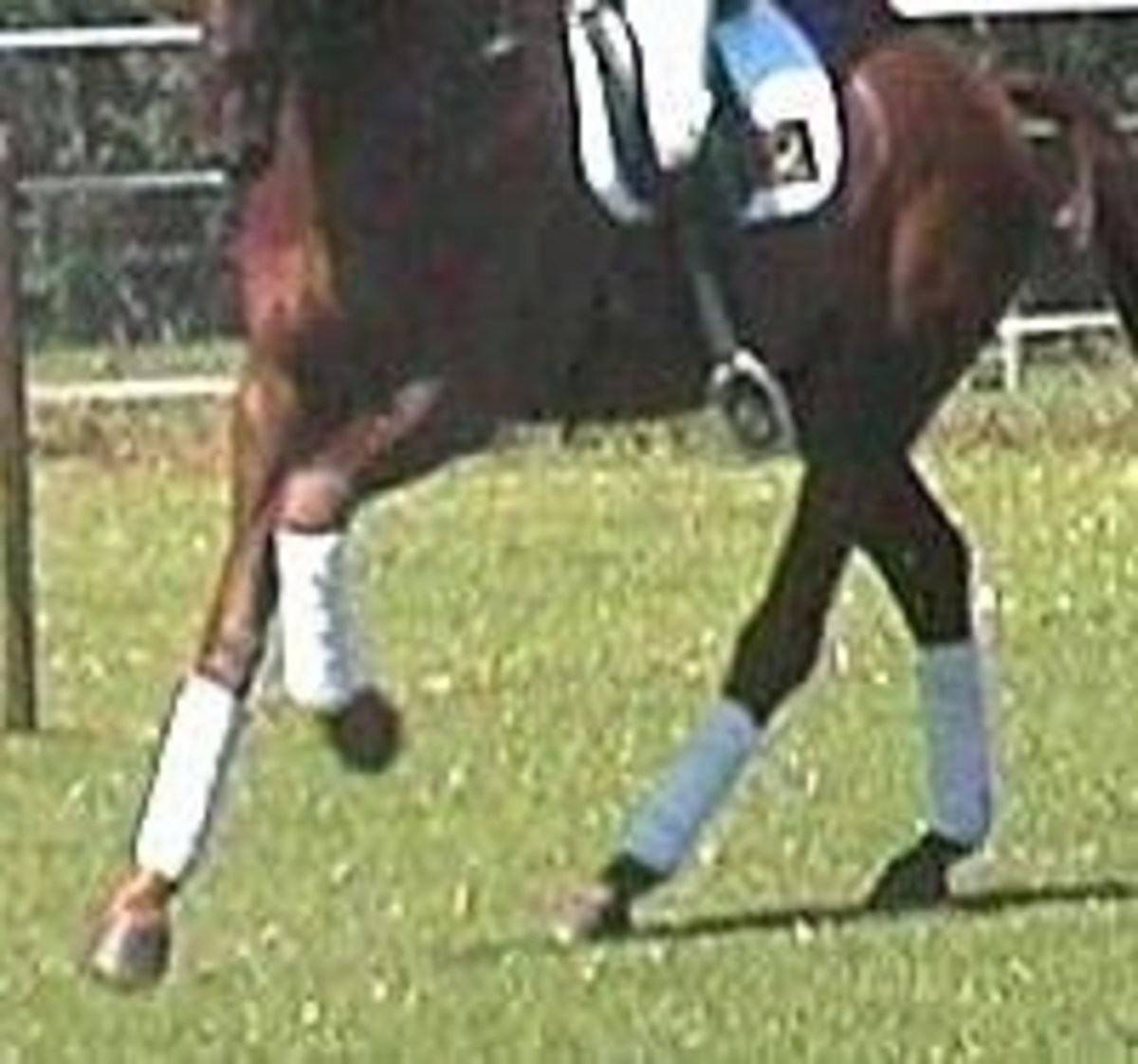
Here are some photos of a horse on a bending line, so you can understand adduction in the horse. Note where their legs are in relation to each other and how you can very clearly see that the adducting leg is stepping underneath the body, almost on the same line of travel as the non-adducting leg.