




 Team Prac
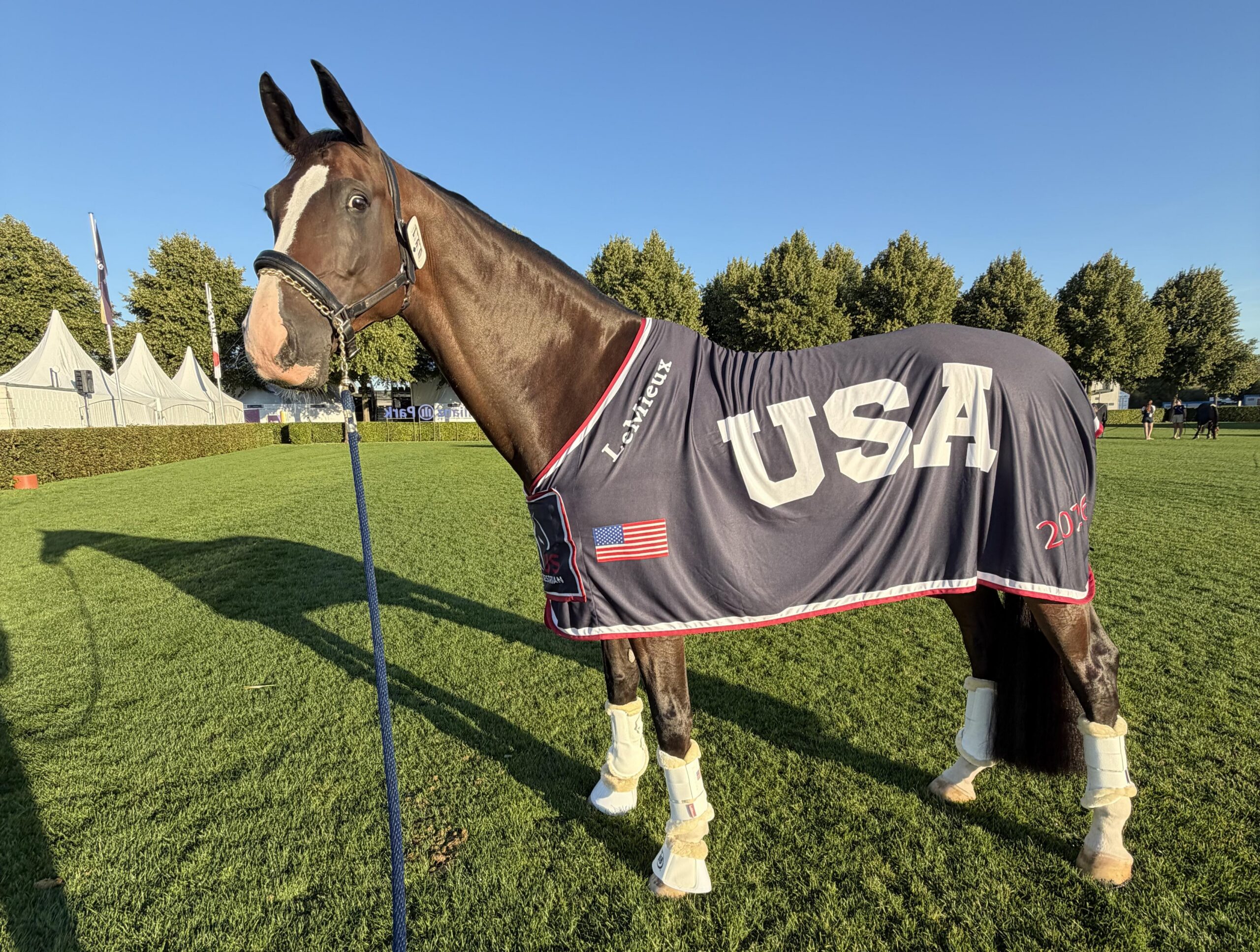
Before 2026, Meagan Davis had only dreamed of riding on a senior team for the U.S. But by the end of summer, she’d earned gold and bronze on two FEI Nations Cup teams and received a last-minute call-up she never expected—a team spot at the FEI Dressage World Championships in Aachen, Germany, aboard Scott Durkin’s 13-year-old Oldenburg gelding Toronto Lightfoot (Totilas x Okima Lightfoot, by Onassis).
We caught up with Davis, who’s based in Saugerties, New York, and Loxahatchee, Florida, to talk about her whirlwind summer competing in Europe, her recent performance during Dressage at Devon and her training philosophies.
Partnering With ‘Toronto’
DT: Tell us how you met Toronto Lightfoot and about your partnership with him.
MD: I was riding with Lars Petersen at the time, and he was working for Helgstrand [Dressage] in the U.S., where Toronto was. Lars said, “I think I have your horse. You need to come ride him.”
I went down there and rode like nine or 10 horses, and Toronto walked in the ring, and I was like, “OK, this horse is good looking … like this one is something to look at.” I sat on him and was like, “I could make this horse my own.”
Lars warned me that he’s a little bit tricky. His conformation isn’t the easiest, but he knew I could handle that and make Toronto into something. So, I was really lucky that Lars picked him for me. At the time, I hadn’t competed internationally at Grand Prix and had only done some national Grand Prix classes.
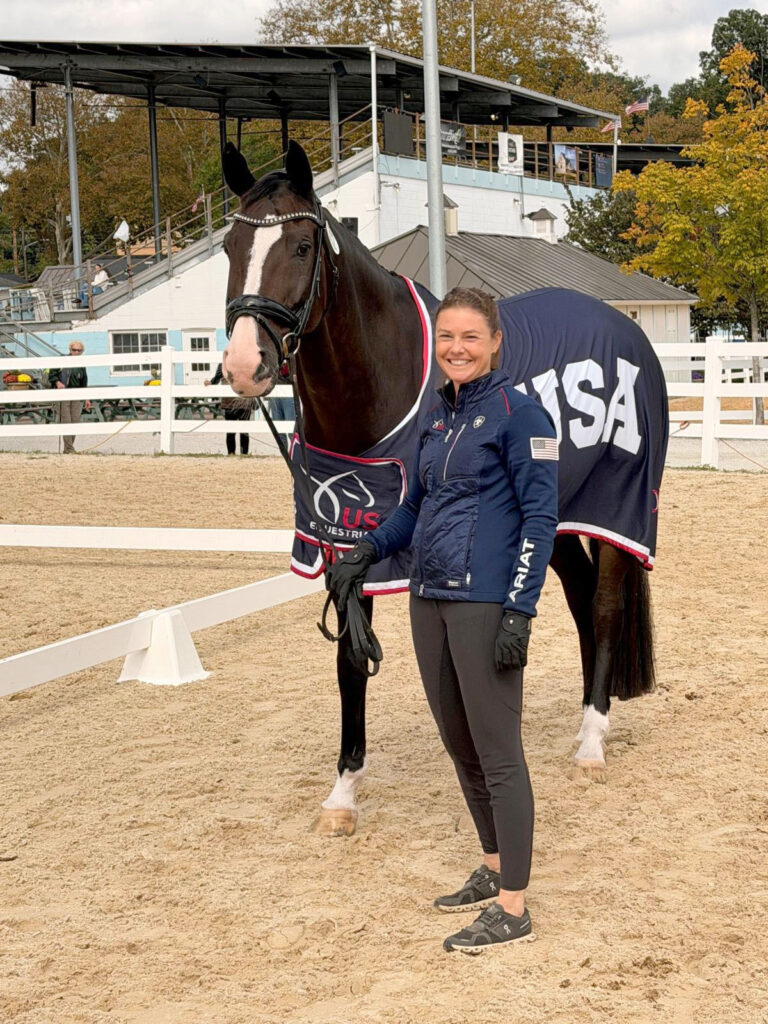
He was basically small tour when we got him—starting to school some of the Grand Prix stuff, but nothing was finished. I took him to his first show, and he wouldn’t get on the trailer. Then he did this massive spook at the show, and it was like, “OK, we’re gonna have to put a little work into this.” But I did my due diligence.
I spent a lot of time with him on the ground, showing him the showgrounds when we went to new places, and he really thrived with that. The more I did that with him, the better he was. I’m so lucky; he trusts me so much that if I just put my leg on, I know we’re going to go.
I worked with Lars for a couple of years with him, and then as I got into the Grand Prix, I went to Ali Brock for a year. Ali really helped us solidify the throughness we needed, and she helped me devise a game plan for what shows we should go to and what our goals should be. This summer, I also started taking lessons with Christoph Koschel. I’m training with him now and it’s been super. He’s pushing us to the next level.
An Incredible Summer in Europe
DT: You’ve had a super year—winning four CDIs, riding on Nations Cup teams in Wellington and Hagen, competing at two CDIs in Europe for the first time, and being selected for the U.S. Dressage Team at Aachen, literally the night before you left. Can you tell us what this journey has been like?
MD: My goal was to get to training camp. That was my big goal, and then I was so thrilled to go to Europe with Toronto. To accomplish what we have in that short amount of time [two years at the CDI Grand Prix level] says a lot about how much Toronto has grown as a horse. And there’s still so much more in him.
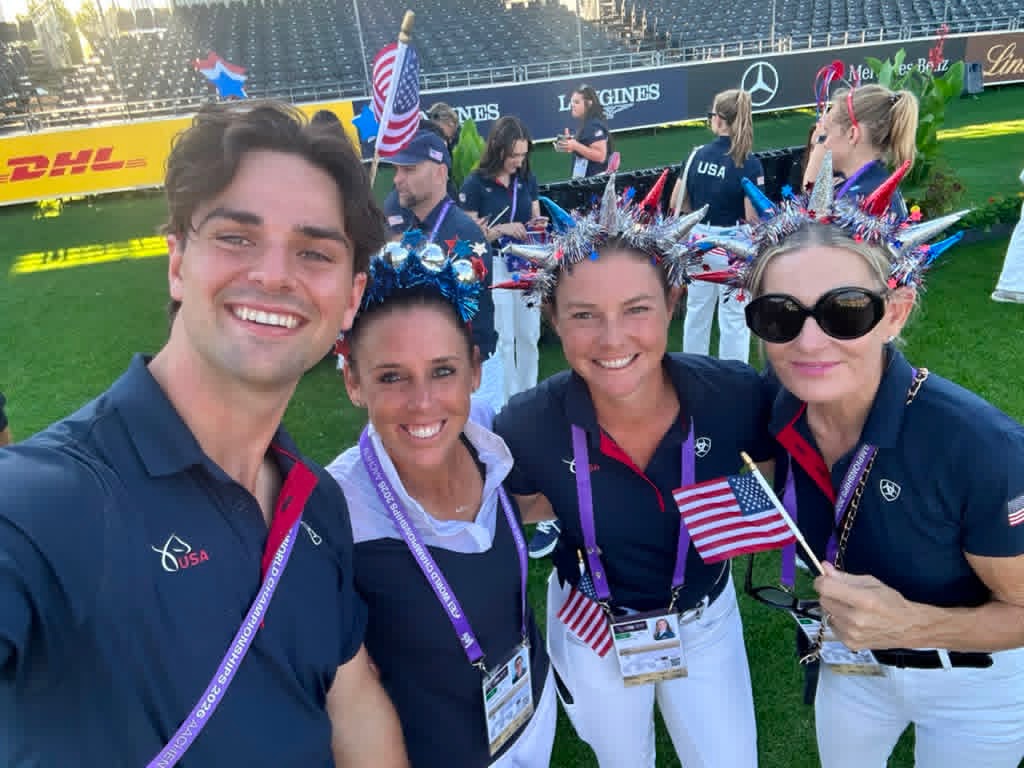
It was super being there again. I did the Young Rider World Cup in 2010 in Germany, and that was the last time I was over there. I went by myself and stayed at Christoph’s base, and you learn a lot going from having 11 horses in training to just one.
So that was a learning curve as well as trying to figure out how to plan for shows in Europe. I’d never done that before, and there are all these little things you learn. I was lucky that I had Ali to fall back on, and Christoph and his wife. They also helped me navigate some things, and riders like Kasey Perry-Glass and Adrienne Lyle helped me as well.
DT: How did you feel when you got the call about the team spot for Aachen?
MD: I did not find out I was on the team until 5 on Saturday afternoon at training camp, and we left for Aachen early the next morning.
The other members treated me like I’d been on the team at training camp because they needed to have the backups ready to go at any moment. Technically, they can substitute in a rider two hours prior to the jog. So, they wanted Kasey and me ready at all times, and we were. Kasey got called up midway through training camp, and I was just keeping Toronto feeling his best, ready if they needed me.
But I hadn’t planned on going. I had no support staff at that point. Luckily, my support team had refundable tickets reserved, so they got on their flights real quick. Christoph postponed his vacation for me and actually sent his groom, Inka Kalberlah, to help us.
DT: What was the Aachen experience like?
MD: I was super pleased with our ride. Going into that stadium, Toronto got a little nervous and stopped right before the sand part of the arena. He was looking around, and I was like, “OK, this is going to go one of two ways. He’s either going to decide to go with me, or he’s going to say he can’t handle the pressure, and we’re going to have to bow out.”
I just petted him and actually said out loud, “Toronto, I really need you to be my partner today.” He put his head down and off we trotted into the ring. I was dumbfounded. I was like, “Wow, this horse really loves me!”
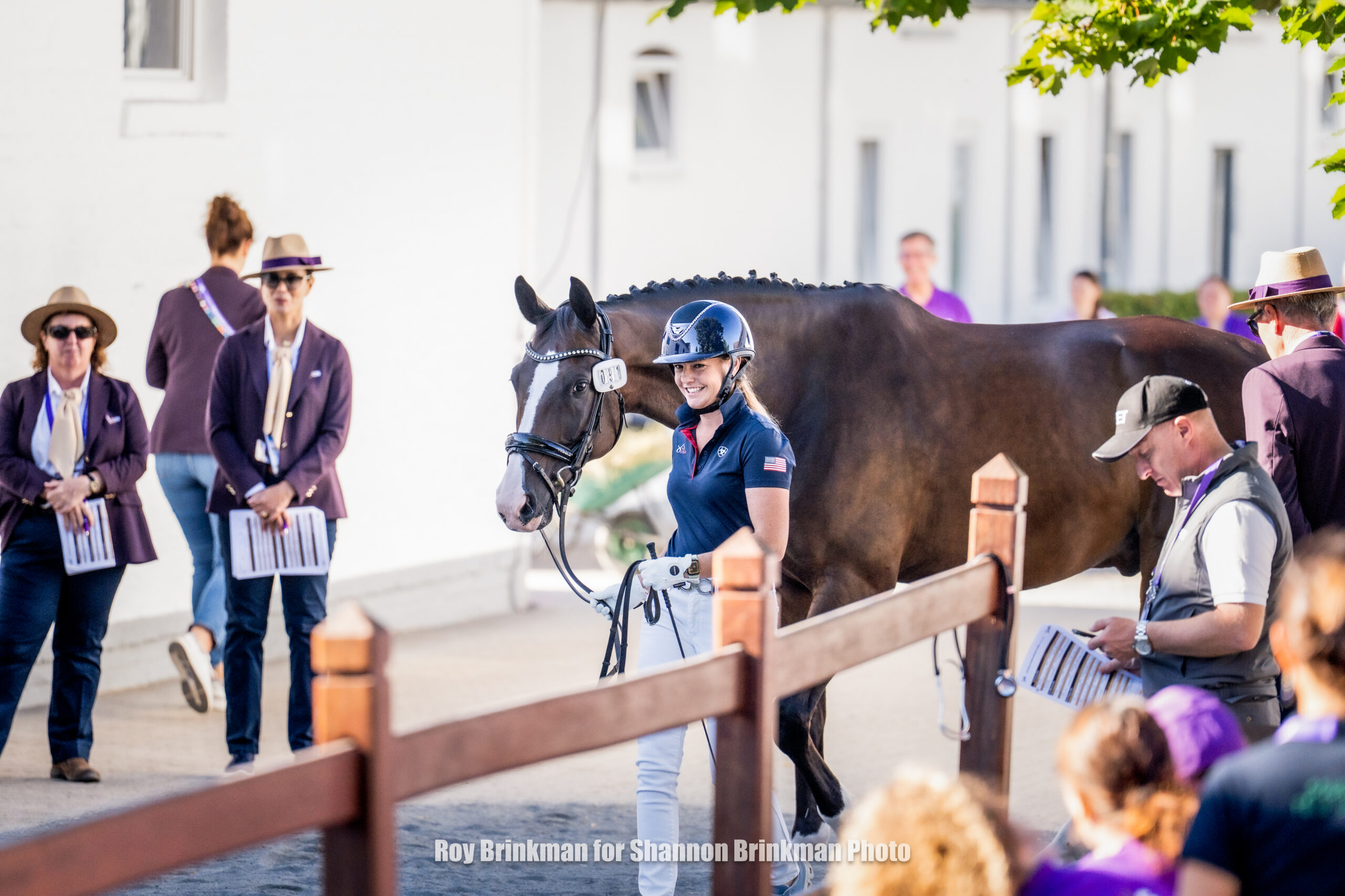
Being in that stadium was absolutely incredible. I hope we did our country proud. That’s the big thing—to go out there and be a positive representation of what dressage is in the U.S.
We had a fantastic team. Everyone had so much fun and was super supportive. The sport does tend to be a little bit lonely because we’re usually all at our own barns training. But when you’ve been on a team, there’s this special bond that you can’t replicate.
Personal Best at Devon
DT: You and Toronto wrapped up your year with a fifth-place finish in the CDI-W Grand Prix Freestyle at Dressage at Devon and a personal-best score of 74.970%. Tell us about your experience competing at Devon?
MD: It was super exciting. The goal was to test what we’ve been building on. It was only my second time showing that freestyle, and I hadn’t ridden it really all summer. Our freestyle was set to the Rolling Stones, so it’s a little rock and roll and grabs everyone’s attention.
When I got home from Europe to our facility in New York, I couldn’t practice it because our ring is quite a bit short. So, I was just trying to feel our way through it and listen to the music. Without being able to ride it several times beforehand, it was really quite hard.
But more than anything, we wanted to get Toronto into Devon’s environment—that electric, sort of European-feeling atmosphere that other shows in the U.S. just don’t have. He was so good in the freestyle and answered all of my questions. He was with me every stride, and that’s really what we were looking for. All of the homework we’ve been doing at home can then go and be demonstrated in the show ring.
Future Ambitions and Training at Home
DT: What are your goals for next year?
MD: We will be heading to Florida in November where we’ll train with Christoph and devise our plan. I think we’re looking at the five-star in January for sure. And I’d like to go back to Europe next year, hopefully to Aachen again, and do some more Nation Cup teams.
DT: Tell us about your program at home.
MD: I had around 11 horses in training this year, but it was a little bit less when I was in Europe. I pared it down a bit because I knew I was going and wanted a really solid core group of clients and horses that I could leave with my assistant Regan [Walmer]. I didn’t want her overwhelmed either.
I have adult amateur horses, sales horses and horses for me. I take everything. No horse is not good enough to be in my barn.
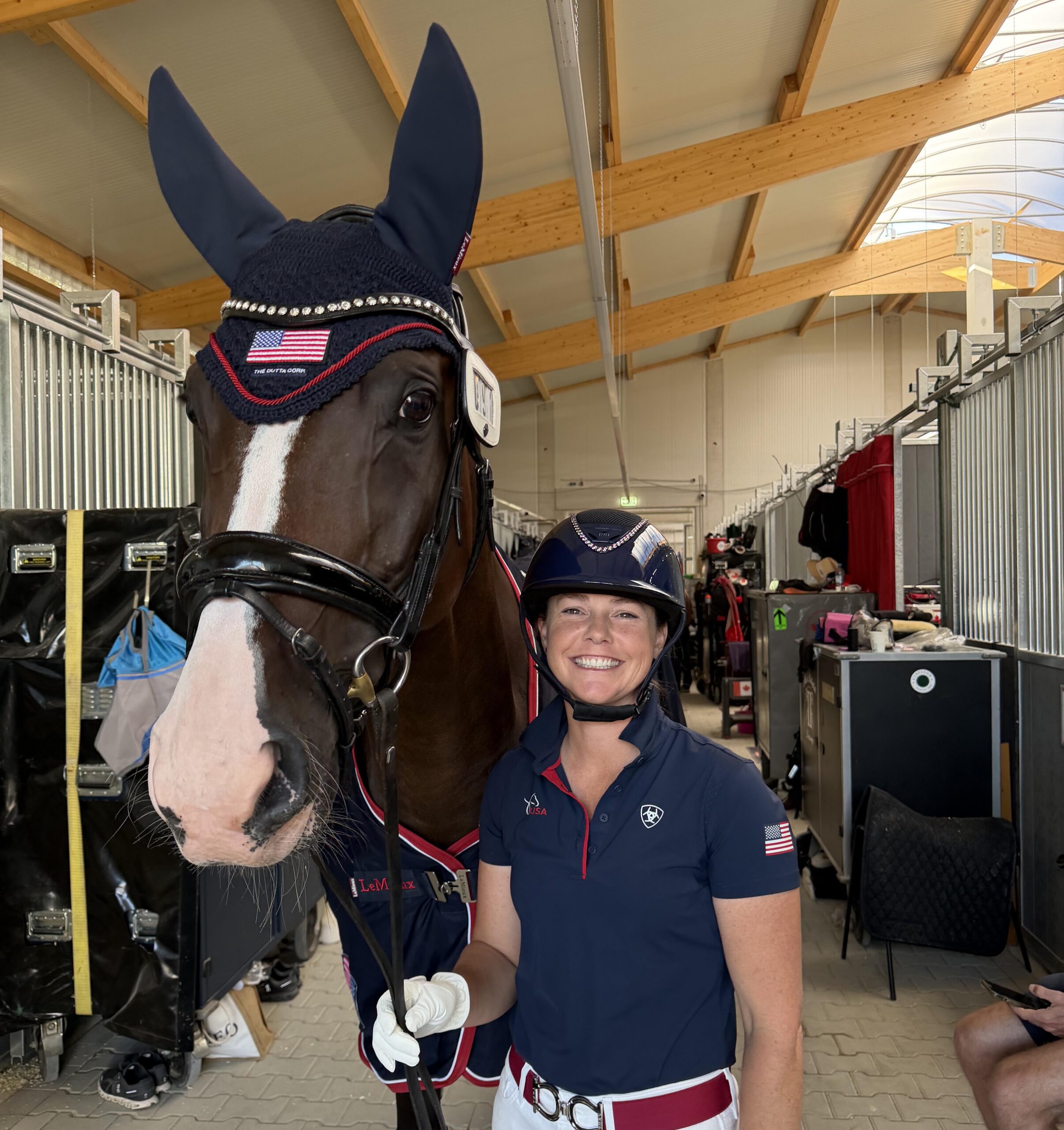
I do boot camps. People send me their horse for a month, and I help them get ready for a show or anything they might need. I grew up having horses at home—I was never in full training for my Junior/Young Rider career. I would get lessons once a week or twice a week, depending on my dad’s schedule. He would drive me to lessons with Lendon Gray who was an hour and a half away. So, I grew up riding horses in my backyard.
I don’t feel as if I’m too good to sit on any horse. I won’t get on dangerous horses—there’s that line. But I have PREs in my barn who are Third Level schoolmasters for their riders, and some of them are honestly my most fun rides during the day. For me, being able to teach and train horses is a great way to hone my own skills.
Sometimes I’ll be like, “OK, well, what happens if I do this on this horse? Does it fix this?” And I think the more different horses you have in your stable, the more things you can learn from them.
DT: Do you have any favorite exercises you use at home in training?
MD: For me, I really want my horses to be soft through their rib cage. When they’re soft through the rib cage and straight, you can add forward or energy—whatever it might be. But if they’re not soft and accepting of the leg, nothing comes through.
On a circle, I’ll use leg yielding; inside leg to an outside rein half-halt, 10-meter circle to 10-meter circle. I also learned this great exercise from Chris Hickey years ago: You do a 10-meter circle in the corner and go around like you’re going to do a second 10-meter circle. But instead of a full one, you do a half-circle followed by a 10-meter circle in the opposite direction. Then, continue that down the arena, so you eventually do six 10-meter circles down the long side.
If it’s a younger horse, I make the circles a little bit bigger, so you don’t make six of them. It could be a 15- or 12-meter circle or whatever the horse might need. It’s about bending on the circle to the change of bend and direction. For me, when you can do that with ease at the trot, you know your horse is working through his body.
I’m also big on turnout and going out of the ring to hack my horses. Usually my barn is mostly empty. My horses come in to work, and they go back out. I love having them turned out.