




 Team Prac
There are many factors to consider when planning a long-distance trip with your dressage horse or permanently relocating him to a different state or even country, and it’s crucial to plan in advance to ensure his comfort and safety for the duration of his journey.
In Part 1 of this two-part series on how prep your horse for long-distance travel, we discussed how to select the appropriate transportation, when to schedule his travel and key items to pack for his trip. In Part 2, our four experts explain how to manage your horse’s work schedule when planning for long-distance travel and provide grooming, nutrition and hydration tips to make sure he arrives at his final destination feeling his best.
Adjusting Work Schedules
As your horse’s departure date approaches, it’s important to maintain his training program without over-exerting him. You don’t want him to be exhausted before his trip. Ruben Palomera, former groom to U.S. Olympians Debbie McDonald and Adrienne Lyle, suggests lightening your horse’s workload a few days before his travel plans and keeping an eye on his legs and muscles in the days leading up to his journey.
“Liniments and magnetic blankets are great in helping with recovery. Standing wraps are also a good solution on days your horse works hard,” Palomera noted. “You can also use the occasional poultice, but be cautious of skin reactions from overuse and avoid using them multiple days in a row.”
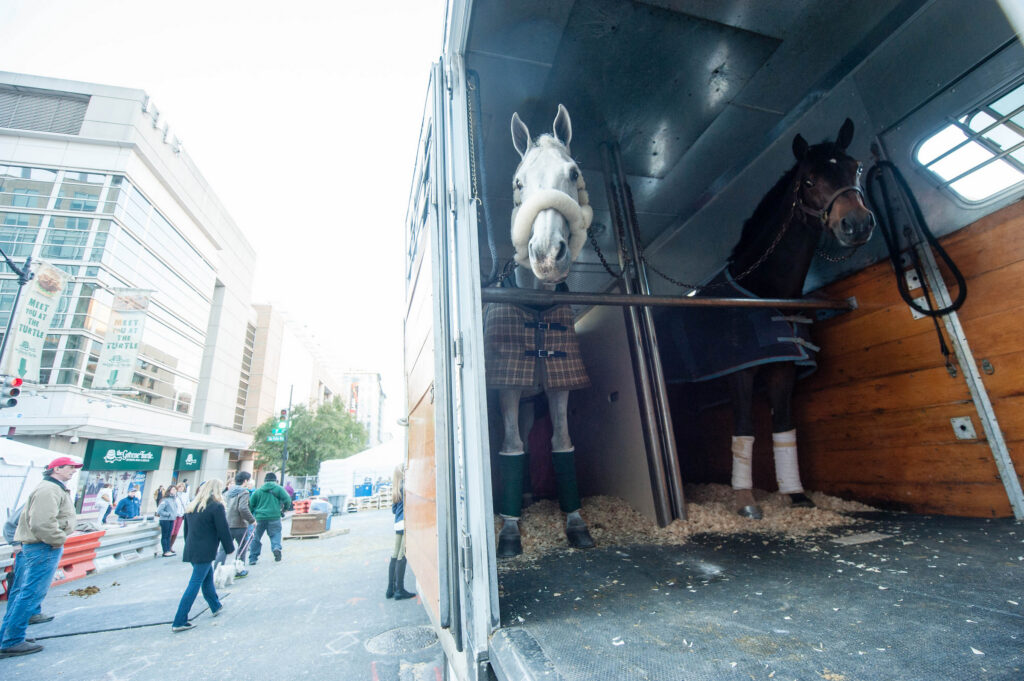
On travel days, dressage trainer Caroline Roffmann suggests only hand-walking and grazing your horse. When she hauled her horses from her home base in Florida to the 2012 National Young Horse Championships in Lamplight, Illinois, she didn’t work them on shipping day.
“Upon arrival, I hand-walked and grazed the horses later in the day. The next day I hacked and gave the horses an easy day,” she said. “The third day after arrival, I rode lightly and headed toward normal work.”
Palomera points out that the same recovery aids you use on hard workdays can be helpful after a long trip. Even though your horse hasn’t been working under saddle during his trip, maintaining his balance in a trailer over a great distance puts stress on his muscles and joints, so he still needs the chance to rest and stretch before going back to his regular training routine.
Blanketing
Karin Ahlqvist, transport manager for international horse-transport company The Dutta Corporation, advises to plan what blankets your horse will need before he travels. “Horses don’t usually wear blankets when they fly because it’s air-controlled and can get pretty warm inside. If they do, it’s a very light sheet, but we usually recommend going without,” she said. “You always can store a blanket for them to use when they get off-loaded.”
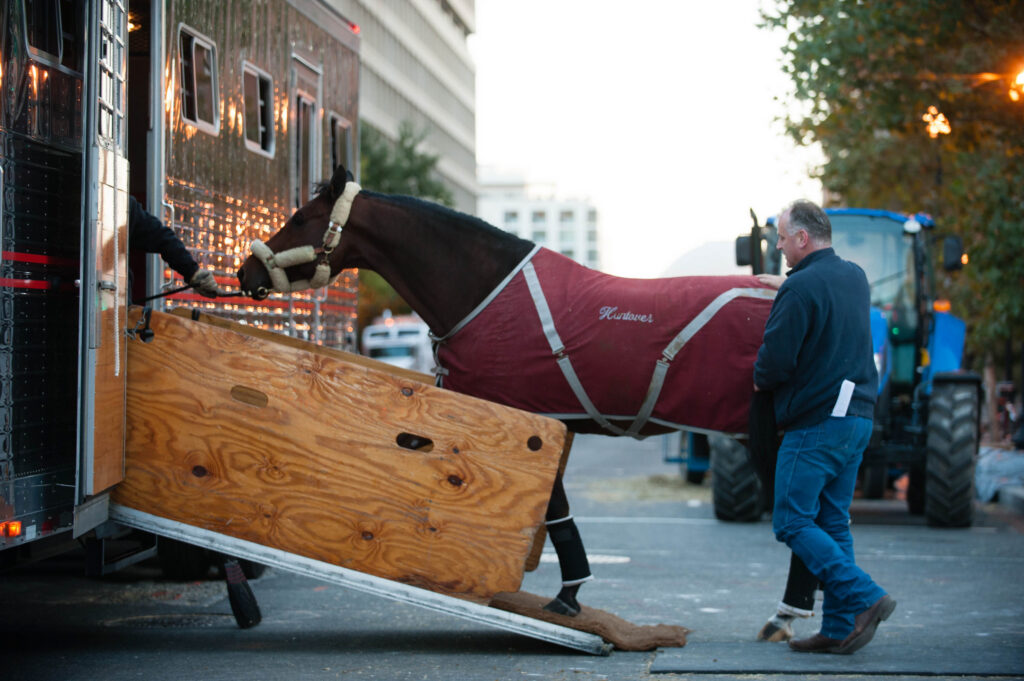
Always pack for varying temperatures, says Meaghan Byrne, dressage trainer and former groom to international competitor Catherine Haddad-Staller. “If you start your trip in the middle of the night, it may be colder and your horse might need a sheet. As you continue your trip, the temperature may increase so you may need to take the blanket off or vice versa,” she noted. “Make sure to feel your horse’s chest and ears whenever possible to see if he’s getting too hot or cold.”
Clipping
Many horses require a body clip before training in warmer climates. Palomera suggests waiting until you arrive before taking on the potentially high-stress task of clipping. “Just hand-walk your horse on arrival day,” he said. “On the second day, you can clip him before you start working again.”
Here, Palomera offers six quick tips for properly clipping your horse:
1. Clip between feeding times or at the end of the day to avoid extra stress.
2. Start by giving your horse a bath. A clean horse is easier to clip because dirt and hair doesn’t wear on the blades as much.
3. Thoroughly dry your horse, especially his legs, with a clean towel.
4. This is the appropriate time to sedate a horse who requires it, as you need some time for the drugs to take effect.
5. Disinfect sharp clipper blades and lubricate them every 10 to 15 minutes.
6. Clip only with cold or slightly warm blades. If they become hot, wait for them to cool down or change them before continuing.
Feed, Water and Supplements
In the days leading up to departure, Palomera advises keeping your horse’s feeding routine the same but adding an electrolyte and vitamin C supplement. Also try to keep his grain feedings regular throughout the trip and make sure he always has access to hay. For horses prone to ulcers, he suggests taking preventative measures when necessary. Products like Ulcergard can help prevent gastric ulcers and certain supplements can also support digestive health during travel. (Providing him with quality hay via a haynet can also stave off gastric upset.)
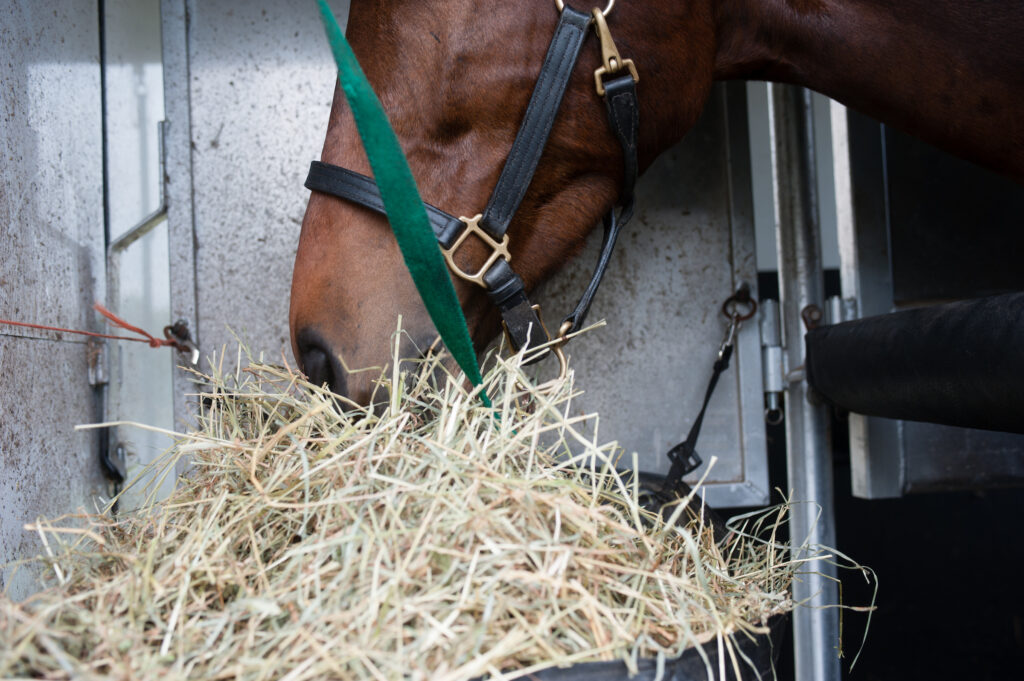
Byrne notes that it’s important to offer your horse water every time you stop throughout the duration of your trip. “If possible, stop every two hours to offer your horse water when trailering and make sure you have easy access to fresh water and a clean bucket,” she said. “This will help keep him hydrated and give him a short break from the stress of riding through bumps and shifts in the road.”
Takeaway
Throughout the travel process, don’t be afraid to ask for advice from your professional shipper, veterinarian or trainer. Long-distance hauls certainly require proper planning for things to go off without a hitch, but with careful consideration of your horse’s travel method, shipping dates, his training program as well as his grooming, nutrition and hydration needs, you’ll help ensure he gets to his destination in the safest, most stress-free way possible.