



 Team Prac
From barn chores to hard work in the saddle and long hours in the truck, dressage riders put their backs and core muscles to work all day long. Yet while we routinely work on strengthening our horses’ toplines and cores, we often forget that our backs and cores require the same amount of care and attention to avoid injury and stay healthy.
Dr. Robert P. Norton, M.D., an orthopedic spine surgeon at Florida Spine Associates, sees riders at several of the company’s southern Florida offices. He treats them for everything from everyday wear and tear to acute injuries and more serious spinal surgeries.
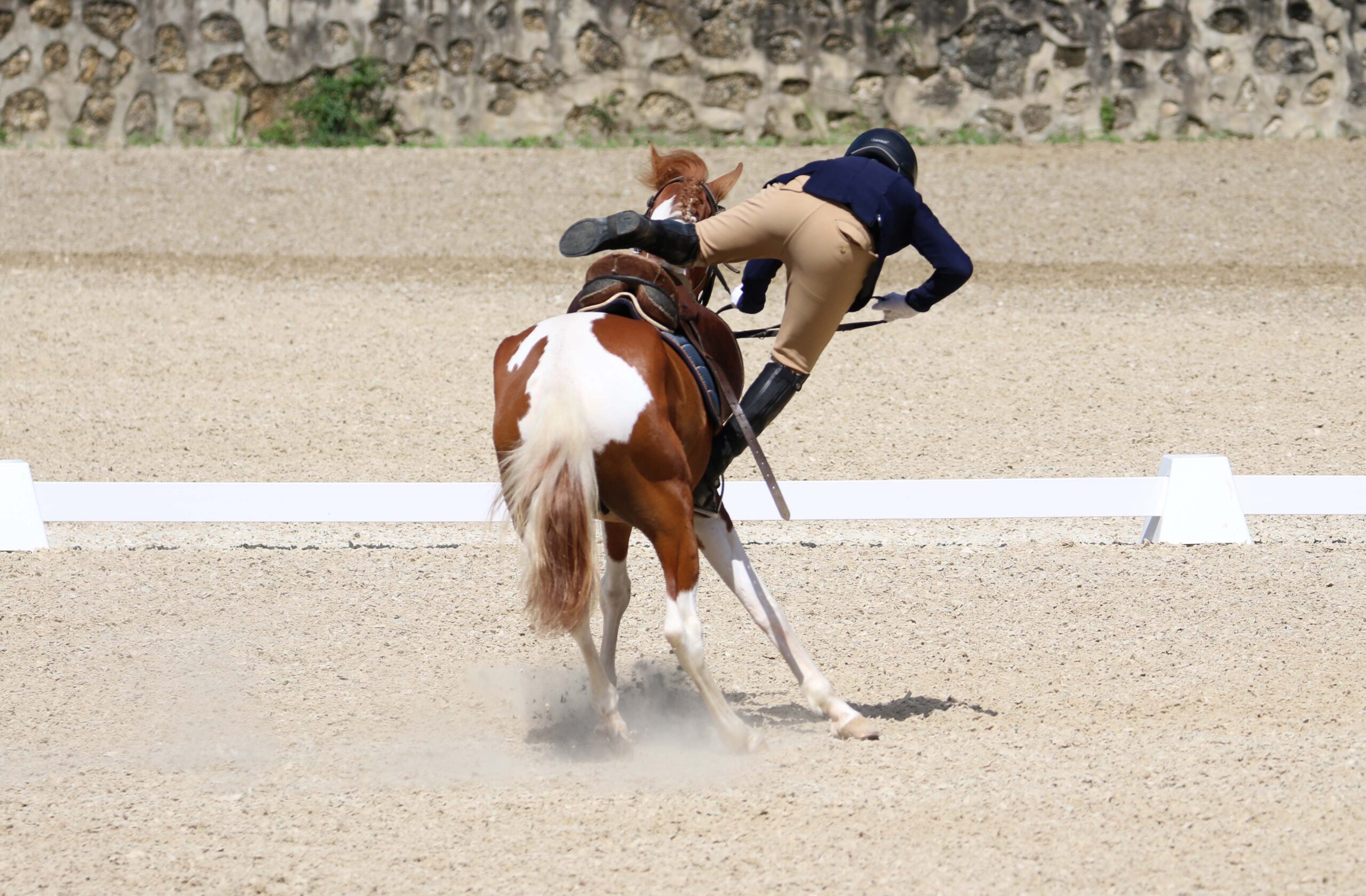
Back pain in equestrians is a common issue he sees, and it usually comes in the form of acute traumatic injury, such as a fall from a horse, and pain related to repetitive stress and motion.
An acute traumatic injury can result in compression or burst fractures, “and fortunately, the majority of them can actually be treated conservatively with a back brace and some therapy,” Norton said. “It’s pretty rare to actually need to do a surgery.”
Pain caused by repetitive stress and motion can be brought on by the regular movements of riding a horse, like posting the trot or sitting a big-moving horse, or being in an improper position for too long.
“We see a combination of both,” he said. “We [call it] myofascial or musculoskeletal pain, so sprains and strains of the paraspinal muscles and ligaments in the back. Structural problems would be disc injuries. A lot of patients will develop disc-related problems, whether it be a tear in the disc—called an annular tear—or you could get a disc herniation or disc degeneration. Disc degeneration is more common in patients that have prolonged sitting positions and/or repetitive motions. So, you can imagine that horseback riders are prone to that.”
Disc injuries such as herniations often result from a trivial injury, Norton said. “They occur after you’ve been in a prolonged position, such as lying down and sleeping, and then getting up, or sitting for prolonged periods of time, and then getting up.”
Discs are like cushions or shock absorbers, and they’re filled with fluid, making them plump to allow for that shock absorption. “If you’re sitting for hours, or if you’re riding for long periods of time, eventually that disc will compress down because the fluid is squeezed out of it,” he explained. “And then when you acutely get up, it doesn’t have to be traumatic, but you just get up and change positions, and you change the volume and the height, it opens up and sets you up for a tear of that disc, and that’s when the fluid can leak out.”
He notes that “weekend warriors” could be prone to these types of injuries if they sit in an office all week.
If you work at a desk or do any type of repetitive activity, Norton advises getting up and taking breaks to move and stretch. You might also invest in a lumbar support device or chair that fits the curvature of your back.
When you get to the barn, make sure you’re properly warmed up before riding. Stretches such as back extensions, back arches, child’s pose, hamstring stretches and even just bending down to touch your toes are all good for your spine health.
Strengthening Your Core
Norton said many spine injuries happen because the core is not strong enough. This is an increasing issue as people are more sedentary than in the past. As riders, we need core strength to sit properly in the saddle, absorb our horses’ energy, develop an independent seat and aids, and avoid back pain.
“When your core isn’t strong, all the energy is transferred directly onto the joints of your back, the bones and the discs when you get up and move around,” he said. “When you have a strong core, you have strong abdominal muscles, paraspinal muscles and flank muscles. Think of them as a protection around the spine. They provide a ring of muscular protection, and the stronger that that muscle is, the more energy it can absorb when you transition positions and move.
“[The muscles] take on the forces of gravity, and the energy that’s required to move around is offloading the discs themselves,” he added. “When you don’t have that support structure, all that energy and force is directly impacted onto the disc itself.”
Starting with abdominal muscles, Norton suggests focusing on your internal and external obliques, which are on your sides and originate at your hip bone, groin and lower back, as well as your transverse muscles, which are located deep in your abdomen and run horizontally, attaching to the lower ribs, groin, hip and lower back.
The paraspinal muscles, which run along your spine and in between the transverse processes also need strengthening. Classic crunches, planks, back arches and bird dog—where you get on your hands and knees in tabletop position and extend and compress opposite legs and arms while tightening your core muscles—will help. Norton suggests focusing on these exercises at least three times a week.
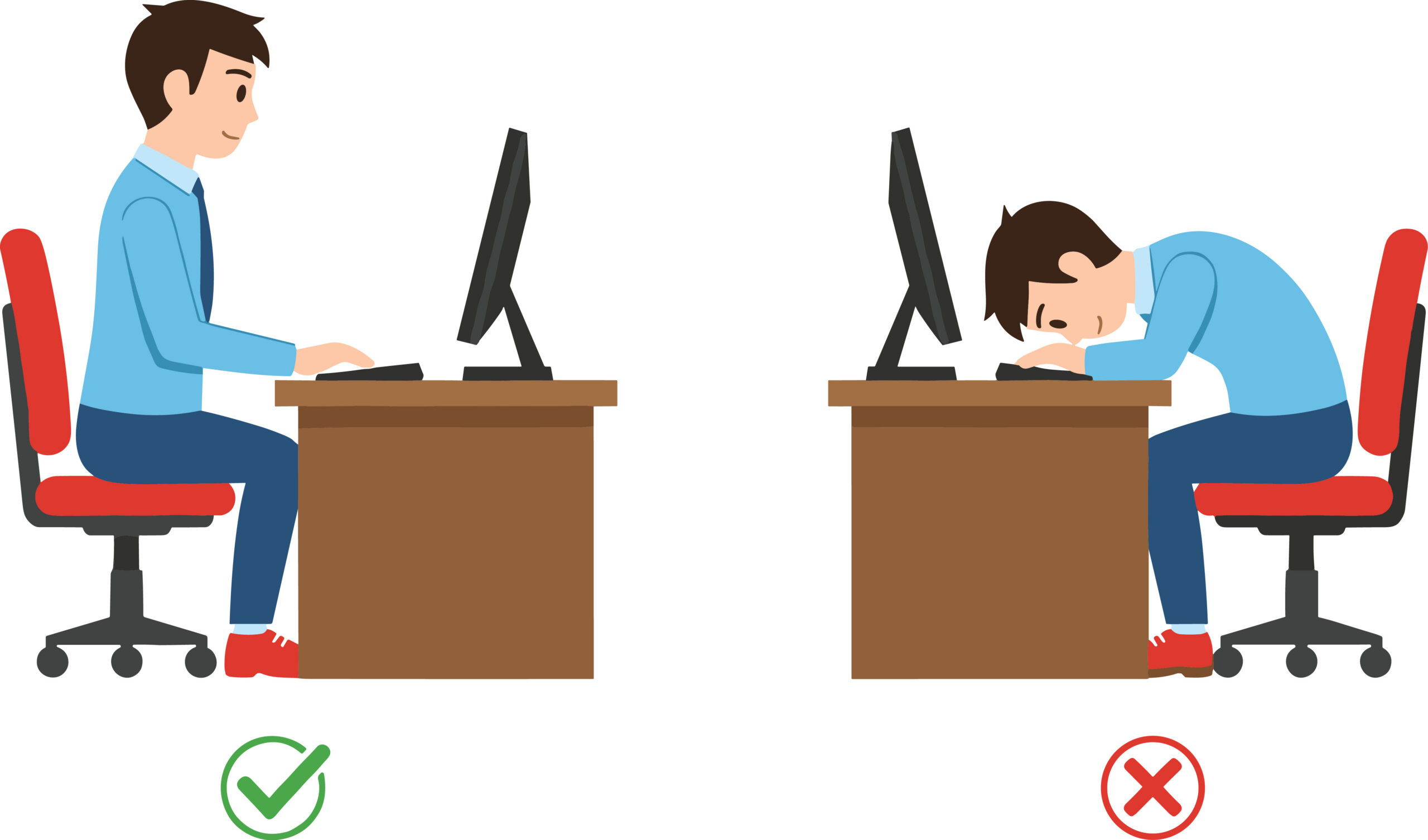
A strong core will support your posture both in and out of the saddle. “Like mom always used to tell you when you were a child: Sit up straight,” he said. “That’s engaging your core when you’re sitting up straight. And if you do that all day long, every day, you’re really going to build up those muscles. If you just get sloppy and get into that ‘iPhone position’ where you’re leaning over, that’s the worst. Rounding your back, that’s terrible for your back, so it’s the last thing you want to do.”
Some riders use braces or devices to help with posture in the saddle, but Norton is not a fan of them for long-term use for his patients. He will recommend them for short-term use when recovering from a serious injury like a fracture.
“The problem with these braces is that people become reliant and dependent on them, and when you do that, you feel better because you’re actually in the proper positioning that you should be in, but you’re not engaging your muscles, and you’re actually relying on this brace to do the work for you,” he said. “So it actually has the opposite effect, because then your muscles become weaker and dependent on the brace.”
Already in Pain?
Riders are generally tough and will push through pain, but Norton recommends seeing a doctor sooner rather than later for back pain. You could try anti-inflammatories, heat and ice to calm down short-term back pain, but it’s always best to see a professional if it persists. Your doctor may prescribe stronger anti-inflammatories, injections or physical therapy if the pain isn’t a structural issue.
“If you have prolonged periods of back pain that are not getting better after two to three weeks, or if you have severe intractable back pain that is just putting you in misery, and you can’t do anything to get rid of that pain, those are two reasons to see someone for localized back pain,” he said.
If you have back pain that includes numbness, tingling, burning or pain shooting down your legs or arms, Norton said to see a doctor right away as a structure could be involved such as a disc herniation that’s causing neurologic compression which could lead to symptoms like sciatica. Any neurologic symptoms like balance changes, clumsiness or difficulty walking would also warrant a visit to a spine specialist, especially after a fall.
For lifelong spinal health, Norton said that strengthening exercises and reducing sitting will go a long way. In addition, he recommends minimizing BLTs (bending, lifting and twisting). Bend with your legs and engage your core, using your buttocks and thigh muscles.
When lifting something heavy, do not lift it up out in front of you, which can put strain on your discs. Keep it close to your center of gravity and bend with your legs. If you’re moving something heavy, try not to twist while doing it—move your body parts together.
“Just being mindful of your positions and posture and keeping your core strong and protecting your back [from] BLTs is paramount and fundamental to longevity of your back and making sure you have a long, fruitful life riding horses,” he concluded.