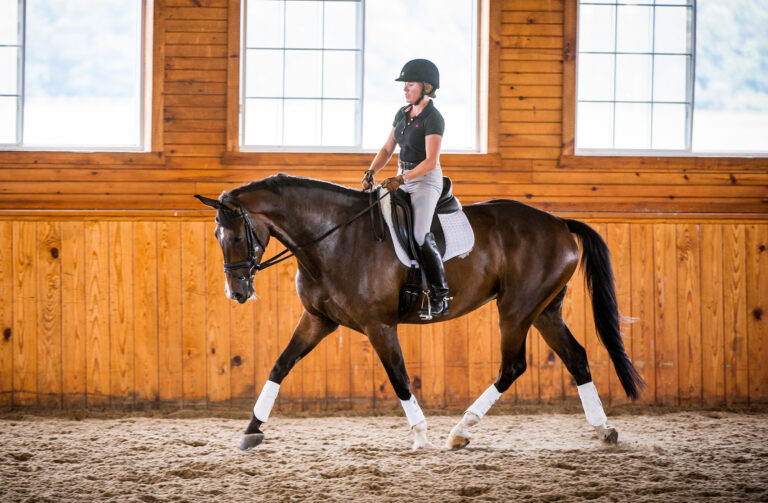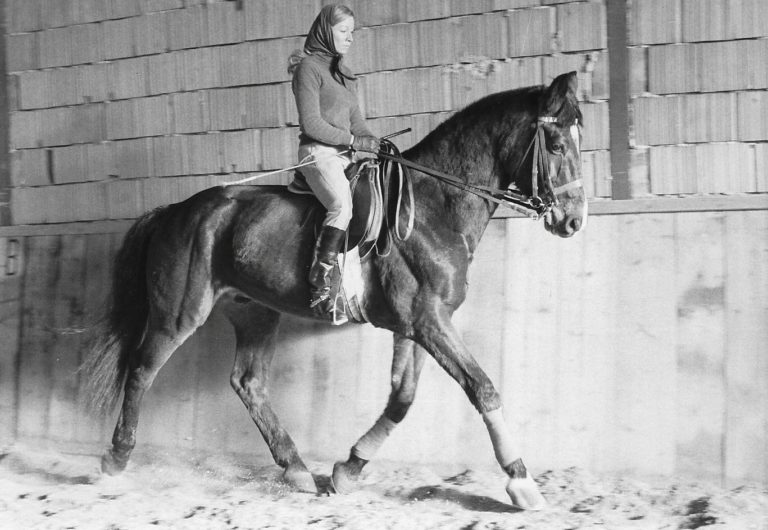

I often need to remind myself—as well as my husband and kids—of the importance of balance. Between school, work, appointments and evening activities (riding included) our days are hectic and, at times, way out of balance. This imbalance in our daily lives can leave my family feeling a little out of control, even worried. It’s not until we readjust and find time to eat dinner together, read a good book or just be together, that we become focused and centered again.
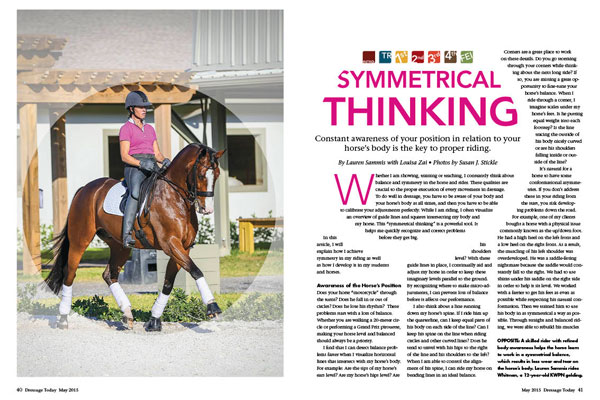
While the balance I speak of is one of mindfulness, the balance we seek in the saddle isn’t all that different. A horse who is not ridden in balance can feel out of control or worried, which can reveal itself in him motorcycling through turns or losing his rhythm. To combat this, international dressage competitor Lauren Sammis comes to us this month with her thoughts on finding balance and symmetry in the horse and rider. She believes these qualities are crucial to the proper execution of every movement in dressage.
“To do well in dressage, you have to be aware of your body and your horse’s body at all times, and then you have to be able to calibrate your adjustments perfectly,” says Sammis. This refined body awareness that she seeks is what she says helps the horse learn to work in a symmetrical balance, which results in less wear and tear on his body. Read “Symmetrical Thinking” on p. 40.
This story leads nicely into Eva Colacicco’s story of five riders (herself included) who have found joy in owning and riding senior horses. DT’s Technical Editor Beth Baumert contributed to the article, discussing how good horse-and-rider balance is key to a horse’s longevity. “Horses hate to be out of balance and can actually be disagreeable with riders who don’t know how to set them up so they use their backs,” says Baumert. “The ideal rider of a senior horse has a well-balanced position, so her weight is carried around the horse, not on top of him.” Read “Enjoying the Older Horse” on p. 46.
Finding our balance in the saddle can be aided by exercises found on the yoga mat. Grand Prix rider and trainer Jaclyn Sicoli offers five valid reasons why riders should practice yoga, including reason 5. Mental Focus: “As the brains of the operation and leader, the rider has a responsibility to remain mentally flexible,” says Sicoli. “Training your mind to remain free of distraction is an important skill for everyday riding. Having control of your thoughts and emotions during a stressful event or moment can be crucial to staying safe. Perhaps the greatest gift of yoga is this training for your mind.” Be sure to read her story on p. 28.
We hope you find balance both in and out of the saddle this month.
Until next time…